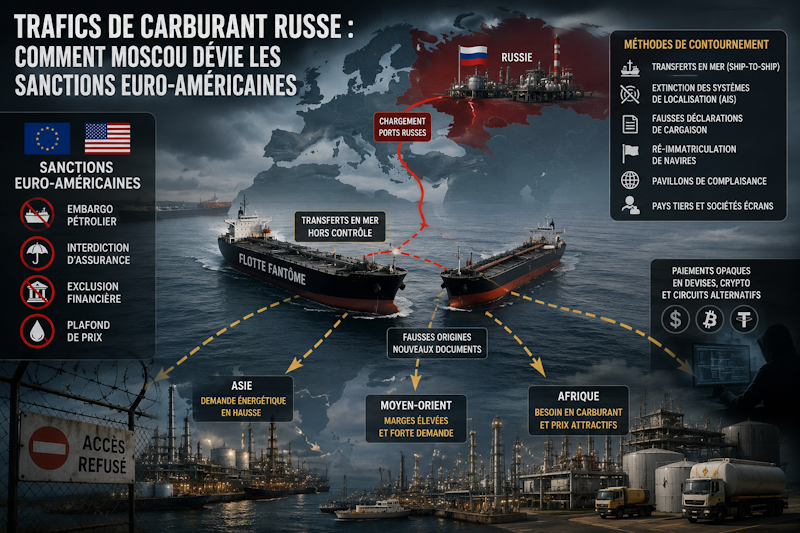
Two parallel investigations have uncovered a sophisticated network funneling Russian petroleum products into global markets despite Western sanctions imposed after the Ukraine invasion. Evidence points to Morocco as a critical transit hub in this covert trade route.
Geneva-based trader coordinates Moroccan fuel imports
Investigative findings reveal that Morocco emerged in 2025 as North Africa’s top destination for Russian petroleum products, a position facilitated by a discreet Geneva-based trading firm, Alvari SA. Through this intermediary, multiple shipments totaling tens of millions of dollars have reached Moroccan ports including Jorf Lasfar and Mohammedia.
The Tranquil Sea, one of the vessels identified in this network, exemplifies the tactics used to obscure origins. Despite being listed by British authorities on sanctions lists against Russian-linked vessels in October 2025 while en route to Morocco, it evaded detection long enough to complete its delivery. Ukrainian defense authorities previously alleged the ship served as a platform for spying on NATO military activities and had been detained by Finland for suspected damage to an undersea cable. When approached for comment, Alvari SA’s legal representatives denied any connection to the vessel’s chartering or operation.
Turkmenistan label masks Russian origins
To conceal the true source of the fuel, documentation was manipulated through Cypriot commercial channels. A diesel shipment was falsely certified as originating from Turkmenistan, with the actual transshipment occurring offshore near Gibraltar under “Off Port Limits” (OPL) operations—typically reserved for minor logistical tasks rather than high-risk petroleum transfers.
Financial transactions between Moroccan and international banking entities reveal another layer of this scheme. Payments flowed from Attijariwafa Bank—controlled by the royal holding Al Mada—to the Tangier-based offshore branch of the Popular Bank, with Moroccan distributors reportedly securing discounts of up to $7 per metric ton compared to European price benchmarks. This represents significant cost savings when contrasted with the current $15 premium on non-Russian fuel imports.
Diplomatic timing added another dimension to these shipments. Records show the Moroccan Foreign Minister Nasser Bourita’s visit to Moscow coincided with the Tranquil Sea‘s arrival in Morocco, occurring just days before a critical UN Security Council vote on Western Sahara where Russia abstained—an outcome favorable to Moroccan interests.
Spanish market emerges as suspected destination
Spanish petroleum sector analysts have documented a sharp increase in diesel imports from Morocco, raising suspicions of a triangular trade route where Russian-origin fuel enters the European Union through Moroccan ports. Despite Morocco lacking domestic refining capacity, data shows dramatic growth in these imports since the Ukraine conflict began.
Official figures indicate Moroccan imports of Russian diesel reached 645,000 tons in 2025, climbing to 489,000 tons in early 2026—constituting 45% of the country’s total fuel imports. Spanish customs records reveal no diesel exports to Spain from Morocco prior to 2022’s European sanctions against Russian energy products.
Spanish strategic petroleum reserve data shows 76,000 tons of Moroccan diesel arriving at Tarragona, Barcelona and Bilbao ports during March-April 2026, following the closure of the Strait of Hormuz after regional military escalations. Spanish refinery industry representatives expressed concerns about unfair competition from potentially illicit fuel imports, with the Spanish Fuel Industry Association warning of the need to combat fraud in hydrocarbon trade.
Two investigations confirm suspicious trade patterns
When examined together, these investigations paint a consistent picture: Russian petroleum products appear to be rerouted through Moroccan ports before potentially entering European markets. While neither investigation claims definitive proof of every shipment following this exact path, both rely on maritime tracking data (Kpler), customs documents and industry testimonies to build their cases. The inherent complexity of tracing refined petroleum products through international supply chains makes absolute verification challenging.