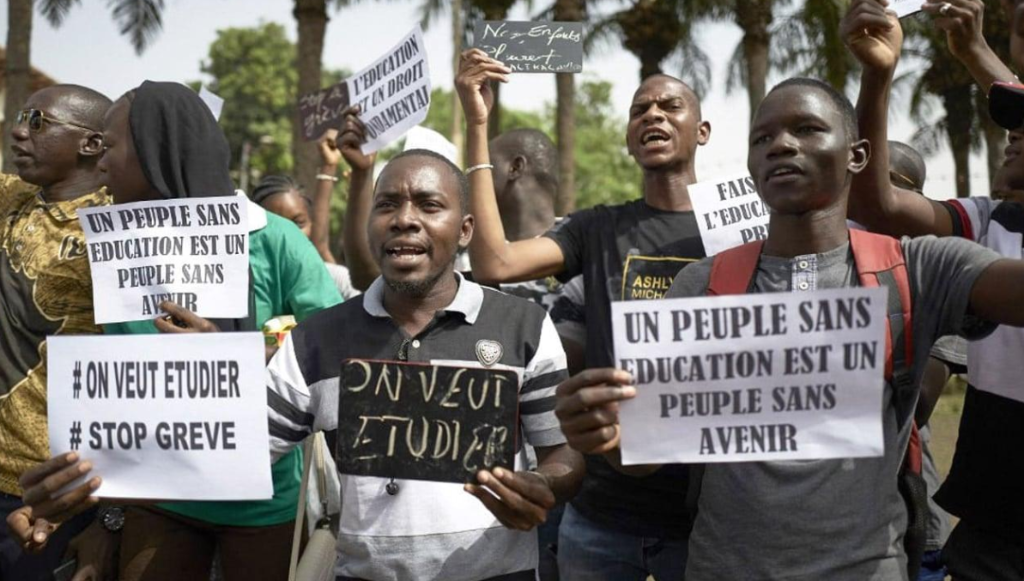
After three weeks of relentless strikes paralyzing Mali’s universities and elite schools, a pivotal question emerges: will the transitional authorities finally act to end the deadlock? The Syndicat national de l’enseignement supérieur et de la recherche scientifique (SNESUP) has announced a breakthrough—being granted an audience with the highest state officials. But as the movement enters its fourth week, one question lingers: will this historic meeting translate into tangible solutions?
From Silence to Dialogue: Has the Government Finally Listened?
The transitional authorities’ prolonged silence, which persisted for over three weeks since the strike began on October 26, has been shattered. The SNESUP’s executive committee revealed it was received by top Malian officials over the past two days—a first in this escalating conflict. Yet, despite this unprecedented move, the union has yet to suspend the strike, signaling that words alone may not suffice.
The content of these discussions remains undisclosed, with the SNESUP emphasizing the need to consult its members before commenting further. No concrete commitments from the government regarding the resolution of the research allowance dispute have been disclosed at this stage. For now, the strike persists, proving that initial outreach does not automatically translate into action.
Why Is the Research Allowance Such a Critical Issue?
The heart of the dispute lies in a presidential decree issued nearly a decade ago. Decree No. 2017-0850/P-RM, adopted on October 9, 2017, established the right to a research allowance for university professors and researchers. Despite its legal recognition, the allowance has never been implemented, leaving thousands of academics awaiting what they see as a long-overdue obligation.
The SNESUP’s demands are clear: the announcement of the allowance’s exact amount, transparent payment procedures, and settlement of outstanding payments for the years since 2017. For these educators, this is not a new demand but a call to enforce existing regulations—one that underscores the state’s failure to uphold its commitments.
Who Bears the Brunt of the Standstill?
The strike’s impact extends far beyond the walls of university offices. As universities remain shuttered, students face mounting uncertainty about their academic progress, exam schedules, and the integrity of their programs. What began as a professional dispute has rapidly evolved into a crisis threatening the entire higher education system in Mali.
Earlier efforts to mediate, including a November 7 meeting with religious and community leaders, failed to yield results. With the intervention of the highest state authorities now underway, the stakes are higher than ever—will this shift in dialogue bring an end to the paralysis, or will the standoff endure?
What Comes Next for the Strike and the Authorities?
The transitional government’s newfound willingness to engage marks a potential turning point. Yet, the SNESUP remains cautious. The union has made it clear that any decision to suspend the strike hinges on the outcome of consultations with its members and the substance of the proposals put forward by the authorities.
For now, the dialogue has begun, but the conflict remains unresolved. After a decade of unfulfilled promises, the higher education community demands action—not just words. The transitional authorities now face a critical test: can they transform this rare moment of engagement into a lasting resolution, or will the universities continue to bear the weight of this impasse?