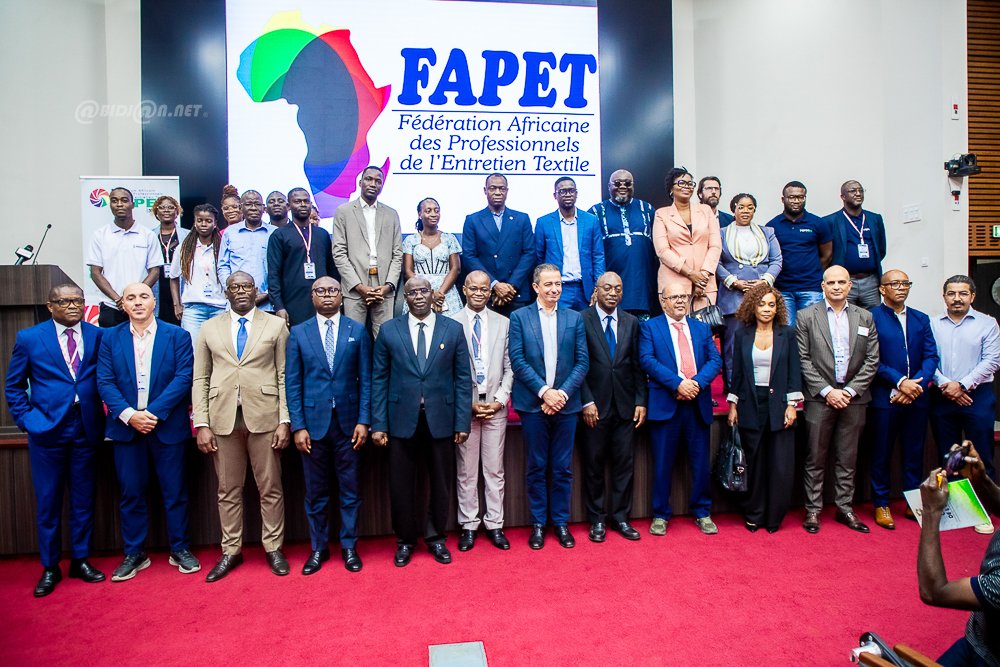
The economic hub of Abidjan is currently hosting the third edition of the African Textile Care Professionals Forum (FAPET), running from May 20-22, 2026. This gathering at Abidjan-Plateau brings together industry leaders from across the continent to tackle critical challenges around modernizing and industrializing Africa’s textile care sector.
Themed ‘Structuring, ecological transition and innovation: steering towards sustainable industrialization of Africa’s textile care industry’, the event was inaugurated with the presence of Soro Mamadou, representing the president of the Economic, Social, Environmental and Cultural Council (CESEC).
In his address on behalf of CESEC president Dr. Eugène Aka Aouélé, Soro Mamadou emphasized that the textile care industry has evolved from a secondary activity into a key economic driver across African nations. Once overlooked, this sector now plays a crucial role in job creation, environmental protection and service enhancement across vital industries like healthcare and tourism.
‘Africa must develop its own value chains, upgrade infrastructure and professionalize its workforce to meet international standards.’ Soro Mamadou declared to delegates from multiple African countries.
The discussions highlighted several persistent challenges facing the industry. Yoboué Célestin-Arthur, President of the African Federation of Textile Care Professionals (FAPET), identified ongoing informality, technical training gaps, limited financing access and the urgent need for accelerated ecological transition.
He commended the sector’s African leaders, including Fayçal Belaroussi, FAPET vice-president and head of Algeria’s National Pressing and Laundry Association, and M. Adebayo, president of the Fabricare Professionals and Dryclean Association.
With strong support for Côte d’Ivoire’s economy in mind, organizers aim to transform this platform into a development catalyst through experience sharing, public-private partnerships and promotion of modern, eco-friendly practices.
Key focus areas for the 2026 edition include managing healthcare, industrial and household linen while exploring pathways for industrializing Africa’s textile care sector.