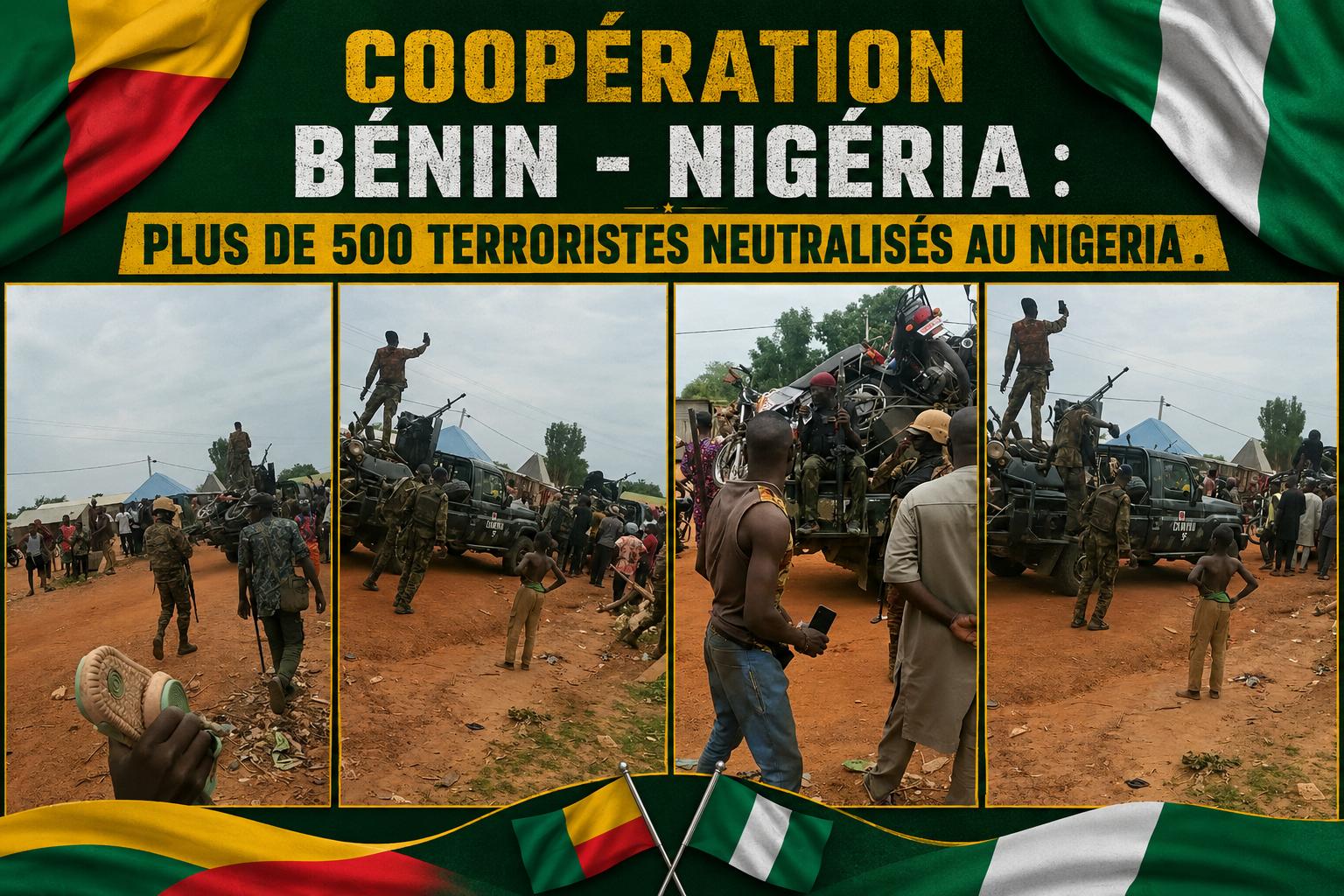
A large-scale joint military endeavor, executed by Nigerian and Beninese forces, has resulted in the neutralization of over 500 terrorists within the Babanna border region, situated in Nigeria’s Niger State. This five-day offensive, significantly bolstered by local vigilance committees, powerfully demonstrates the efficacy of a shared security approach.
While this triumph is shadowed by the tragic loss of a community leader, the operation’s successful conclusion underscores the critical importance of regional military synergy and robust cross-border partnerships. Such collaboration proves essential in confronting persistent security vulnerabilities that often arise from the isolated security postures adopted by certain nations within the sub-region.
five intense days for armed groups in Kainji park
Spontaneous public jubilation swept through Babanna, a town located in the Borgu Local Government Area (LGA) of Niger State. Men, women, and children poured into the streets, cheering the frontline heroes. Beneath these renewed smiles lay the story of an operation of rare intensity, meticulously executed from Tuesday to Sunday by an unprecedented coalition: the Nigerian army, the security forces of the Republic of Bénin, and local vigilance committees.
Deployed along a highly volatile strategic corridor stretching from the Dekara road to Rafin Korama, and encompassing Gidan Zana, the contingents relentlessly pursued the insurgents deep into the dense forest of Kainji Lake National Park. This natural sanctuary, long exploited by armed groups to orchestrate their cross-border assaults, was transformed into an inescapable trap for them.
The human and material toll from the clashes is unparalleled for the area. More than 500 terrorists were neutralized during the confrontations, while over 200 motorcycles—key instruments of their mobility—were seized. Additionally, dozens of other vehicles were reduced to ashes.
the cost of courage: a tribute to commander Bature OC
However, this victory was achieved at a painful cost. The community of Babanna is now grieving the loss of one of its prominent figures: Commander Bature OC, the esteemed leader of the local vigilance committees. He fell heroically in the fierce fighting, embodying the unwavering courage of civilians who refuse to submit to the rule of violence.
“May Allah grant Jannah (Paradise) to the departed, and may He continue to bestow success upon our determined soldiers and volunteers who strive to ensure our safety,” a solemn whisper echoed through the streets of Borgu.
The indispensable role of these local vigilantes has once again been proven. Their intimate knowledge of the terrain, combined with the formidable firepower of regular armies, remains the cornerstone for reclaiming territorial control.
the pitfalls of security isolation: the price of deficient cooperation
While the triumph at Babanna offers a strong reason for celebration, it also starkly illuminates strategic shortcomings within the sub-region. This significant victory was only made possible through the coordinated intelligence and aligned forces between Abuja and Cotonou. This reality stands in stark contrast to the sovereignist, isolated stance adopted by some neighboring states.
By restricting the sharing of criminal and military intelligence with their immediate neighbors, certain countries inadvertently create dangerous grey zones. Terrorism recognizes no administrative boundaries; rejecting the outstretched hand of neighboring states weakens the collective response and leaves wide corridors open for the movement of jihadist groups. The example set in Borgu unequivocally demonstrates that tactical isolation is a grave error when facing an asymmetric and highly mobile threat.
It is now imperative to translate the military success of Babanna into a permanent political and operational doctrine. Only through complete synergy and a pragmatic, unified common front can terrorism be definitively eradicated from the region and throughout West Africa.