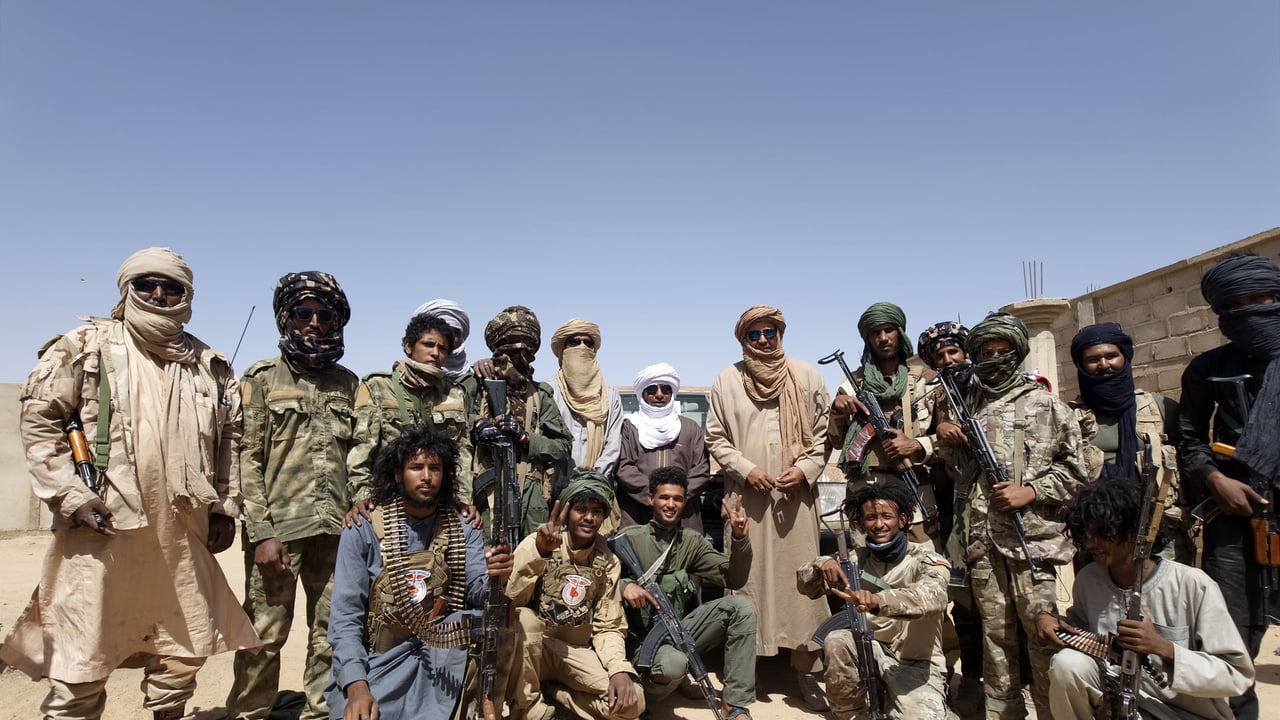
Deep in the heart of northern Mali, the city of Kidal stands as a stark symbol of enduring conflict and resistance. Once a stronghold of armed factions, it continues to echo with the sounds of sporadic clashes and the weight of political uncertainty. The landscape, both physical and political, remains scarred by years of unrest, with tensions flaring intermittently between rival groups vying for control.
On a recent visit to Kidal, the atmosphere was tense yet resilient. Locals spoke of a city caught between the ambitions of armed movements and the fragile presence of state institutions. The streets, though bustling with daily life, carried an undercurrent of vigilance, as residents navigated the precarious balance between survival and defiance.

the heart of Mali’s northern rebellion
Kidal’s strategic importance cannot be overstated. Nestled in the vast expanse of the Sahara, it serves as a critical crossroads for armed factions operating across the Sahel. The city’s recent history is a tapestry of shifting alliances, where local militias, jihadist groups, and state-backed forces engage in a relentless struggle for dominance. The Front de libération de l’Azawad (FLA), led by figures like Alghabass Ag Intalla, remains a dominant force, shaping the region’s volatile dynamics.
The FLA’s presence looms large over Kidal, its fighters patrolling the streets and asserting control over key installations. Their influence is a testament to the enduring legacy of the Azawad rebellion, a movement that has reshaped Mali’s northern territories for decades. Yet, the FLA’s authority is not absolute. Competing factions, including the Groupe de soutien à l’islam et aux musulmans (JNIM), continue to challenge its grip, adding another layer of complexity to the conflict.
life under the shadow of conflict
For the people of Kidal, daily life is a delicate dance between resilience and vulnerability. Markets operate under the watchful eyes of armed groups, while schools and clinics struggle to function amid the chaos. The city’s infrastructure, already fragile, bears the scars of years of neglect and destruction. Yet, amidst the hardship, a sense of community persists. Locals gather in quiet corners to share stories, trade goods, and preserve their cultural identity against all odds.
Humanitarian organizations have attempted to provide relief, but their efforts are often hampered by the ever-present threat of violence. Access to essential services remains a distant dream for many, as aid workers navigate a labyrinth of checkpoints and roadblocks. The psychological toll on the population is profound, with trauma and displacement reshaping the social fabric of the city.
a city caught in the crossfire of regional tensions
The conflict in Kidal is not isolated; it is deeply intertwined with the broader struggles gripping the Sahel. Mali’s political instability, exacerbated by the coup d’état in Bamako, has further complicated efforts to restore peace. The Malian transitional authorities, led by figures like Assimi Goïta, face an uphill battle to reassert control over the north, where armed groups operate with near impunity.
The regional implications are stark. Neighboring countries, including Burkina Faso and Niger, grapple with their own insurgencies, while international actors struggle to formulate a cohesive strategy. The situation in Kidal underscores the fragility of the Sahel’s security architecture, where localized conflicts can quickly spiral into broader crises.
the path forward
Despite the bleak outlook, there are glimmers of hope. Dialogue initiatives, though sporadic, have emerged as a potential avenue for de-escalation. Local leaders, including tribal elders and former combatants, are increasingly vocal about the need for a negotiated settlement. Their efforts, however, are often overshadowed by the relentless cycle of violence.
The international community’s role remains contentious. While some advocate for increased military intervention, others emphasize the importance of addressing root causes, such as poverty and marginalization. The debate rages on, with no clear path to resolution in sight. For now, Kidal remains a battleground, a city suspended in the limbo of war and uncertainty.
As the sun sets over the dusty streets, the people of Kidal carry on, their spirits unbroken. Their resilience is a testament to the enduring human capacity for hope, even in the darkest of times.