
How blockades by the Macina Katiba are reshaping life in central Mali
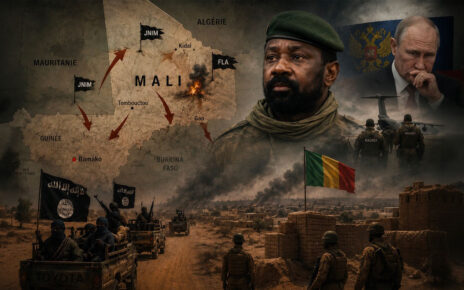
In central Mali, blockade tactics have evolved from temporary wartime measures into a systematic strategy of control. Historically, these regions have known sieges during conflicts such as the Ségou State wars or the Hamdallahi Caliphate in the 19th century, where villages were cut off until surrender. Today, the Macina Katiba—a faction of the Group for the Support of Islam and Muslims (JNIM)—has transformed this practice into a deliberate governance tool. Blockades are no longer just punitive actions but instruments of domination, enforcing compliance through coercion rather than formal administration.
Economic and social breakdown in Marébougou
The study Living under Blockade highlights how these tactics devastate daily life in villages like Marébougou, Saye, and Kori-Maoundé. These areas, located in Mopti and Bandiagara, face not just military closures but cascading crises affecting mobility, agriculture, trade, education, gender relations, and local authority structures. The goal is unmistakable: make resistance unsustainable by making life untenable for those who refuse allegiance.
In Marébougou (Djenné district), residents initially resisted the Katiba Macina’s demands—school closures, forced veiling of women, agricultural levies, and livestock confiscations. This defiance was bolstered by regular army patrols and the presence of a donso camp (traditional hunters). However, the resistance crumbled in late 2021 after a decisive defeat of local self-defense groups. A six-month total blockade followed, severing access to markets, roads, fields, and essential supplies. By its end, the village submitted not out of conviction but necessity, desperate to end starvation and restore minimal mobility.
Targeted violence and forced adaptation in Saye
Saye’s story contrasts sharply. Despite its historic resistance to Ségou’s rule in 1782, the village has steadfastly rejected the benkan—a so-called pact disguised as a compromise but enforced through threats. Residents argue they are already devout Muslims and see no reason to submit to an external religious authority that has already stripped them of wealth—burned crops, stolen livestock, and severed market access. Here, resistance is organized around traditional leaders, youth groups, and donsow fighters, while women risk raids to gather food and firewood, exposing the gendered violence of the siege.
The blockade’s strain on local resources has forced neighboring villages to seek refuge in Saye, creating a humanitarian overload. Without external supply lines from urban centers like Djenné or San, public services in Saye are overwhelmed. The siege isn’t just containment; it’s a calculated push toward capitulation through artificial scarcity.
Kori-Maoundé: unyielding defiance amid escalating hardship
In Kori-Maoundé, the Dan Na Ambassagou self-defense group has enforced a hardline stance against negotiation with jihadists. Local authorities—village chiefs, imams, and mayors—remain aligned with this position, rejecting any dialogue with the Katiba Macina. The result? A punitive blockade marked by targeted attacks, assassinations, and near-total restriction of field access. The village’s topography and the group’s presence slow direct offensives, but civilians bear the brunt, fleeing to Bandiagara, Sévaré, or Bamako or surviving under increasingly precarious conditions.
Kori-Maoundé’s defiance is rooted in collective memory. The plateau’s hills were the site of a decisive 1892 battle against French colonizers—a symbol of resistance that fuels today’s refusal to negotiate. Displaced persons from surrounding villages have flocked here, further straining resources but reinforcing the village’s identity as an unyielding bastion.
Mediators: a fragile lifeline
Mediation plays a critical but uneven role. In Marébougou, neighboring mayors acted as intermediaries between the village and the Katiba Macina, facilitating a fragile accommodation. In Saye, no such initiatives materialized. In Kori-Maoundé, Dan Na Ambassagou’s influence blocks local mediation entirely, with regional reconciliation teams remaining detached from the village’s concrete struggles. This disparity underscores a harsh reality: blockades thrive where mediation fails, and violence persists without political or traditional bridges to transform armed confrontation into dialogue.
The pillars of village life under siege
Schools, agriculture, and livestock are the bedrocks of rural Mali—and the first casualties of blockades. When schools close, it’s not just education that collapses but the promise of a collective future. In Marébougou, Kori-Maoundé, and Saye, teachers have fled, classrooms stand empty, and students disperse. Agriculture fares no better: fields become inaccessible, crops are burned, and herds are stolen, forcing households to rely on external supplies that the blockade cuts off.
Women, often responsible for market gardening, food processing, and small-scale trade, face heightened vulnerability. Restricted mobility and lost autonomy in local markets deepen poverty and erode the social fabric. The blockade doesn’t just destroy income; it dismantles the exchange networks that sustain rural economies.
Community solidarity as a lifeline
Despite the devastation, survival in these villages depends on community networks. Shared food, water, and medicine; collaborative labor; and support for vulnerable households have become essential. In Saye and Marébougou, residents describe these solidarities as temporary shields against total collapse. They reveal a truth often overlooked: civilians are not passive victims but active agents in their survival, creating local forms of protection in the absence of the state.
The blockade as a tool of territorial control
Marébougou, Saye, and Kori-Maoundé illustrate how blockades have become a technology of control. By controlling roads, markets, schools, and social norms, armed groups reshape daily life without physically occupying every village. Responses vary—forced surrender, prolonged resistance, pragmatic arrangements, or partial flight—but the core question remains the same: how do you survive when the threads connecting a territory to the outside world—roads, fields, schools, markets—can vanish overnight? In central Mali’s Ségou and Mopti regions, blockades are more than tactics. They are instruments of a new order, one built on fear.