 Premium article
Macky Sall’s return to Senegal fuels political tensions
On Friday, July 17, Senegal’s former president will make his first visit to the country since his electoral defeat two years ago. The announcement has sparked sharp divisions and reignited memories of his administration’s repression.
- Updated on July 15, 2026 at 6:51 PM

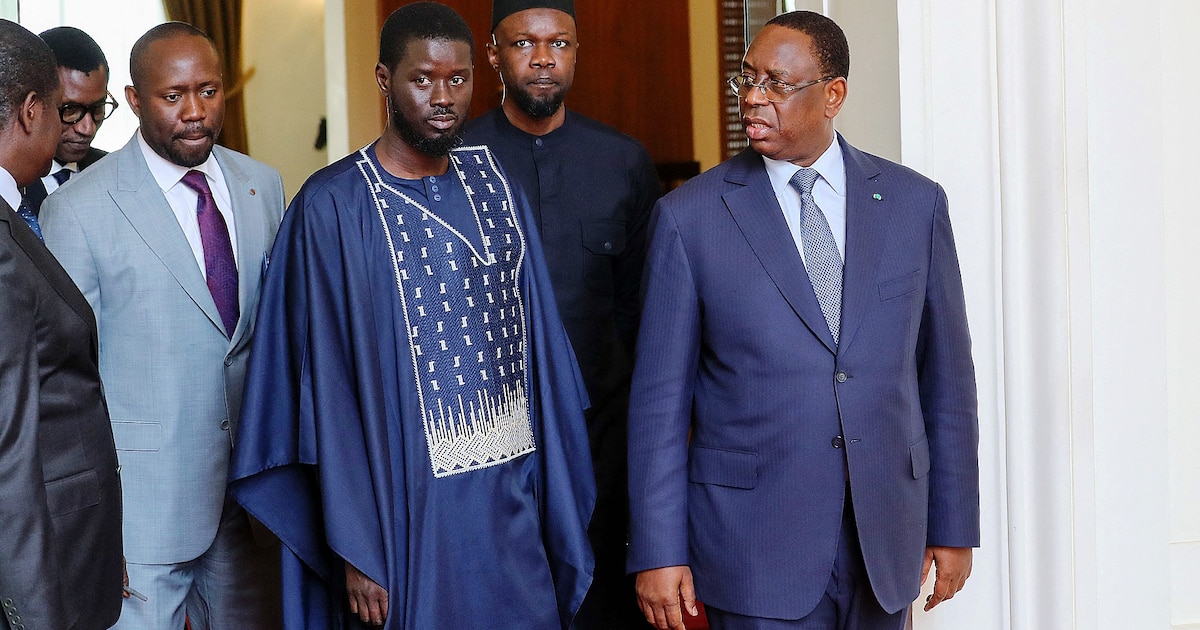
An unexpected twist has sent shockwaves through Senegal’s political landscape. Former president Macky Sall, defeated in the 2024 elections and living in exile, is set to land at Dakar’s Yoff military airport this Friday. The visit, marked by high-profile protocol, includes a scheduled meeting with his successor, Bassirou Diomaye Faye—a move that has stunned many given the strained history between the two leaders.
Old wounds resurface
The timing couldn’t be more sensitive. Just weeks before the 2024 elections, Bassirou Diomaye Faye was still incarcerated in Cap Manuel prison alongside hundreds of members of his party, the Pastef. Among them was activist Aly Coly, who recalls the ordeal: “They even jailed my wife and our three-month-old baby during that time. Now, as I watch my child play safely at home, I learn that our president is welcoming the man who ordered this repression!”
Official records from that period indicate over a thousand political detainees, many imprisoned for merely wearing Pastef bracelets. Between 2021 and 2024, 65 people died in clashes and protests linked to state repression. These injustices were central to Bassirou Diomaye Faye’s campaign platform.
Yet, two years later, justice remains elusive. “No investigations have been launched. No one has been held accountable. And now Macky Sall returns as if nothing happened. The people see this clearly—we’re not blind,” Aly Coly declares with frustration.
A bid for global influence
Behind Sall’s brief visit lies a strategic agenda. In a formal statement, he confirmed the trip is tied to his candidacy for UN Secretary-General, a role he first announced during the UN General Assembly on April 22. Sall positions himself as a champion of multilateralism and impartiality, though he has yet to secure backing from the African Union or his own government—a hurdle that may require Bassirou Diomaye Faye’s endorsement.
To many Senegalese, the idea is unsettling. “The UN exists to defend human rights, doesn’t it? How could someone who oversaw 60 deaths as president lead such an institution?” Aly Coly questions.
Others see potential benefits for Senegal. Maurice Soundieck Dione, a political science professor at Gaston Berger University, argues: “This could significantly boost the country’s image, making it more attractive to foreign investors and securing capital inflows—critical in today’s economic climate.”
A calculated political gamble
For Bassirou Diomaye Faye, aligning with his predecessor could be a pragmatic move. Tensions have simmered for months between the president and his former mentor, Ousmane Sonko—a dominant force in the National Assembly who has publicly challenged Faye’s leadership. “This meeting, while surprising to many, reflects the evolving political dynamics of recent months,” Soundieck Dione notes. By welcoming Sall, Faye may be seeking new allies, though critics accuse him of betraying his reformist promises.
Elected on a platform of radical change, Bassirou Diomaye Faye has faced backlash for reintegrating figures from the previous administration into key state roles. “There’s a growing sentiment that he’s abandoning Sonko and reverting to the old corrupt system,” Soundieck Dione explains. “In Senegalese culture, betraying one’s mentor is deeply frowned upon.”
As Friday’s meeting approaches, the nation watches closely. Will it deepen the president’s isolation or mark the start of a new political alignment? The answer may hinge on whether this encounter serves as a step toward reconciliation—or further division.