Mali launches HPV vaccine: a breakthrough in women’s health
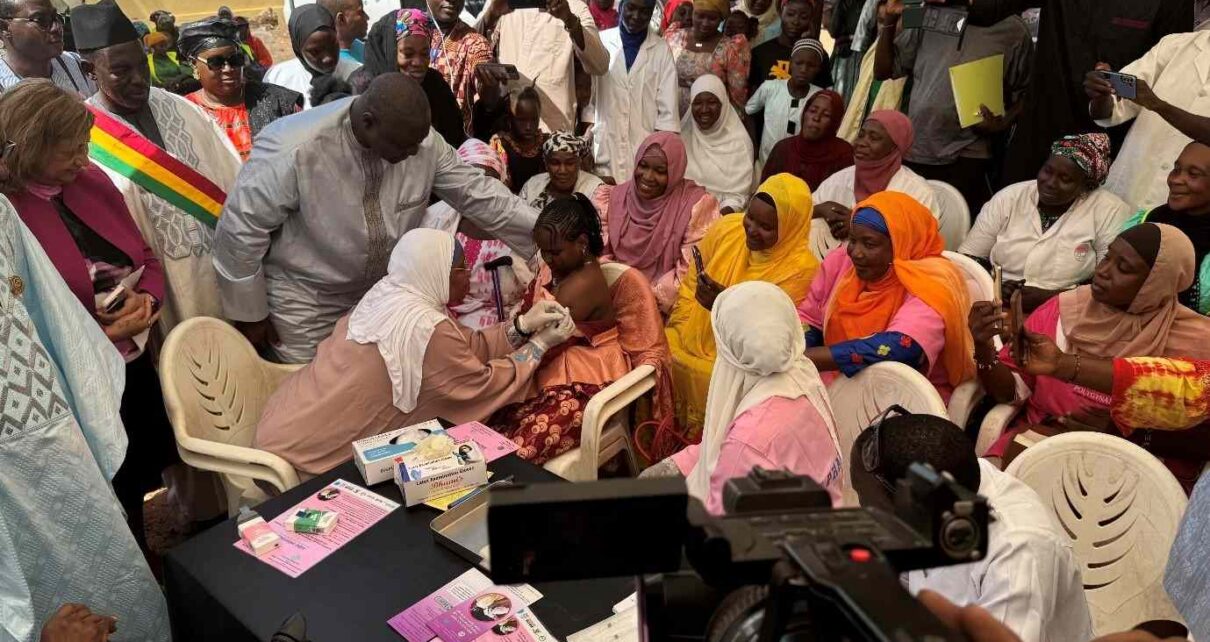
In a landmark initiative, the Malian government has incorporated the human papillomavirus (HPV) vaccine into its routine immunization program as of early November. During a high-profile ceremony in Bamako, attended by dignitaries and international partners including Gavi and the Ministry of Health and Social Development, the significance of this milestone was highlighted—marking a major leap forward in preventing cervical cancer among Malian women.

Cervical cancer remains a devastating reality for countless Malian women. Fatoumata, a 38-year-old woman, is one of its many victims.
« I initially had a fibroid, and it took me time to treat it. It was only when I started experiencing bleeding that I decided to undergo surgery. After the operation, I began noticing unusual discharges—watery, odorless, and colorless. I consulted my gynecologist, and the results confirmed cervical cancer. The treatment cost me between 5 and 6 million West African CFA francs, with the surgery alone amounting to 2 million francs. »
With this initiative, Mali aims to protect over 320,000 girls annually, reducing cervical cancer cases by nearly 90%. This could prevent more than 3,600 deaths among Malian women each year.
This testimony underscores the challenges faced by women in Mali, where late diagnosis and inaccessible, costly treatments are common due to limited access to quality healthcare.
The burden of cervical cancer in Mali
Cervical cancer, caused by persistent infection with certain types of HPV, is a major public health concern in Mali. It is the second most common cancer among Malian women aged 15 to 44. Often detected too late, the disease continues to claim thousands of lives annually.
Beyond medical barriers, cultural taboos prevent women from openly discussing their symptoms. Superstitions sometimes associate the disease with curses or spells, further delaying diagnosis and exacerbating outcomes. « Cervical cancer is sometimes perceived as a curse cast by a co-wife, sister-in-law, or former partner, » explains a reproductive health advocate.
A historic milestone: the introduction of the HPV vaccine
In a groundbreaking move, the Malian government has recently integrated the HPV vaccine into its routine immunization program. During the launch event in Bamako, Dr. Ibrahima Diarra, Director of the National Immunization Center of Mali, emphasized the significance of this advancement: « A single dose is sufficient to protect a 10-year-old girl for more than a decade against the viruses responsible for 70% of cervical cancers. » The vaccine is now free for young girls, thanks to support from Gavi and co-financing by the Malian government.
With this initiative, Mali hopes to protect over 320,000 girls annually, reducing cervical cancer cases by nearly 90% and preventing more than 3,600 deaths among Malian women each year.
Advancing health equity
This vaccination program represents a significant step toward health equity. Cervical cancer claims the lives of thousands of women daily, particularly in low-income countries. In 2022 alone, 348,000 deaths were recorded globally, with 90% occurring in these countries. By introducing the vaccine, Mali is taking a just and equitable step, ensuring prevention is accessible to all girls, whether they live in urban or rural areas.
Dr. Diarra explains the rationale behind targeting 10-year-old girls: « We selected this age group because their cervix is still healthy, well before the onset of sexual activity, ensuring maximum vaccine efficacy. » This approach aligns with the World Health Organization’s (WHO) recommendation to prioritize vaccination for girls aged 9 to 14.
Mali stands out as one of the first Sahelian nations—and the first Gavi-supported fragile and conflict-affected country—to introduce the HPV vaccine.
By preventing cervical cancer, the introduction of the HPV vaccine also reduces the financial burden of treating the disease. « A single dose costs around 150,000 West African CFA francs in private pharmacies, but thanks to Gavi’s support and co-financing by the Malian government, the vaccine is now free as part of the routine immunization program, » Dr. Diarra notes with optimism.
Mali’s initiative not only protects generations of Malian women but also serves as an example for other countries in the region. This revolutionary step aligns with Gavi’s global goals to vaccinate 86 million girls in low- and middle-income countries by 2025.
Combating misinformation
Malian health authorities face another critical challenge: misinformation. Rumors and fake news about vaccines sometimes circulate, fueled by opponents. « It is crucial to counter these false claims. This vaccine is safe, effective, and does not compromise the fertility or reproductive health of young girls, » insists Dr. Diarra.
The Minister of Health, Colonel Assa Badiallo Touré, also reaffirmed the vaccine’s safety and importance during the launch.
The introduction of the HPV vaccine represents a significant victory for women’s health and a step toward a more equitable future in Mali. By breaking the cycle of the disease through prevention, the country sets an example of a public health model centered on equity, protecting the most vulnerable and ensuring a safer future for Malian women.