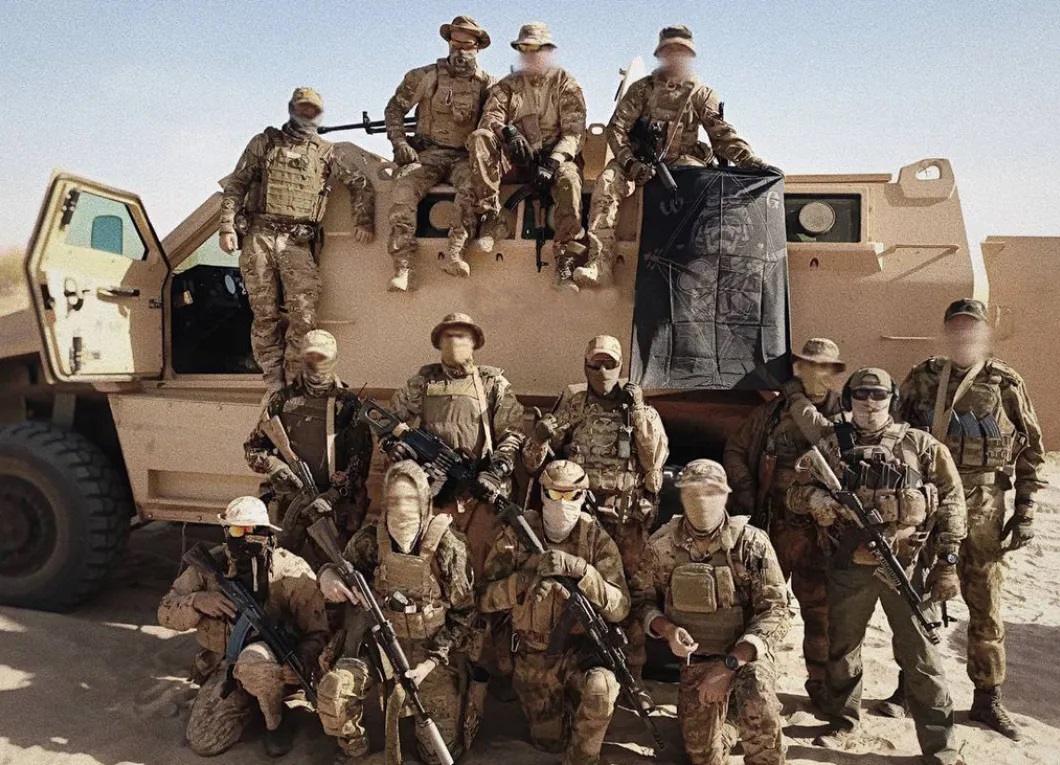
When the infamous Wagner Group of Russian mercenaries announced its withdrawal from Mali earlier this year, it proclaimed on social media that its “mission was accomplished.”
However, the reality of their three-and-a-half-year engagement in counter-terrorism and counter-insurgency operations proved disastrous. Mali, a nation in the Sahel region, tragically remains identified as a global epicenter of terrorism.
A report from August 27 by the investigative body The Sentry highlighted that “despite its combat-ready reputation and occasional claims of public triumphs in Mali, the Wagner Group’s strategy has been marred by a series of failures.”
The Kremlin has since supplanted Wagner with its own paramilitary contingent, known as the Africa Corps, operating under the direct control of the Ministry of Defense. According to a July 29 report from the Timbuktu Institute, up to 80% of the Africa Corps’ personnel are former Wagner mercenaries.
The report further notes that “the Africa Corps inherits Wagner’s legacy of human rights violations, including extrajudicial killings and acts of torture. These abuses, frequently perpetrated with impunity, fuel resentment within various communities and contribute to jihadist recruitment by exploiting existing grievances.”
Interviews conducted by The Sentry with Malian military personnel, intelligence agents, and officials from the Ministries of Finance and Mines reveal a profound animosity among Malian soldiers towards the Russian presence. These Malian sources stated that Wagner fighters consistently disregarded their chain of command and control. Furthermore, Malians attributed security deficiencies and operational blunders, resulting in the loss of personnel and equipment, directly to the Russian mercenaries.
The mercenaries’ brutal tactics and their inconsistent approach to counter-terrorism also failed to secure the trust and confidence of the Malian populace.
The report indicates a “significant surge in attacks against civilians and civilian casualties since Wagner’s arrival in Mali, often linked to Malian security forces and their allied militias. Indeed, the Wagner Group employs tactics that indiscriminately target civilians.”
Reports also document Wagner fighters engaging in sexual violence and mass executions, exemplified by the 2022 Moura massacre. This horrific event saw over 500 civilians killed, with at least 300 men among them systematically executed.
In early 2023, United Nations experts called for an independent inquiry into egregious human rights violations and “possible war crimes and crimes against humanity committed in Mali by government forces and the private military contractor known as the Wagner Group.”
Since 2021, these experts have consistently received “persistent and alarming reports of horrific executions, mass graves, torture, rape, and sexual violence.” Despite numerous calls for investigation within Mali, no tangible results have materialized.
Some soldiers from the FAMa (Malian Armed Forces) directly attributed the scale of the Moura massacre to the Russian mercenaries’ influence over senior army officers.
One FAMa officer confided to The Sentry, stating, “Without Wagner, there would have been no Moura. Not on such a scale, not for such a duration, not with so many deaths.”
Malians largely blame the heavy-handed tactics employed by the Russians for triggering a surge in recruitment among Tuareg separatist fighters and terrorists affiliated with Al-Qaeda and Islamic State.
In a 2024 interview with France24, Amadou Koufa, leader of the Al-Qaeda-affiliated Islamist militant group Katiba Macina, asserted that the Russians’ brutality had galvanized local residents to join the struggle “to defend their religion, their land, and their possessions.”
Russian forces reportedly attacked weddings and funerals using drones, while disturbing videos depicting Wagner fighters abusing Tuareg civilians circulated widely online. These actions further intensified public discontent and fueled recruitment propaganda for extremist groups.
Researchers from the Royal United Services Institute noted in a January 2025 report that “local community leaders in central Mali frequently lament Wagner’s failure to permanently improve the security situation in their region.”
Wagner suffered a devastating defeat in July 2024 when a large convoy of its vehicles was ambushed by multiple terrorist groups near the Malian village of Tin Zaouatine in the country’s North-East. Militants claimed to have killed 84 Russian mercenaries and 47 FAMa soldiers during the engagement.
The relationship between Wagner and the FAMa, according to The Sentry, deteriorated into mutual suspicion. Russian survivors accused Malian intelligence services of underestimating rebel numbers and abandoning them during combat. Conversely, Malian officers alleged that the Russians disregarded command structures, commandeered their vehicles, and openly subjected them to racist treatment.
A high-ranking officer confided to The Sentry, remarking, “We have fallen from Charybdis into Scylla,” a sentiment reflecting a worsening situation.
Anger escalated further following a militant attack on Bamako airport in September 2024, which resulted in over 100 fatalities. Despite Wagner units being stationed nearby, reports indicate they delayed intervention for five hours.
An airport guard told The Sentry, “If you don’t pay them, they don’t move,” suggesting a transactional approach to security.
Charles Cater, Director of Investigations at The Sentry, unequivocally stated that the Wagner Group’s intervention in Mali constitutes a profound failure.
He elaborated, “Heavy-handed and ill-informed counter-terrorism operations have inadvertently strengthened alliances among armed groups threatening the state, led to significant battlefield losses for Wagner, and resulted in a greater number of civilian casualties. Ultimately, Wagner’s deployment served neither the interests of the Malian people or its military government, nor even the mercenary group itself.”
Justyna Gudzowska, Executive Director of The Sentry, emphasized that Mali’s experience should serve as a stark warning.
She warned, “As Moscow extends its influence into the Sahel and attempts to rebrand its presence with the Africa Corps, it is vital to grasp that Wagner was neither the infallible fighting force nor the effective economic actor it purported to be.”
Instead, “the Malian example vividly demonstrates the group’s dual failure, a lesson that should caution other African clients considering the deployment of the Ministry of Defense-backed Africa Corps.”