Mali: Assimi Goïta faces the failure of military escalation
Same category
Mali’s military regime faces critical juncture as security deteriorates
Offensive reveals regime’s vulnerabilities
The limits of populism and misplaced pride have become starkly evident in Mali, where the reality on the ground has caught up with a regime entrenched in its own certainties. On April 25, a series of coordinated assaults by the Group for the Support of Islam and Muslims (JNIM), an Al-Qaeda affiliate, and the Azawad Liberation Front (FLA) targeted several military positions, including areas surrounding Bamako. Tragically, Defense Minister Sadio Camara lost his life in these attacks. Further north, strategic locations such as Kidal slipped from the control of the Malian army.
This widespread offensive has laid bare the inherent weaknesses of a government that had staked its legitimacy primarily on the promise of territorial reconquest. For any Sahel Insider seeking a deeper Sahel analysis English, these events highlight a troubling trend in West Africa insider news.
Sovereignty claims mask escalating insecurity
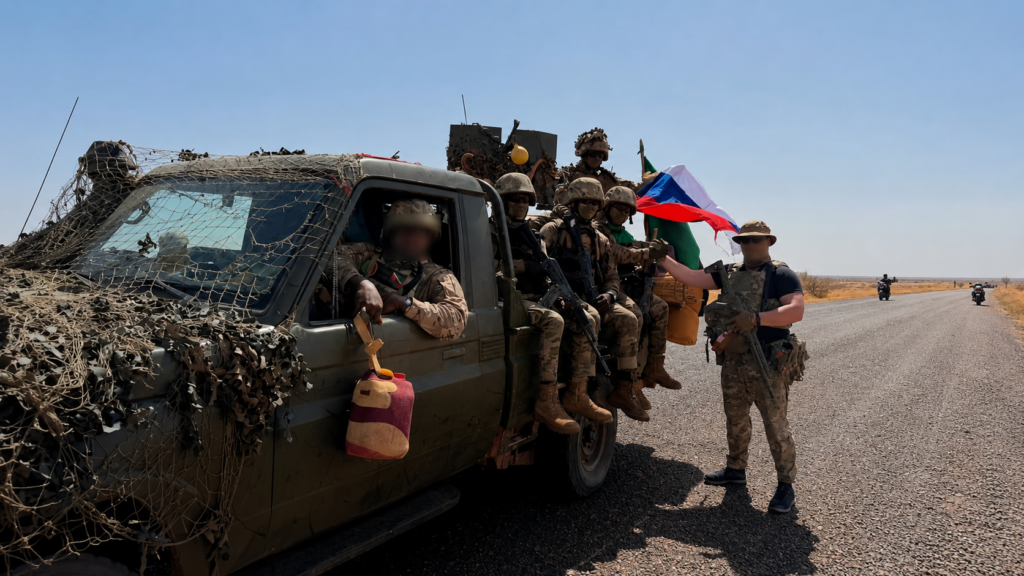
By severing ties with France, orchestrating the departure of MINUSMA, and relying on Russian Africa Corps mercenaries, the Malian junta vowed to usher in an era where Mali would finally control its own destiny. Yet, the reality has proven far more brutal: jihadist armed groups and Touareg rebels from the Azawad Liberation Front continue to expand their territorial influence, Bamako remains on edge, and civilian populations bear the brunt of the escalating conflict. This trajectory is a key point in any Mali Burkina Niger analysis.
The rhetoric of national sovereignty has largely served as a smokescreen for an authoritarian consolidation of power. Political parties have been silenced, journalists intimidated, and any form of criticism is swiftly branded as an act of treason, further eroding democratic space and stability in Sahel politics.
A regime besieged from within and without
Mali now finds itself caught in a tightening vice, having reached its military and political limits. Externally, jihadist forces continue to demonstrate an undiminished capacity for disruption and violence. Internally, the weariness of power and deepening military rivalries fuel an environment of profound uncertainty.
The initial promise of national salvation has devolved into a critical impasse. General Goïta, who sought to embody the restoration of the state and Malian pride, now risks being remembered by history as the leader who presided over its fragmentation.
Latest news