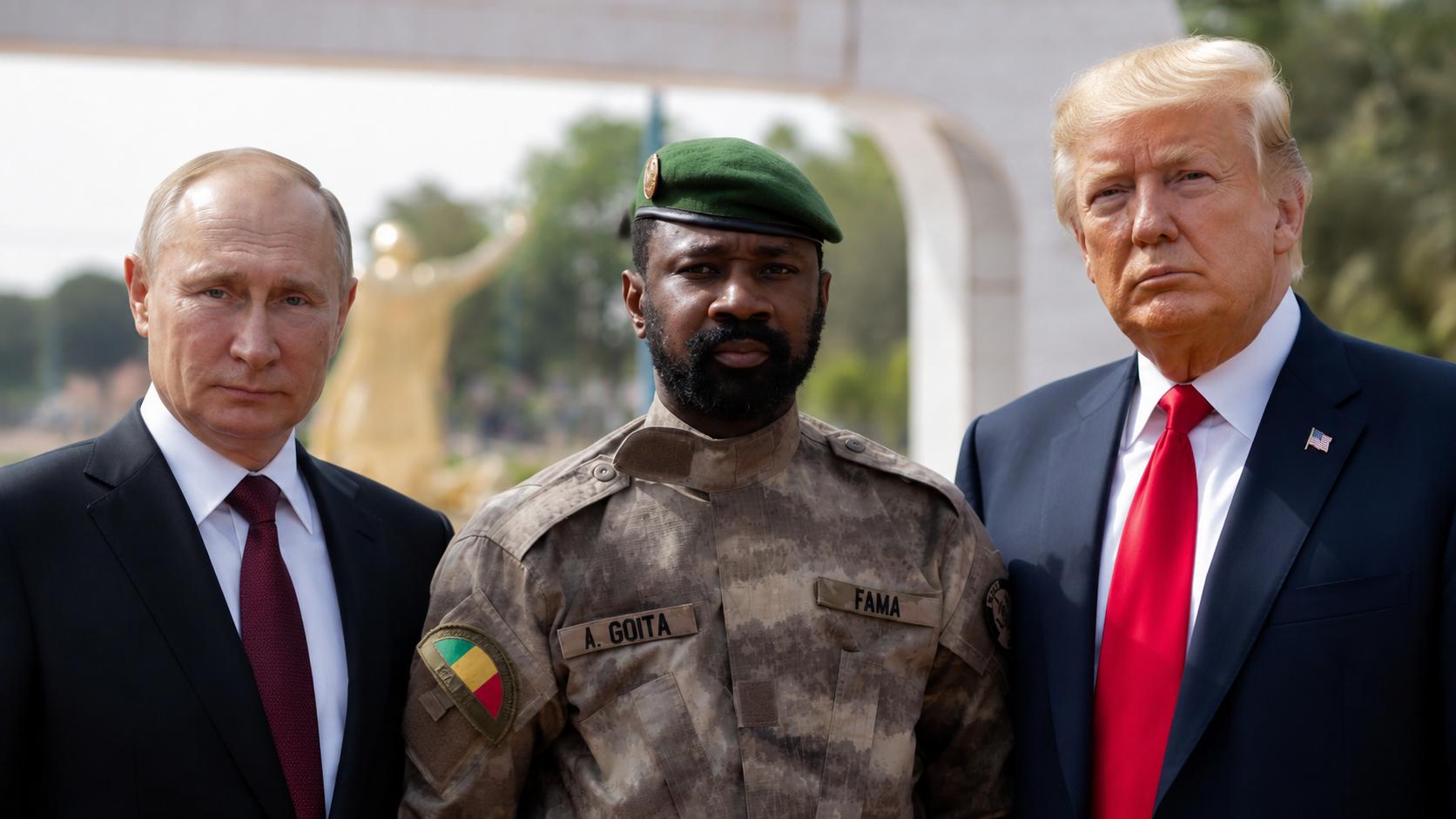
The notion that aligning with Moscow would provide a miraculous solution has undeniably faded in Mali. While the Malian transitional government maintains a narrative of self-reliance and animosity towards Western allies, the reality on the ground is stark: security continues to deteriorate rapidly, and the strategy championed by Russian paramilitaries is sinking into a critical quagmire. This situation demands a fresh Mali security crisis analysis.
The deepening security quagmire with Africa Corps
Three years have passed since Russian mercenaries, initially operating under the Wagner banner and now rebranded as Africa Corps, first deployed. The outcome of Moscow’s assistance has proven particularly dire:
- Operational Incapacity and Costly Setbacks: Far from eradicating the threat, Africa Corps forces have accumulated tactical defeats. Evidence includes violent ambushes suffered in the North, notably around Anéfis, and regular assaults targeting joint airbases.
- Terrorist Threat Expansion: The Group for the Support of Islam and Muslims (JNIM), an Al-Qaeda affiliate, has never appeared stronger or better equipped. The menace has shifted southward, now endangering the country’s economic and institutional heart, posing a significant risk of strangulation to the capital. This highlights the urgent need for West Africa insider news on the evolving threat.
- Strategic Disadvantage: Deprived of high-precision aerial intelligence, projection capabilities, and advanced technological resources previously provided by multilateral partnerships, the Malian Armed Forces (FAMA) and their Russian allies find themselves in a state of constant vulnerability.
The American option: precision technology to neutralize JNIM
Given the entrenchment of the Russian paramilitary approach, recent revelations from Washington regarding discussions for targeted strikes against JNIM present a strategic opportunity that Mali cannot afford to overlook. Shifting away from the large-scale ground interventions of the past, the model of high-precision strikes being considered by the American administration offers significant tactical advantages:
- Decisive Technological Superiority: Leveraging an unparalleled intelligence chain, including ROIM (Reconnaissance, Observation, Intelligence, Surveillance), MALE drones, and satellite targeting, the United States possesses the capability to decapitate JNIM’s command structure and neutralize its senior leaders without deploying ground troops.
- Targeted Response to Terrorist Expansion: By striking at the core of JNIM’s logistics, these operations could immediately alleviate military pressure on Malian garrisons and break the momentum of armed groups extending towards the Gulf of Guinea. This is crucial for Sahel politics stability.
- Overcoming Russian Partnership Limitations: Where Russian methods are hampered by a deficit in targeting capabilities and heavy air support, American strike power offers a surgical response capable of dismantling the asymmetric threat without miring the country in a war of attrition.
Beyond dogma: safeguarding the nation
While the transitional government insists on a principle of self-sufficiency that now proves illusory, the stark reality of the numbers and the distress of rural populations serve as a reminder that no nation can single-handedly defeat a transnational terrorist threat of this magnitude.
To refuse the support of American interception and strike capabilities due to ideological posturing, while maintaining a demonstrably ineffective Russian partnership, represents a disproportionate risk. To halt JNIM’s advance and restore territorial integrity, military rationality dictates overcoming political obstacles and seizing the only technological leverage capable of tipping the balance of power. This is a critical juncture for Mali Burkina Niger analysis.