Crédit photo, Getty Images
Malian authorities recently announced substantial financial rewards, up to 2 billion FCFA, for information leading to the capture of Iyad Ag Ghaly, the influential leader of the Sahelian jihadist group JNIM, and several of his associates. This decisive move by the Malian government comes in the wake of recent combined assaults on Kidal and Kati, attributed to both jihadist factions and separatists from the FLA.
In an official statement signed by Mali’s Minister of Security and Civil Protection, Major General Daoud Aly Mouhammedine, the government urged the populace to actively collaborate with national armed and security forces. The objective is to assist in locating seven individuals identified as significant threats to national security across Mali and the broader West Africa region.
Details of Mali’s Announced Bounties
Crédit photo, Getty Images
The Ministry of Security and Civil Protection broadcast its communiqué on state television, stating: “As part of the fight against terrorism and the preservation of national security, the Government of the Republic of Mali informs the public that a financial reward is offered to anyone providing reliable, relevant, and actionable information leading to the arrest or neutralization of the individuals designated below.” This move underscores Mali’s commitment to tackling Sahel politics and security challenges head-on.
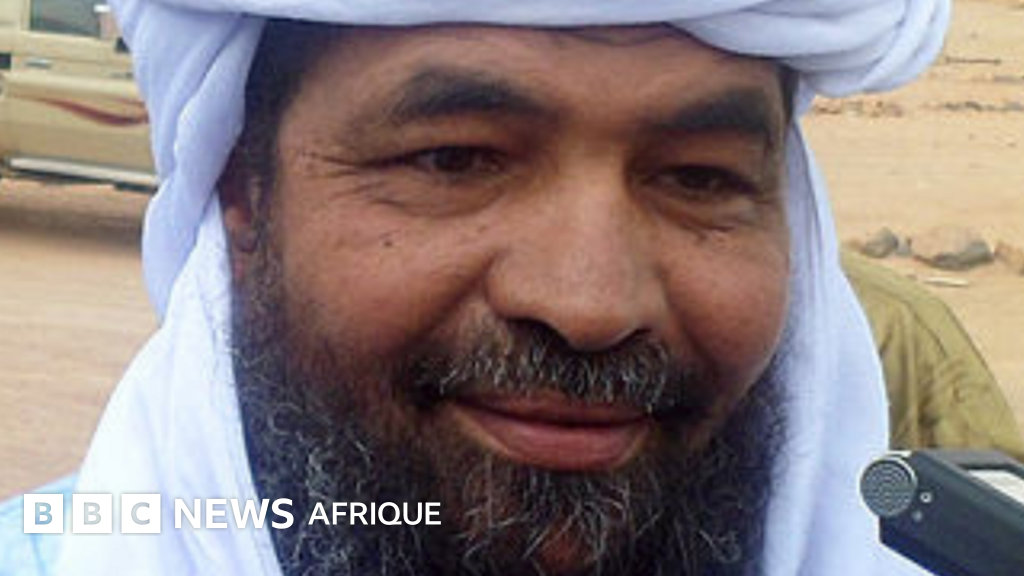
The highest reward, 2 billion FCFA, is designated for the capture of Iyad Ag Ghaly, the formidable leader of Jama’at Nusrat al-Islam wal-Muslimin (JNIM), also widely recognized as the Group for the Support of Islam and Muslims (GSIM).
Following Ag Ghaly, rewards of 1.5 billion FCFA each are offered for Amadou Koufa, head of the Katiba Macina, and Abdoulaye Mohamed, known by his alias Habib, also a prominent figure within the Katiba Macina.
The fourth individual on the list is Algabas Ag Intallah, a key political and military personality within the Front de Libération de l’Azawad (FLA), with a bounty of 1 billion FCFA for his capture.
Rounding out the list are three other leaders from the Front de Libération de l’Azawad: Ghita, Bilal Chérif, and Abderrahmane Al Banna, each with a reward of 500 million FCFA.
This significant announcement directly follows the coordinated assaults on April 25, which were carried out by JNIM jihadists and FLA separatists. These attacks tragically resulted in the death of Mali’s Defense Minister, Sadio Camara, highlighting the urgent need for these Mali jihadist bounties.
Understanding Iyad Ag Ghaly: A Profile of the Sahel’s Most Wanted
Crédit photo, Romario Ollo Hien/AFP via Getty Images
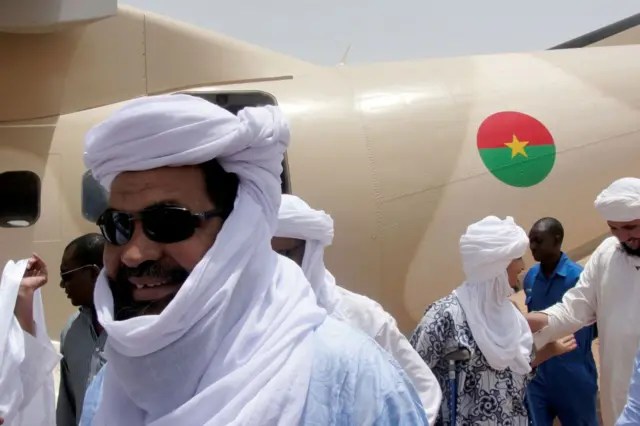
Born in 1958 in Boghassa, located in Mali’s northern Kidal region, Iyad Ag Ghaly stands as a prominent Tuareg warlord and Malian jihadist. His journey from a young refugee to a formidable militant leader is extensive.
During the 1970s, Ag Ghaly sought refuge in Libya, where he, like many other young Tuaregs, joined Colonel Muammar Gaddafi’s forces. He saw combat experience in both Lebanon and Chad, honing his tactical skills.
Upon his return to Mali in the early 1990s, he established the Popular Movement for the Liberation of Azawad (MPLA), igniting a significant Tuareg rebellion. His leadership continued with the creation of the Popular Movement of Azawad (MPA), which engaged in conflict with the Malian state before a peace protocol was signed in 1992.
A pivotal shift towards Islamism and jihadism marked his later years. By 2007, he had radicalized and forged ties with jihadists from the GSPC, a group that later became known as Al-Qaeda in the Islamic Maghreb (AQIM).
In 2012, Ag Ghaly founded the Salafist jihadist group Ansar Dine, aligning it with AQIM’s fight. Five years later, in 2017, he established and assumed leadership of the Group for the Support of Islam and Muslims (GSIM), or JNIM. This powerful coalition brought together several Malian jihadist groups under a unified banner, pledging allegiance to both AQIM and Al-Qaeda.
Experts from the Timbuktu Institute have described Iyad Ag Ghaly as “the most wanted man in the Sahel and the greatest threat to the Malian government.” His strategic evolution is noteworthy, impacting Sahel analysis English discussions.
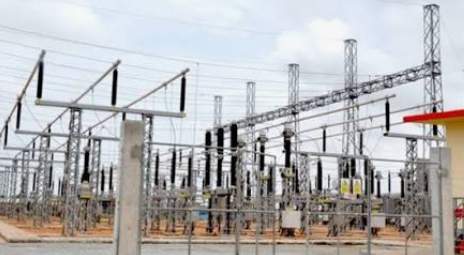
The think tank, led by Dr. Bakary Sambe, observed a shift in his tactics in recent months. Instead of solely engaging in direct military confrontation, he has adopted an “economic blockade” strategy. This involves disrupting major supply routes and targeting critical infrastructure, such as power lines, to impede the flow of food, fuel, and energy into the capital. His aim is to make daily life unsustainable for residents, thereby destabilizing the country from within.
According to the Timbuktu Institute’s analysis, Ag Ghaly’s ultimate goal is political: to isolate the current regime in Bamako and instigate its collapse, rather than to directly govern Mali. He reportedly prefers to exert influence from the shadows, controlling events remotely.
The Institute emphasizes the severe nature of this threat to the Malian government, noting that it extends beyond conventional military engagements, directly affecting the daily lives of Malians. This situation compels the authorities to urgently devise new strategies to safeguard the nation’s core.
An international arrest warrant has been active against Iyad Ag Ghaly for several years, issued by the International Criminal Court (ICC). He faces accusations of crimes against humanity and war crimes allegedly committed between 2012 and 2013.
JNIM, an Al-Qaeda affiliate, remains one of the most active jihadist groups operating across the Sahel, sowing terror in Mali, Niger, and Burkina Faso, the nations comprising the Alliance of Sahel States (AES).
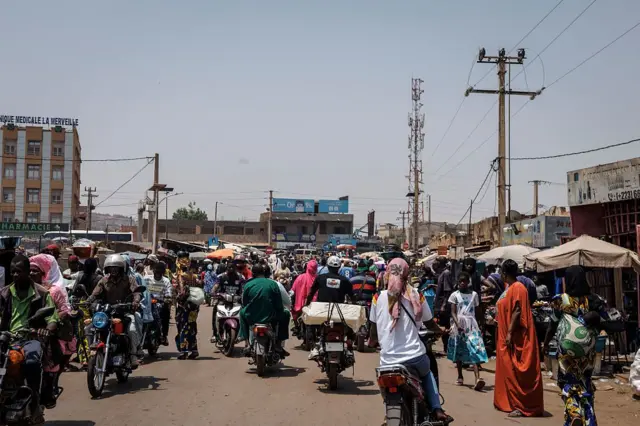
In a related development, authorities have imposed a ban on medium and large-engine motorcycles, citing their superior power and speed. Smaller displacement motorcycles remain unaffected by this measure.
Furthermore, the government has suspended the importation and sale of motorcycles and their spare parts for a period of one year. Traders are granted a three-month window to declare their existing stocks; any undeclared motorcycle inventories after this period will be subject to seizure by the authorities.