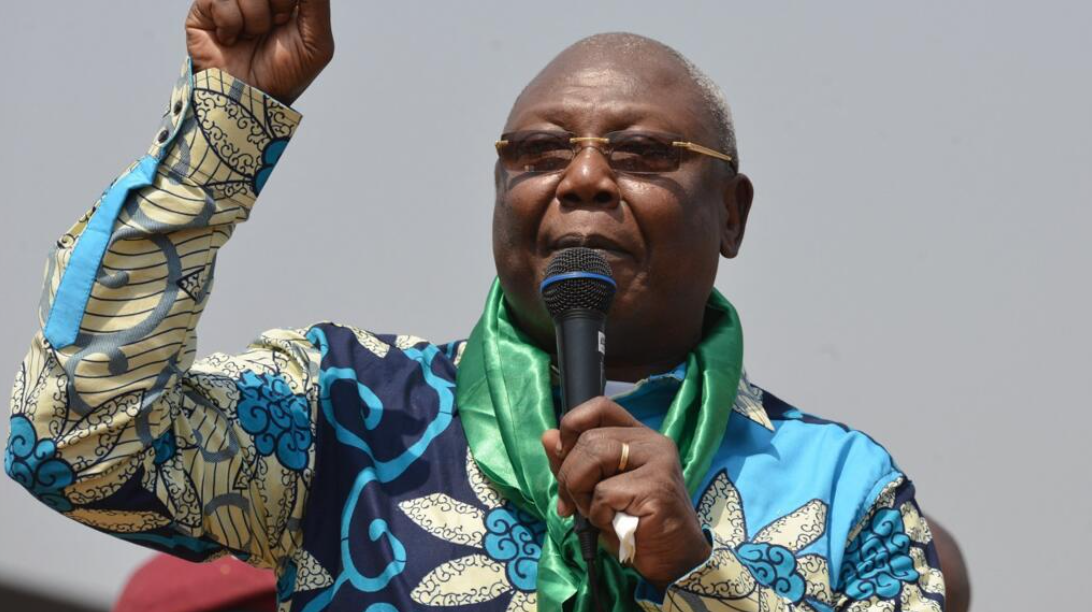
Following Faustin Archange Touadéra’s inauguration, marking the beginning of the Seventh Republic, Martin Ziguélé, former prime minister and leader of the MLPC, has spoken out amidst a tense political backdrop characterized by persistent friction between the ruling power and the opposition.
In an interview from Bangui, Ziguélé paints a concerning picture of the current situation. He argues that after a decade under the current regime, the daily lives of Central Africans have not improved. He emphasizes the urgent need for genuine dialogue between political leaders and civil society stakeholders to reverse this trend.
To support his argument, the opposition leader cites alarming poverty statistics. According to a 2016 benchmark, over half the population lived below the poverty line (less than 1,000 CFA francs per day); by 2026, this figure is projected to reach approximately two-thirds of the population. This is compounded by structural issues such as limited access to water and electricity, dilapidated transport networks, and the proliferation of illegal roadblocks. The decline in agricultural sectors, he says, reflects the country’s economic downturn. Key crop yields have plummeted – cotton production, which once approached 100,000 tons, now hovers around 2,000 tons – and historical crops like coffee no longer have reliable statistics. Given these conditions, Ziguélé believes recovery requires extensive political and economic reforms.
dialogue: a must for moving forward
In his view, discussion between political factions is non-negotiable. In a democracy, dialogue should be seen as a crucial tool for resolving impasses. He points out that the majority of the population lives in rural areas and directly suffers the consequences of isolation and the collapse of production chains. After his inauguration on March 30, 2026, Faustin Touadéra presented a positive assessment of his two terms, while acknowledging significant challenges. However, Martin Ziguélé believes that without broad and sincere consultation involving all active forces in the nation, it will be difficult to initiate the reforms needed for recovery.