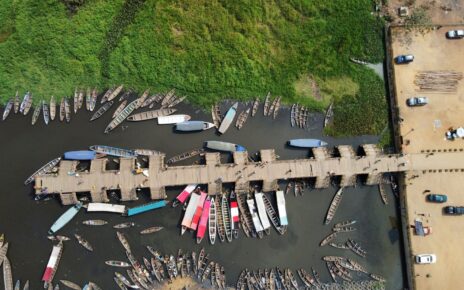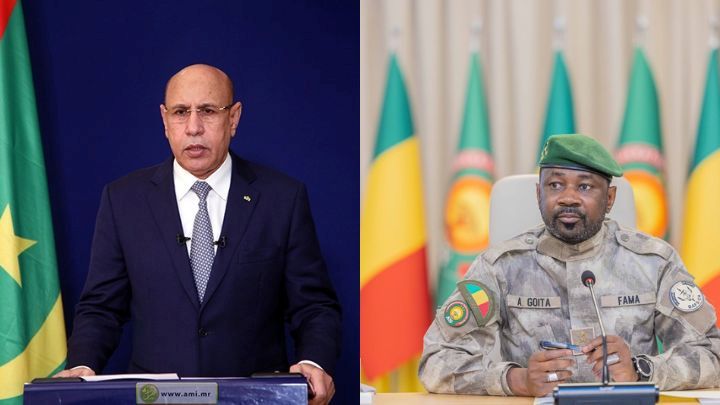
The recent fires that have engulfed trucks along the Sahelian border regions are far from isolated security incidents. Instead, they signal a deepening crisis along the once-stable commercial arteries connecting Mauritania, Morocco, and northern Mali. These trade routes, once relied upon to supply essential goods to remote Malian communities, now face persistent insecurity, further straining access to food and vital supplies.
Trade flows that once supplied markets in Tombouctou and Gao via Mauritanian territory have dwindled significantly. The historic trans-Saharan routes, which once facilitated the movement of goods, now face mounting disruptions, destabilizing an already fragile economic balance in northern Mali.
For decades, Mauritania played a pivotal role in the commercial networks linking Morocco to northern Mali. Goods transited through its ports before reaching major cities in the region, relying on long-standing trade networks rooted in the ancient caravan routes of the Sahara.
Umar Al-Ansari, an analyst familiar with the region, notes that Mauritania has long been a lifeline for northern Mali. He highlights: « Mauritania served as a critical artery for the Malian north, not only as a transit point for goods but also as a sanctuary for those fleeing instability. Since 1991, Nouakchott has kept its borders open to waves of Malian refugees. Recent estimates show that over 300,000 Malians—refugees and asylum seekers—now reside in eastern Mauritania, particularly in the Mbera camp and surrounding villages. »
Security cooperation slowly erodes
This openness also contributed to strengthening border security efforts. Mauritanian authorities managed, through early measures, to curb armed threats and limit their spread into frontier zones. However, this cooperative dynamic has gradually unraveled amid a broader deterioration in regional security.
The actions of Mali’s transitional authorities, coupled with the involvement of foreign military partners—particularly Russian forces—have reshaped perceptions of the relationship between the two nations. Border areas have increasingly become theaters of military operations and civilian tensions, marked by arrests, armed clashes, and accusations of collaboration with armed groups. These incidents have progressively weakened the traditional cooperation mechanisms between border communities.
Local networks crumble under rising instability
According to Al-Ansari’s analysis, this erosion has directly undermined the decades-old local networks that sustained the frontier’s economy. He explains: « Each incident—kidnappings, accusations, or clashes—has weakened the traders, herders, traditional leaders, and transporters who once structured frontier life. This loss of trust has created vacuums that armed groups have exploited, seizing control of zones once dedicated to commerce and human movement. »
Today, the routes connecting Mali to Mauritania are increasingly plagued by insecurity, with frequent disruptions that cripple trade flows and further isolate northern Mali.
Once seen as a stabilizing force and a key partner for Bamako, Mauritania has gradually distanced itself from cooperative initiatives. This shift reflects a deeper realignment in bilateral relations, driven by escalating security tensions and shifting regional alliances.