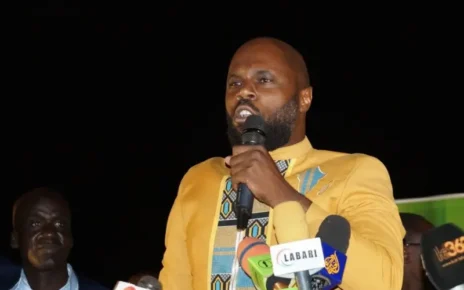
The imminent verdict from South Africa’s courts regarding the fate of Kémi Séba, the controversial panafricanist activist arrested in April while attempting to enter Zimbabwe illegally, raises a profound question: Is he truly the modern face of panafricanism? With over 1.5 million social media followers, Séba embodies a vocal, if divisive, current within the movement. His arrest, linked to charges in Benin for state security violations, underscores tensions between radical activism and institutional governance.
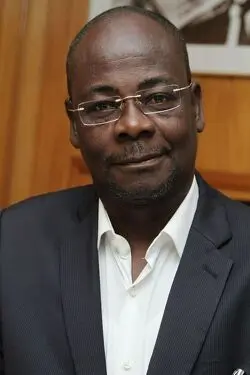
Venance Konan, a seasoned analyst of African geopolitics, examines the contradictions of contemporary panafricanism through Séba’s case, questioning whether his brand of activism aligns with the movement’s historical ideals of unity, emancipation, and dignity.
The arrest of Kémi Séba—a Beninese–Nigerien dual national with French citizenship revoked—alongside his 18-year-old son and a South African white supremacist, François Van der Merwe, reveals troubling alliances. Séba, founder of the Urgences panafricanistes NGO, is notorious for his anti-French rhetoric, opposition to the CFA franc, and antisemitic views. His arrest in Pretoria came as he allegedly sought to travel to Zimbabwe and possibly Europe, facing charges in Benin for inciting rebellion.
Propaganda and autocratic alliances
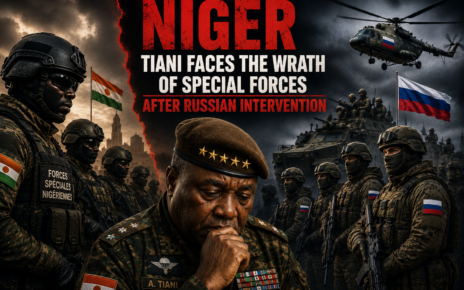
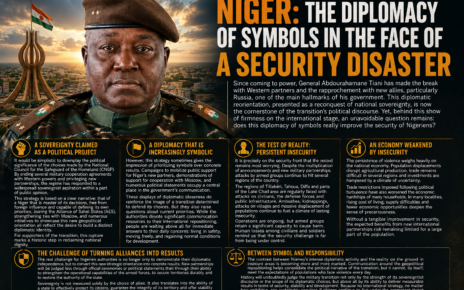
Séba is part of a trio of francophone panafricanist voices—alongside Franklin Nyamsi and Nathalie Yamb—who dominate online debates with their strident anti-Western rhetoric. Yet their activism often aligns with pro-Russian propaganda and support for the military juntas of the Alliance of Sahel States (AES): Mali’s Assimi Goïta, Burkina Faso’s Ibrahim Traoré, and Niger’s Abdourahamane Tiani. This raises a critical question: Does panafricanism today mean opposing France only to align with Russia and its autocratic allies?
The movement’s origins trace back to early 20th-century Black intellectuals in the Americas and the Caribbean, who fueled anticolonial struggles across Africa. Figures like Kwame Nkrumah of Ghana, Sékou Touré of Guinea, and Patrice Lumumba of the Democratic Republic of the Congo embodied its ideals. The Fédération des étudiants d’Afrique noire en France (FEANF), a student union founded in 1950, became a hub for panafricanist thought, advocating for decolonization and continental unity—despite facing severe repression from French authorities.
From unity to fragmentation
The post-independence era saw panafricanism’s promise fade into micro-nationalisms. Instead of continental unity, Africa witnessed secessions like Eritrea’s independence and the Sudan’s division. The transformation of the Organisation of African Unity (OAU) into the African Union (AU) in 2002, spearheaded by Libya’s Muammar Gaddafi, failed to revive the dream of unity. The New Partnership for Africa’s Development (NEPAD), launched in 2001, also lost momentum amid unrelenting challenges.
Empty rhetoric and realpolitik
Today, panafricanism is often reduced to political posturing. Leaders like Ivory Coast’s Laurent Gbagbo, who revived his Parti des peuples africains-Côte d’Ivoire (PPA-CI), or Senegal’s PASTEF party, use the label without tangible commitment. Meanwhile, African nations oscillate between hostility toward fellow Africans—such as South Africa’s xenophobic policies—and regional tensions, like those between Sahel states and ECOWAS members.
The modern panafricanist movement, as represented by Séba, Nyamsi, and Yamb, is increasingly criticized for its inconsistencies. All three—once French citizens now stripped of nationality or sanctioned by the EU—claim persecution for their anti-Western stance. Yet their alignment with Russian geopolitical interests and support for authoritarian regimes betray the movement’s founding principles. As Séba allegedly admitted in a leaked conversation, some of his peers are accused of being opportunists serving Togo’s Faure Gnassingbé. The question remains: Is this panafricanism or a cynical distortion of it?
In a world dominated by predatory powers, Africa’s survival hinges on genuine unity. But the panafricanism of today—rent by contradictions, hijacked by propaganda, and weaponized for political ends—risks becoming a hollow ideal rather than a transformative force.