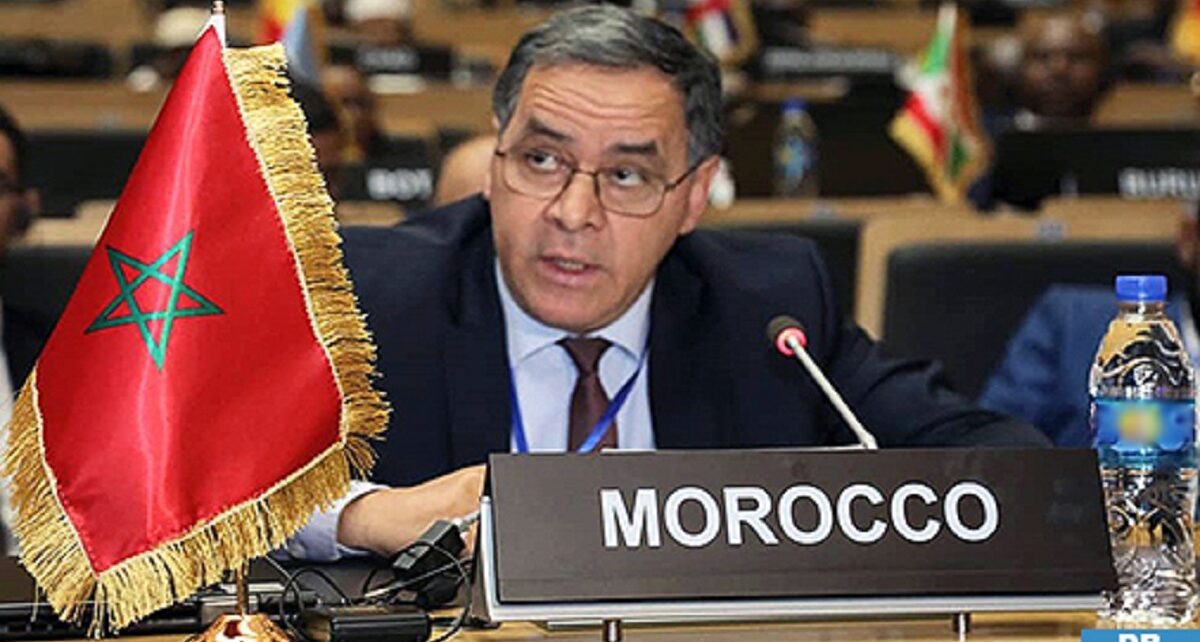
The Moroccan delegation, led by Ambassador Mohamed Arrouchi, has placed the 2015 Skhirat Agreement at the forefront of Libya’s political recovery efforts during a high-level session at the African Union’s Peace and Security Council.
Morocco’s diplomatic push for Libyan reconciliation
The Ambassador, who serves as Morocco’s Permanent Representative to the African Union and the UN Economic Commission for Africa, emphasized the Kingdom’s unwavering commitment to fostering national reconciliation in Libya. His address highlighted Morocco’s long-standing role in facilitating dialogue between Libyan factions from Tripoli and the eastern region, including key meetings in Bouznika and recent negotiations in Tripoli and Zenten.
Arrouchi reiterated that the Skhirat Agreement—signed under UN auspices on December 17, 2015—remains the cornerstone for achieving a lasting political settlement in Libya. He stressed that any solution must uphold the country’s unity, sovereignty, and territorial integrity, rejecting military intervention as a viable path forward.

African Union’s role in Libya’s stability
During the session, Morocco praised the African Union’s efforts to promote peace and stability across the continent, particularly its initiatives aimed at resolving Libya’s protracted crisis. The Ambassador highlighted the January 7, 2026 agreement signed in Tripoli between representatives of the Government of National Unity and the eastern Libyan government as a significant milestone in the reconciliation process.
Arrouchi underscored that Morocco’s diplomatic engagement aligns with international legality and the principles outlined in the Skhirat Agreement and the Bouznika understandings. The Kingdom continues to advocate for a political resolution, advocating for dialogue over confrontation and ensuring that Libya’s future is shaped by its own institutions, free from foreign interference.
A united front for Libya’s future
The Moroccan stance reflects a broader regional consensus on the need for inclusive negotiations to end Libya’s decade-long turmoil. By reinforcing the Skhirat Agreement’s relevance, Morocco positions itself as a key mediator, bridging divides between Libyan factions while reinforcing the importance of African-led solutions to the crisis.