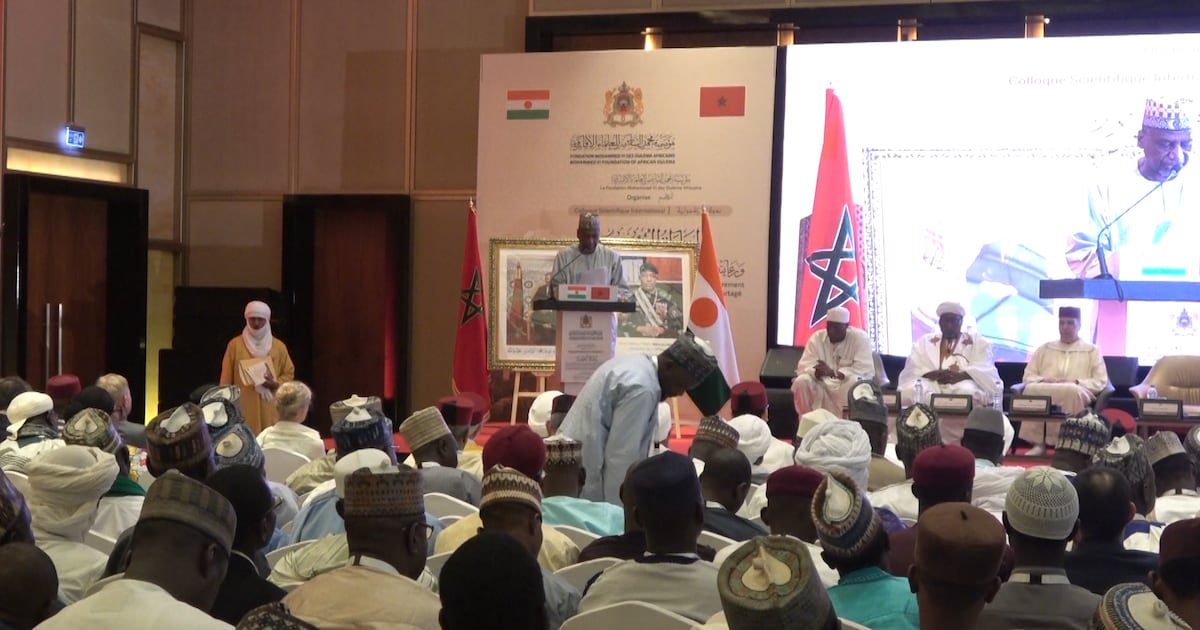
Niamey recently became the epicenter of a pivotal two-day international symposium, where scholars and religious leaders converged to explore the role of faith in fostering harmony across Africa. Organized by the Mohammed VI Foundation of African Ulemas on June 6-7, the event centered on “The Commandership of the Faithful and its impact on shaping Africa’s religious landscape and shared human heritage“.
Promoting Islamic moderation in challenging times
The gathering unfolded against a backdrop of rising religious tensions across the continent. Ibrahim Hamgar, Secretary-General of the Foundation’s Niger branch, emphasized the urgency of the discussions: “In these turbulent times—especially in Africa—where divergent religious interpretations often spark division, our goal was to illuminate the true essence of Islam: moderation, tolerance, and peaceful coexistence. These values are essential for bridging divides and fostering social cohesion among Muslims.“
Strengthening Niger-Morocco ties through faith-based initiatives
The symposium also underscored the deepening partnership between Niger and Morocco. Mohamed Iboumraten, Morocco’s Ambassador to Niamey, highlighted a flagship collaboration: “Our two nations have built an exemplary model of cooperation in critical areas, including Islamic affairs. A standout initiative is the imam and preacher training program, running from 2019 to 2025. Under this initiative, 200 religious leaders—including women—receive annual scholarships for a two-year program at the Mohammed VI Institute in Rabat.“
Religion as a pillar of stability in the Sahel
Souleymane Issakou, Secretary-General of Niger’s Ministry of Foreign Affairs, stressed the broader implications of the discussions. “The presentations and debates revealed how religion can serve as a cornerstone for stability, social cohesion, and intercultural dialogue in African societies—particularly in the Sahel, where security, social, and ideological challenges persist.“
The event concluded with the adoption of a final communiqué and recommendations, reaffirming a shared vision: that peace is not merely a political or military achievement but a spiritual and intellectual endeavor rooted in dialogue and mutual understanding.