Niamey under lock-down as clashes erupt near key airport
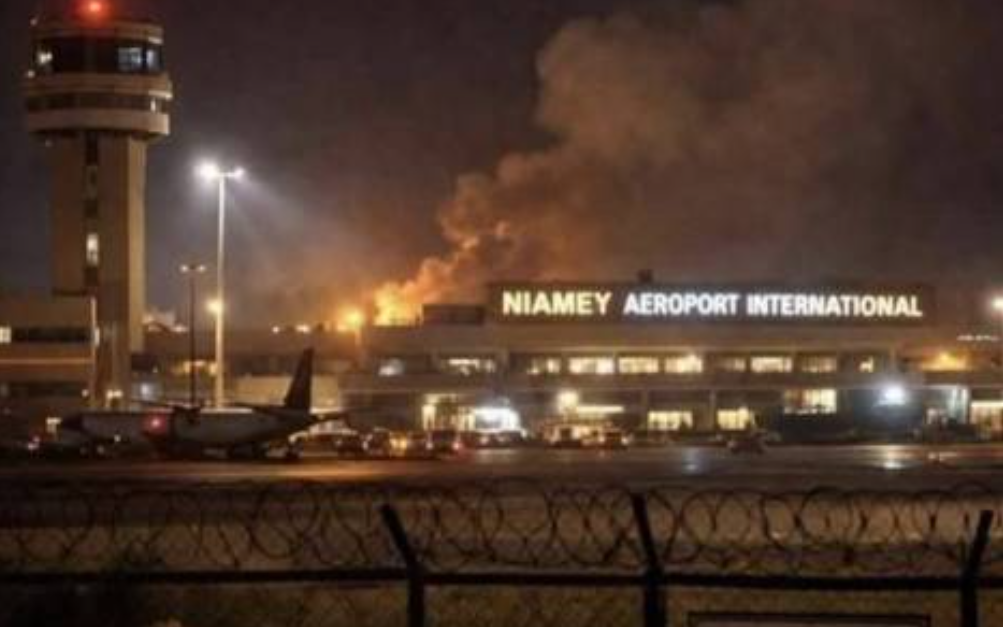
Tensions soared in Niamey this morning after sustained gunfire erupted near the Diori Hamani International Airport, persisting for nearly two hours. While the immediate area has since fallen silent, the capital remains on edge with security forces conducting sweeping operations across the city. The incident has reignited fears of deepening instability in a nation already grappling with persistent security threats.
Morning chaos unfolds near strategic airport
The unrest began at dawn, shattering the calm with automatic gunfire and explosions echoing around the airport perimeter. For two consecutive hours, the area was engulfed in violent exchanges, sending shockwaves of panic through nearby neighborhoods.
Eyewitnesses described scenes of chaos as civilians abandoned their cars and rushed for cover. Security forces swiftly mobilized to counter the assault, though the attackers’ identities and motives remain shrouded in uncertainty. No official casualty or damage reports have been released by military authorities.
Capital locked down as security operations intensify
By mid-morning, the intensity of the fighting had subsided, but the situation remains far from resolved. Elite military units are currently sweeping the airport grounds to eliminate any lingering threats and secure critical infrastructure. Meanwhile, the city has been placed under unprecedented security measures.
Key government sites, including the presidential palace and prime minister’s offices, are now cordoned off by armored vehicles and heavily armed personnel. Roadblocks have been established at major entry points to the city center, with authorities urging residents to limit their movements. This drastic response underscores the government’s heightened concern over potential threats to the transitional leadership.
Niger’s history of urban violence resurfaces
This morning’s attack is not an isolated incident but part of a disturbing pattern of security breaches that have plagued Niger since the 2023 coup. The country has witnessed a surge in sophisticated assaults, not only along its borders but also within its urban centers.
The memory of the failed 2021 coup attempt—just days before former President Mohamed Bazoum’s inauguration—still looms large. At the time, heavy gunfire erupted near the presidential compound. More recently, deadly ambushes by non-state armed groups have devastated regions like Tillabéri and Diffa, areas notorious for their cross-border instability. The Diori Hamani Airport, a vital military and civilian logistics hub, has long been viewed as a prime target by both terrorist networks and disgruntled military factions.
Regional alliances struggle to curb rising threats
The assault serves as a stark reminder of the challenges facing Niger’s military regime. Despite the formation of the Alliance of Sahel States with Mali and Burkina Faso, the promise of eradicating insecurity has yet to materialize. The porous borders and proliferation of armed factions continue to cast a shadow over the country’s stability.
Observers and international partners are closely monitoring the situation, aware that prolonged instability in Niamey could have ripple effects across the already fragile Sahel region, where recurring humanitarian crises have left deep scars.
Uncertainty lingers as security sweep continues
The temporary lull in fighting near the airport offers little comfort to Niamey residents. Questions remain unanswered: Who orchestrated the attack? What were their objectives? With military operations still underway and an atmosphere of apprehension gripping the city, the nation holds its breath. This episode underscores a harsh truth: despite the authorities’ reassurances, peace and security in Niger remain fragile and contingent on the shifting sands of a volatile landscape.