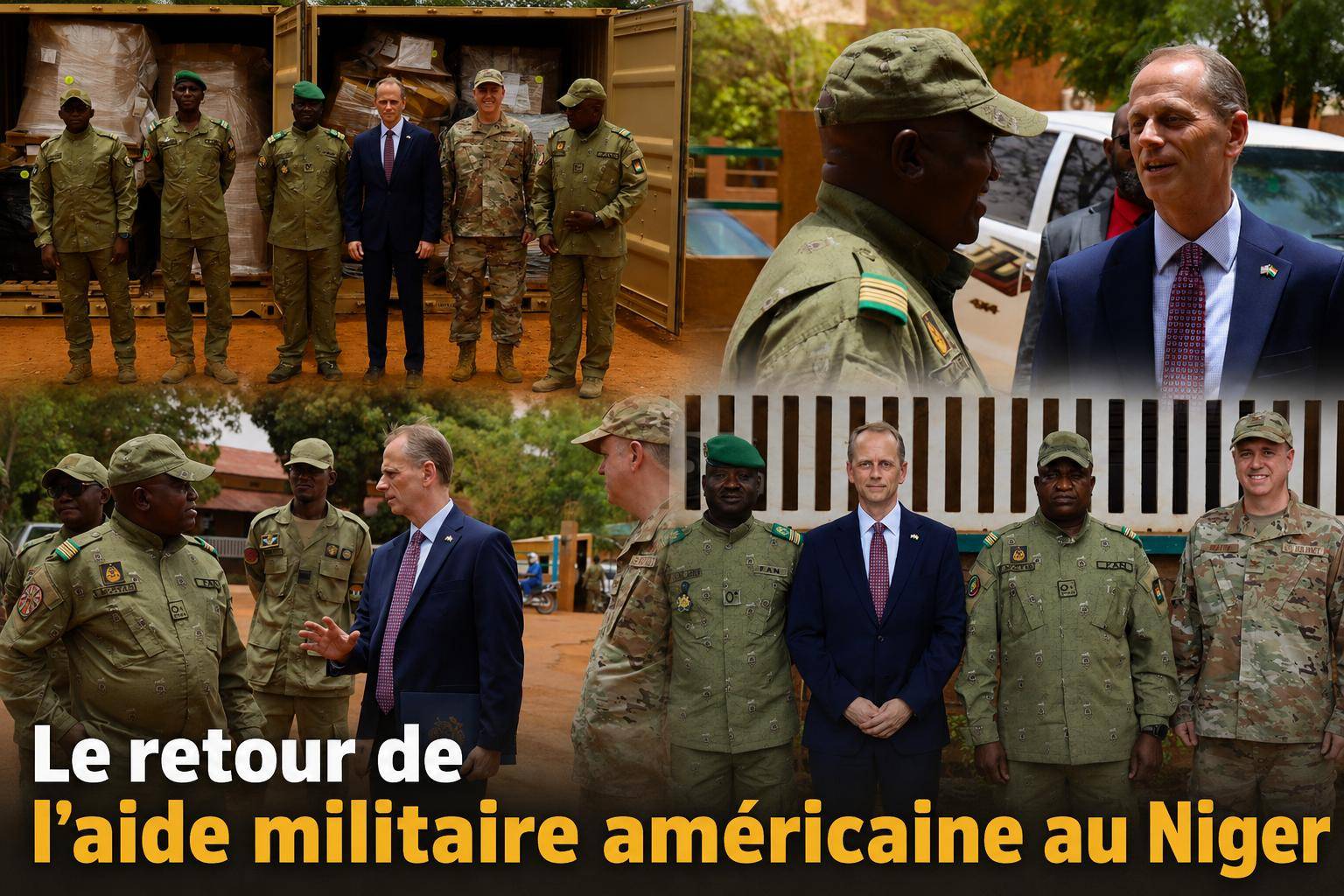
Niamey receives strategic military aid from Washington
The Nigerien Armed Forces (FAN) logistics center in Niamey marked a significant moment in regional security operations on May 26, 2026. Nine large shipping containers arrived carrying advanced American military equipment, delivered directly from U.S. military stockpiles. This donation represents a major boost to Niger’s counterterrorism and border security capabilities.
The ceremony at the FAN logistics facility highlighted the immediate operational benefits of this equipment. According to military sources, the shipment includes critical spare parts, tactical communication systems, personal protective gear, and first-line maintenance tools. These resources are designed to enhance the rapid deployment and repair capabilities of Nigerien units operating in high-risk zones.
Enhancing operational readiness against regional threats
The timing of this military aid couldn’t be more crucial. Niger continues to face persistent asymmetric threats across its southern and western borders, particularly in the volatile tri-border region shared with Mali and Burkina Faso, as well as the Lake Chad basin. The Defense Ministry confirmed that these new resources will be immediately deployed to support counterterrorism operations, disrupt transnational criminal networks, and strengthen border surveillance.
For frontline soldiers, this equipment infusion provides much-needed operational breathing space. The rugged terrain of northern Niger demands reliable communication systems and quick repair capabilities—both of which are now being enhanced through this American support.
From political rupture to pragmatic cooperation
This shipment symbolizes a remarkable shift in Niger’s foreign policy approach. Just two years prior, authorities had terminated military cooperation agreements with Western partners in the name of national sovereignty. The American drone base in Agadez was among installations that were closed and personnel withdrawn.
Yet the escalating jihadist violence across the Sahel has forced a reevaluation of hardline positions. This American military donation demonstrates that diplomatic channels remained open despite official rhetoric. The Nigerien government has chosen to prioritize practical security needs over ideological posturing—a decision that underscores the primacy of battlefield effectiveness over political dogma.
Balancing multiple security partnerships
Niger’s leadership appears to be pursuing a sophisticated security strategy that maintains options with multiple partners. While deepening defense ties with Russia, Turkey, and Iran, Niamey has simultaneously renewed engagement with Washington. This balanced approach reflects a clear understanding that no single ally can provide all necessary military solutions.
The United States, for its part, has adopted a pragmatic stance. After suspending most assistance following the 2023 political transition, Washington has now chosen to provide targeted support that avoids large-scale troop deployments while maintaining influence in the region. These nine containers represent more than material aid—they signal a willingness to rebuild a functional, if limited, security partnership.
The FAN logistics center’s internal assessment captured this new reality perfectly: “In matters of defense, the only rule that matters is operational effectiveness on the battlefield.”
The new calculus of Sahel security
This equipment delivery marks a turning point in how Niger approaches its security challenges. By accepting American military support despite previous political declarations, Niamey has acknowledged a harsh truth: absolute sovereignty must sometimes yield to the practical necessities of national survival. In an environment where security threats respect no borders, the diversification of military partnerships has become the cornerstone of state resilience.
The Nigerien government’s pragmatic pivot demonstrates that when faced with existential threats, even the most assertive declarations of independence can be tempered by the practical demands of war.