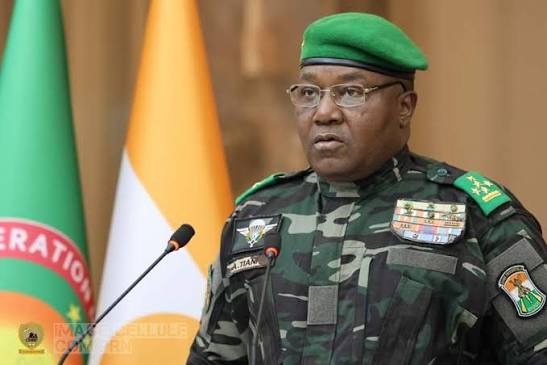
When the National Council for the Safeguarding of the Homeland (CNSP) seized power in Niger on July 26, 2023, it framed its coup as a necessary response to worsening security threats, rampant corruption under President Mohamed Bazoum, and threats to the nation’s sovereignty. Yet over three years later, the reality on the ground tells a far grimmer story: the military government has not merely failed to turn the tide—it has accelerated the very problems it pledged to resolve.
From promises of sovereignty to opaque geopolitical bargains
The CNSP’s toppling of Bazoum was justified, in part, by the need to reclaim Niger’s independence—symbolized by the demand for foreign forces, including French and American troops, to leave the country. But rather than restoring true autonomy, the new regime has entered into a web of opaque alliances that raise serious questions about who now holds real control.
Recent reports indicate that alongside the controversial presence of Russian-backed forces, Algerian troops have been deployed deep inside Niger’s borders, reaching as far as the Madama outpost—more than 200 kilometers into sovereign territory. These decisions were made without parliamentary oversight or any public consultation, effectively bypassing the very notion of national consent the junta claimed to defend.
What the CNSP once condemned as “subjugation” under civil rule is now being replicated through unchecked agreements with regional and international actors. The promise of liberation has curdled into an unchecked transfer of sovereignty.
Security collapse and economic paralysis: where are the results?
Security, the junta’s stated priority, remains in shambles. Despite frequent air strikes and military announcements of battlefield victories, armed groups like the Islamic State in the Greater Sahara (EIGS) and the Support Group for Islam and Muslims (JNIM) continue to overrun entire districts. In Diffa, Maradi, Tahoua, and Tillabéri, schools and health centers remain shuttered as violence grips the land, leaving communities isolated and vulnerable.
The economic fallout is just as dire. Once-ambitious energy projects, including the stalled Kafra oil permit and the uncertain future of the trans-Saharan gas pipeline, have ground to a halt. Flagship initiatives meant to showcase Niger’s economic independence now languish, their progress mired in bureaucratic paralysis and shifting national priorities.
The contrast between rhetoric and reality could not be starker: sovereignty was supposed to bring economic revival, but today, it is serving as a smokescreen for unfulfilled promises and unmet needs.
Where is the public voice in this juncta-driven transition?
One of the most troubling signs of the new era is the suffocation of public debate. Those who once loudly criticized Bazoum’s government now remain conspicuously silent as the military regime tightens its grip. Civil society leaders, activists, and even erstwhile allies appear reluctant to challenge the junta’s decisions, for fear of repercussion or loss of influence.
This selective silence reveals a troubling double standard. What would have sparked mass outrage and protest under civilian rule is now met with muted acceptance or even tacit approval. The junta, draped in the banner of patriotism, has turned the national discourse into a one-way monologue—where dissent is marginalized and accountability is suspended.
A regime trapped in its own contradictions
Three years into a transition that was supposed to restore democracy, Niger finds itself adrift—burdened by escalating insecurity, stalled development, and a political climate stifled by fear. The junta’s claim to legitimacy, rooted in patriotism and anti-corruption, has collapsed under the weight of its own contradictions.
For the people of Niger, the cost of this “sovereign” transition is becoming unbearable. Without accountability, without transparency, and without a clear path forward, the promise of a new dawn has dimmed into a long, uncertain night.