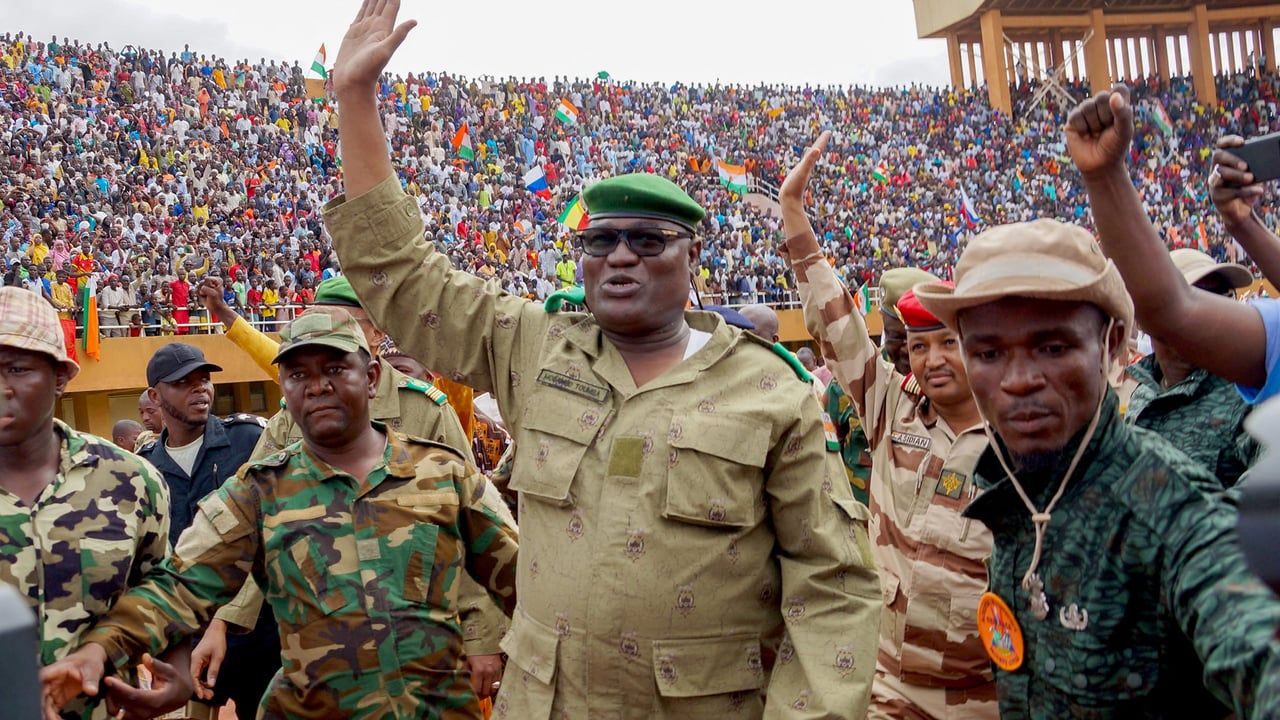

The Situation. In a comprehensive interview spanning over two hours on Niger’s national broadcaster (RTN), General Mohamed Toumba, the Minister of the Interior and Minister of State, addressed critical issues regarding the regional security landscape. As Niger grapples with escalating insurgent activity, particularly within the Tillabéry zone, the General reinforced the military leadership’s long-standing grievances against France.
As part of this Sahel analysis English, the General also touched upon the strained diplomatic ties between Niamey and Cotonou. This comes as Patrice Talon prepares to exit the presidency, making way for his successor, Romuald Wadagni, who is set to take office on May 24.
“While Patrice Talon is stepping down, he was never the fundamental issue. The true obstacle is Macron,” the Nigerien official stated. He argued that Talon had been manipulated by French interests, providing a platform for France to establish a presence on Beninese soil with the intent of launching operations against Niger.
When questioned about his expectations for Romuald Wadagni, the Interior Minister called for tangible “signs of sincerity.” He demanded that Bénin publicly distance itself from French strategic goals and ensure that Cotonou does not permit foreign military presence that could threaten its neighbors.
Patrice Talon is leaving, but he wasn’t the real problem. The real problem is Macron.
The Background. This verbal offensive from a top official in Niamey is part of a broader trend in Sahel politics. Relations between Bénin and Niger have been in a state of constant decline since General Abdourahamane Tiani seized power in July 2023.
Earlier this year, following a strike on Niamey’s international airport and Base 101—which currently houses Russian Africa Corps personnel—Abdourahamane Tiani delivered a scathing critique. He warned leaders like Emmanuel Macron, Patrice Talon, and Alassane Ouattara that while they had been vocal in their opposition, they should be prepared for a strong response from Niger, accusing France, Côte d’Ivoire, and Bénin of complicity in the attacks.
Significance of the Crisis. This latest warning from Mohamed Toumba carries extra weight as it coincides with the transition of power in Cotonou. Providing a Mali Burkina Niger analysis of the situation suggests that the junta remains deeply suspicious of any continuity between the outgoing and incoming Beninese administrations.
Romuald Wadagni, who secured 94% of the vote in the April 12 election, has previously signaled a desire for regional reconciliation. In recent West Africa insider news, he expressed confidence that dialogue between the two nations is inevitable. He has emphasized that shared challenges such as unemployment, poverty, and security require collective action and regional synergy.
Wadagni also noted that while security cooperation with Niger and Burkina Faso is currently suboptimal, military leaders from these nations maintain communication. However, the Sahel Insider perspective from Niamey suggests that this optimism is not yet reciprocated by the Nigerien authorities.