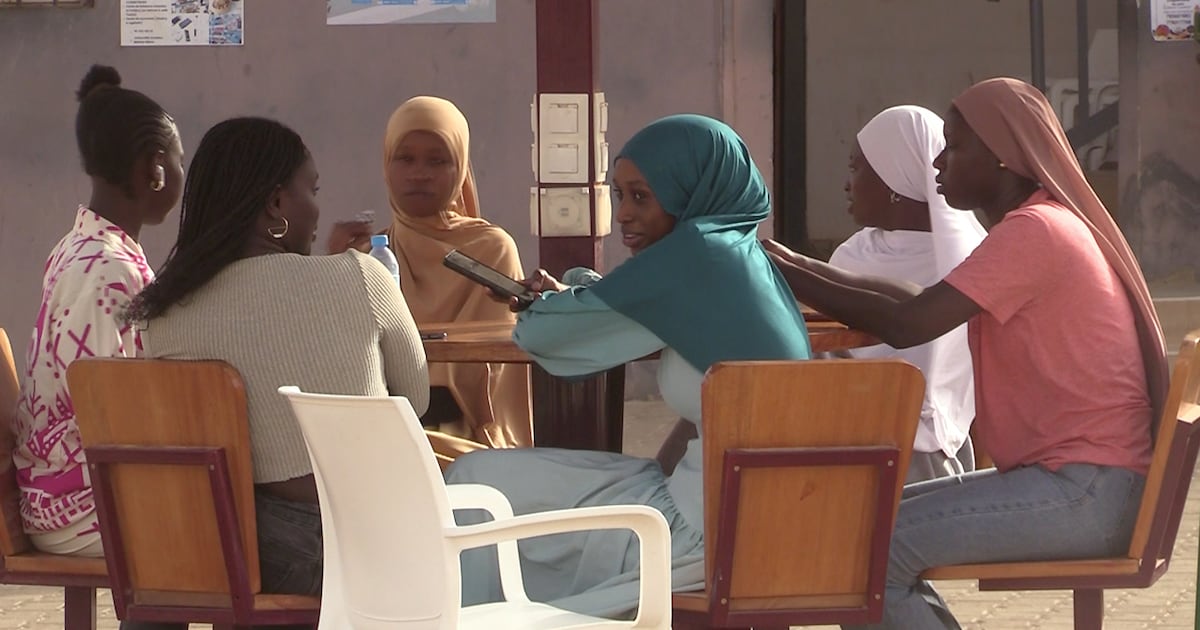
Across Sénégal, a growing number of university students are openly embracing their interest in politics, firmly believing that academic pursuits and civic engagement can harmoniously coexist.
For many young scholars, joining a political movement early in their educational journey offers a valuable opportunity for personal development and future readiness. They perceive political involvement as a natural extension of the knowledge gained at university, providing a practical avenue to comprehend real-world societal dynamics.
Adama Lam, a law student, articulates this conviction with clarity: «As a law student, I see the value in joining a political party to further my professional and personal formation. Engaging with various political factions allows me to refine my perspectives and build character. We understand that academic knowledge is meant to illuminate and empower, enabling us to apply it effectively in the political sphere. For me, university studies and political commitment are not mutually exclusive; they can indeed go hand-in-hand.»
Conversely, some students maintain that political activity should not be viewed as an impediment to academic success or a professional career. They contend that civic participation can seamlessly integrate with other scholastic or career aspirations.
Amadou Saliou Diallo, another student, echoes this sentiment: «Engaging in politics does not necessitate abandoning other fields. Politics is not merely a profession; it’s a commitment to one’s homeland. By becoming politically involved, we act as engaged citizens. However, this involvement does not mean we must forgo another career. One can certainly be an accountant while actively participating in politics.»
For a segment of the youth, political engagement also represents a crucial complementary learning experience. These students are keen to acquire, at an early stage, the practical tools and political acumen necessary to contribute to the nation’s governance in the future, blending academic insights with political culture.
Ousmane Seck, an aspiring student, highlights the significant advantage of this dual experience: «I find it highly beneficial because, alongside our academic knowledge, we also gain political understanding. This is vital as it introduces us to key political programs, such as “Jub, Jubal, Jubanti.” This provides us with useful insights for the future, especially if, by God’s grace, we were to become presidents one day or establish our own political parties. In my opinion, the two realms complement each other perfectly. Ultimately, it hinges on how well a student manages their time and distinguishes between their university life and their political life.»
Driven by personal ambition, a desire to serve their nation, and a need to grasp public challenges, the political involvement of students continues to spark widespread discussion. Yet, a fundamental question persists: should the university remain solely a bastion of knowledge, or should it also function as a fertile ground for cultivating future political leaders in Sénégal?