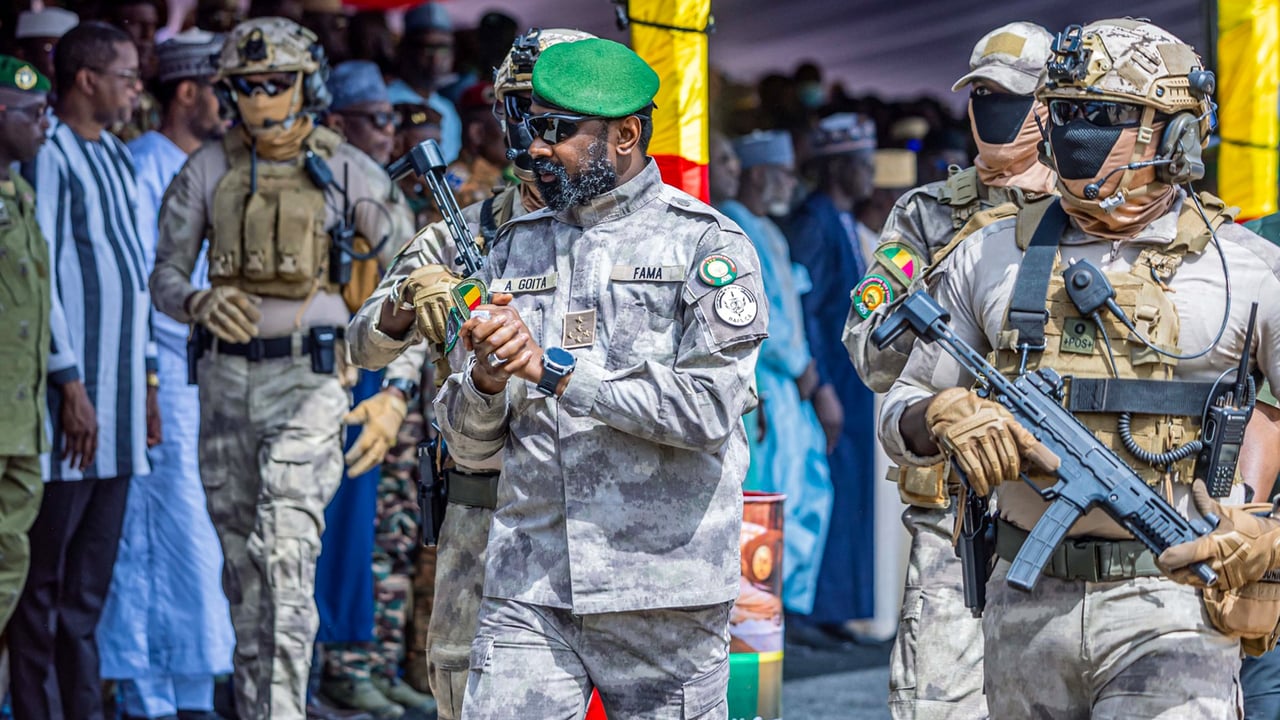

Following a series of significant security incidents on April 25, Mali found itself at a critical juncture, which ultimately enabled interim President Assimi Goïta to decisively reinforce his authority. These events unfolded rapidly, presenting both challenges to the nation’s stability and opportunities for a robust consolidation of power within the current leadership.
In the immediate aftermath of the April 25 attacks, the Malian government acted swiftly to address the evolving security landscape. A poignant moment during this period was the funeral of Sadio Camara, held on April 30 in Bamako, where President Goïta was prominently present. This public display of leadership during a time of national mourning and heightened security concerns projected an image of steadfast control and unwavering resolve, crucial for Goïta Mali power consolidation.
The security environment in Mali, a pivotal nation in the broader Sahel region, remains inherently complex. Persistent threats from extremist groups such as the Groupe de soutien à l’islam et aux musulmans (JNIM) necessitate continuous and robust counter-terrorism operations. In response, Mali has strategically strengthened its partnerships, notably with entities like Africa Corps, often linked to Russian influence under the leadership of Vladimir Poutine. This strategic realignment has played a vital role in shaping the nation’s security posture and empowering President Goïta to exert greater command over both domestic affairs and international relations.
The period subsequent to the April 25 attacks has unequivocally marked a new phase for Mali, with Assimi Goïta at the helm, actively solidifying his grip on power amidst ongoing challenges and the dynamic regional politics of West Africa. This strategic pivot underscores a determined effort to stabilize the country and secure its long-term future.