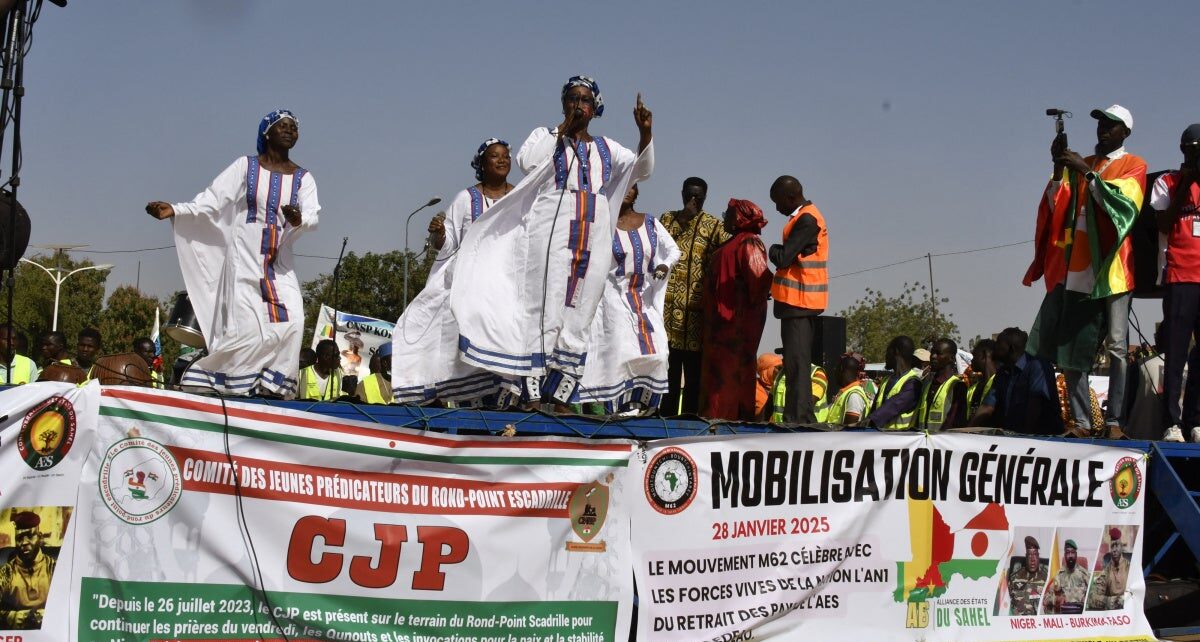
The landscape of human rights in Niger has seen a persistent decline following the military takeover in July 2023. Throughout 2025, the ruling military council intensified its crackdown on political rivals, dissenters, labor leaders, and members of the press. The authorities have continued the unlawful imprisonment of former President Mohamed Bazoum and his spouse, alongside various officials from the previous administration, media professionals, and civil society advocates.
Niger remains embroiled in a violent struggle against several extremist factions. These include the Islamic State in the Sahel (EIS), the Al-Qaeda-affiliated Jama’at Nusrat al-Islam wa al-Muslimeen (JNIM), Boko Haram, and the Islamic State West Africa Province (ISWAP) operating in the southern and western borderlands. The conflict has notably escalated in the Tillabéri region and near the frontiers with Mali and Burkina Faso, placing the civilian population at greater risk.
In August, the military leadership introduced a program known as “Garkuwar Kassa” (Shields of the Fatherland). This initiative seeks to enlist and train civilians to support the national military, a move that has sparked significant alarm regarding the potential for these militias to commit human rights violations.
By March, the head of the military council, Abdourahamane Tiani, solidified his control by taking the oath of office as the transitional president for a five-year term, notably without holding a public vote. This action effectively delayed the country’s return to democratic governance. Furthermore, Abdourahamane Tiani issued a decree that officially dismantled the multi-party political system across Niger.
In a significant geopolitical shift, Niger exited the Economic Community of West African States (ECOWAS) in January, joining Mali and Burkina Faso in this withdrawal. This move restricts the ability of Nigerien citizens to seek legal redress through the ECOWAS Court of Justice. By September, these three nations also declared their intent to leave the International Criminal Court (ICC), a decision likely to obstruct justice for victims of major atrocities.
Atrocities committed by extremist groups
The extremist insurgency that began in northern Mali in 2012 before spreading to Niger and Burkina Faso in 2015 has resulted in a decade of widespread suffering. In 2025, the EIS ramped up its campaign against civilians in the Tillabéri area, executing hundreds of residents and worshippers while looting and burning homes.
- Fambita: On March 21, EIS militants stormed a mosque during afternoon prayers, killing at least 46 people, including three children. They also set fire to 20 houses and several market stalls.
- Dani Fari: On May 13, an attack on this hamlet left seven dead, including two boys, and resulted in the destruction of 12 homes.
- Manda: On June 21, more than 70 worshippers, including five children, were massacred at a mosque during morning prayers.
- Abarkaize: On June 20, militants executed the 67-year-old village leader. Days later, five more men were abducted and found dead with their throats slit.
- Ezzak: On June 23, at least six male civilians were killed during a raid by EIS fighters.
Before these incidents, the EIS frequently threatened locals, accusing them of aiding the Nigerien military or failing to pay the “zakat” (religious tax). Survivors noted that despite warnings, the national army failed to provide adequate protection or respond to the villagers’ pleas for help.
Suppression of political rivals and dissent
Since the 2023 coup, Mohamed Bazoum and his wife have remained confined at the presidential palace in Niamey, denied contact with legal counsel or family. Following a 2024 decision to strip his presidential immunity—a process criticized for lacking legal rigor—the former leader faces potential trial. In early 2025, the United Nations Working Group on Arbitrary Detention officially labeled their confinement as unlawful and demanded their immediate release.
The military council has also detained dozens of former government figures and associates of Mohamed Bazoum without ensuring their rights to a fair trial. While approximately 50 detainees were released in April, many others remain imprisoned for political reasons. Among them is Moussa Tiangari, a prominent human rights defender.
Moussa Tiangari was taken from his Niamey home in December 2024 and held at the Central Service for the Fight against Terrorism (SCLCT/CTO). He faces grave charges, including “conspiracy against state authority” and “association with a terrorist enterprise,” which could carry the death penalty. Despite legal appeals, his detention continues without a court appearance, as the judiciary recently upheld the proceedings against him.
Erosion of free speech and assembly
Press freedom in Niger has been severely compromised since the transition to military rule. Journalists face constant threats and arbitrary arrests, leading many to practice self-censorship. In January, the Ministry of Communication briefly suspended the private station Canal 3 TV and revoked the press credentials of its editor, Seyni Amadou, after he criticized government performance, though these sanctions were later rescinded.
In February 2025, the military authorities expelled the International Committee of the Red Cross (ICRC) from the country without providing a rationale. Later in May, security forces detained three journalists from Sahara FM in Agadez for reporting on the alleged termination of security pacts with Russia and Turkey; they remain in custody despite a judge’s initial release order.
Furthermore, the Ministry of the Interior dissolved four judicial unions in August, claiming they had abandoned their professional duties for personal gain. This move was met with fierce opposition from the Niger Bar Association and the Union of Workers’ Trade Unions of Niger, who viewed it as a direct assault on the independence of the judiciary. In protest, lawyers across the country initiated a two-day general strike to demand the reinstatement of the unions.