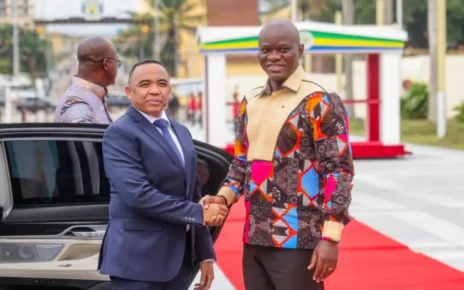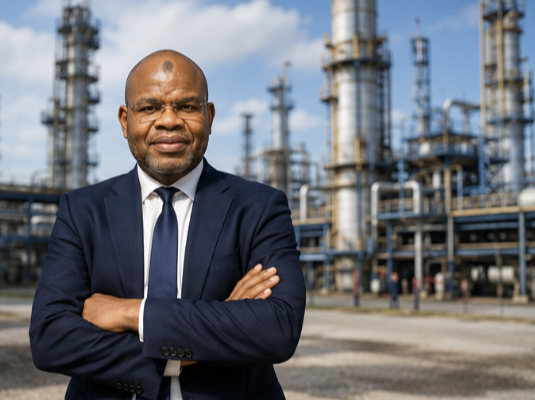
Eighteen months after the July 26, 2023 coup in Niamey, the bold promises of economic Refoundation and radical reform have collided with the harsh realities of oil management in Niger. At the heart of this power struggle sits Hamadou Tini, the newly appointed Petroleum Minister, whose actions have sparked accusations of blatant conflict of interest and ethical violations. Once a senior consultant at Mazars, Tini now wields public authority to reinstate contracts for his former employer, demanding unrestricted access to the SORAZ’s most sensitive financial data. This investigation reveals how an audit—meant to ensure transparency—has been weaponized to serve private interests at the highest level of government.
From reformist rhetoric to the resurgence of old alliances
The military-led National Council for the Safeguard of the Homeland (CNSP) had positioned itself as a crusader for economic sovereignty, with the state-owned Zinder Refinery (SORAZ) as its primary target. Criticizing the former democratic regime for its alleged complicity with foreign actors, the junta vowed to sever ties with consulting firms accused of bias—including Mazars, which had audited SORAZ for over a decade. Chinese partners, particularly the China National Petroleum Corporation (CNPC), echoed these accusations, calling for a neutral, independent audit to restore trust in Niger’s oil sector.
Yet beneath the nationalist rhetoric, a different story unfolded. Through behind-the-scenes lobbying, a former Mazars executive infiltrated the heart of the state apparatus. By January 2026, Hamadou Tini was sworn in as Petroleum Minister—a move widely seen as the triumphant return of the very firm the junta had once condemned. The question now looms: has Niger’s Refoundation merely replaced one set of elites with another?
Tini’s triple role: client, auditor, and paymaster
Within days of his appointment, Minister Tini moved swiftly to relaunch the financial and operational audit of SORAZ. But this time, the rules of engagement had changed. The contract was awarded exclusively to Mazars—his former employer—under the pretext of “completing unfinished work.” The implications are staggering. Tini, now in charge of overseeing SORAZ, simultaneously serves as the client commissioning the audit, the auditor executing it, and the final recipient of its findings. Worse still, as the sole signatory on public payment orders, he controls the purse strings funding his own firm’s work.
Experts warn that such a concentration of power undermines the very purpose of an audit. How can an entity audit a public company impartially when its leader’s career began within that same firm? The lack of separation between regulator and audited entity strips Niger of any meaningful oversight, turning financial scrutiny into a tool for advancing private agendas.
The scramble for confidential data
Tini’s directive was as swift as it was sweeping. In an unprecedented move, he ordered the SORAZ leadership to hand over, within a week, all financial, technical, and operational documents—”without delay or restriction.” These are the same records that SORAZ’s management and Chinese partners had previously refused to share, citing legitimate concerns over trade secrets and competitive advantage.
Observers in Niamey have drawn parallels to an old proverb: “He who looks through a keyhole already knows what’s on the table.” Tini, intimately familiar with SORAZ’s internal weaknesses from his time at Mazars, knows exactly where to dig for discrepancies. The urgency suggests he is not merely auditing—he is hunting for ammunition to consolidate his position and discredit rivals.
The pattern of fallen ministers
Tini’s takeover of SORAZ sheds new light on the chronic instability plaguing Niger’s Petroleum Ministry since the coup. In just three years, three ministers have been installed and removed in a high-stakes game tied to the refinery’s secrets. Before Tini, Mahaman Moustapha Barké announced a major SORAZ audit in June 2024, only to be arrested and detained for nearly a year without trial in January 2025. His successor, Dr. Sahabi Oumarou, attempted to revive the audit in February 2025 before being swiftly sidelined in early 2026.
Industry insiders now allege that Tini played a pivotal role in the downfall of his predecessors. While still at Mazars, he allegedly drafted damning reports and memos to undermine their management, clearing the path for his own rise to power. The strategy was twofold: eliminate obstacles to Mazars’ return and position himself as the junta’s ideal candidate for the Petroleum Ministry.
A Refoundation under artificial respiration
The SORAZ scandal exposes the deep contradictions of Niger’s current regime. While citizens grapple with economic hardship and the delayed benefits of oil wealth, the sector’s resources appear to be siphoned off to serve narrow factional interests. What was once hailed as a demand for transparency—an independent audit of SORAZ—has devolved into a weapon of internal power struggles. The irony is stark: the junta’s promise of a new, accountable era has instead delivered a system where oil wealth flows to those who already hold the reins. The only change? The names and faces at the top—and the firms profiting from the chaos.