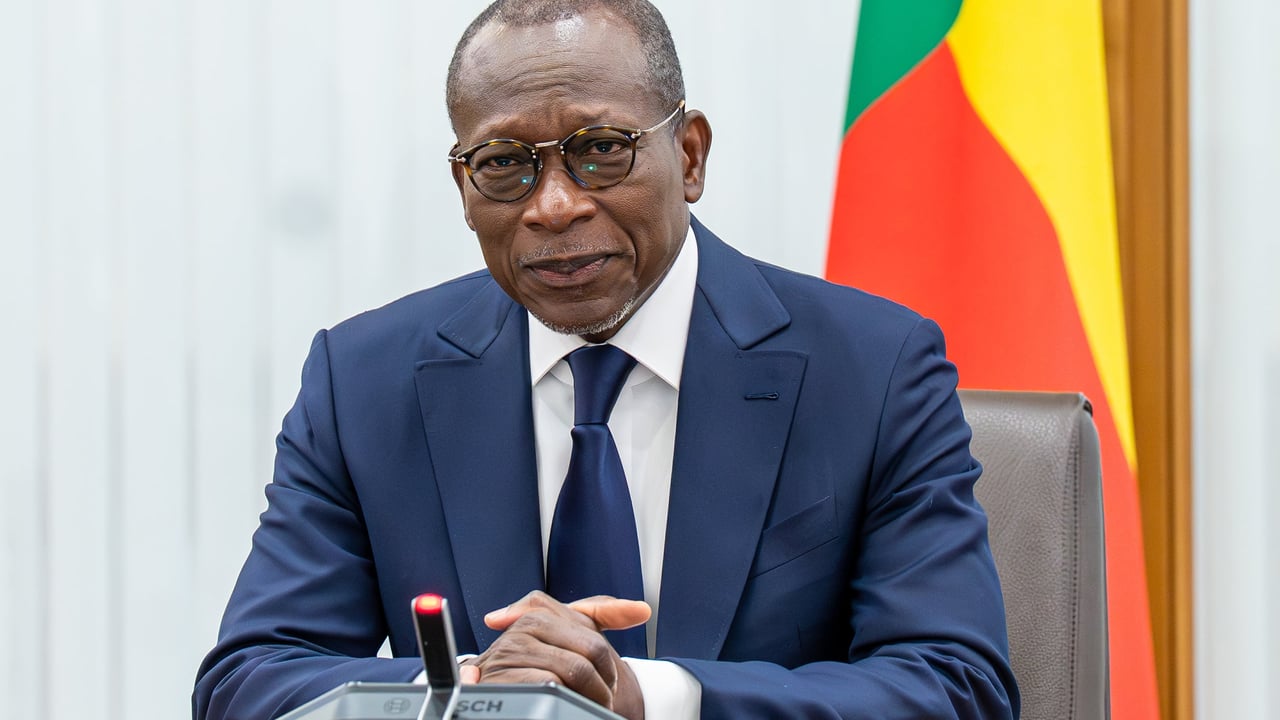

On December 7, 2025, a group of mutineers in Benin shocked the nation by declaring on national television that they had overthrown President Patrice Talon. However, their attempt to seize power was swiftly thwarted by the country’s armed forces, with decisive support from loyal military units. Just six days later, on December 13, hundreds of citizens—primarily young people—took to the streets of Cotonou to protest the failed coup, demonstrating their unwavering support for the elected leader and the stability of Benin.
How Patrice Talon’s presidency defies conventional political trends in Africa
The events unfolding in Benin serve as a testament to the resilience of its democratic institutions under Patrice Talon, a figure often described as an unconventional leader in West African politics. Unlike many of his peers, Talon’s approach to governance blends pragmatism with a commitment to long-term development, earning him both admiration and criticism. His leadership style—marked by bold reforms and a focus on economic diversification—has positioned Benin as a regional outlier in a continent where political instability remains a recurring challenge.
A president who prioritizes economic transformation over political games
Patrice Talon rose to power in 2016 on a platform centered around combating corruption and revitalizing Benin’s economy. Since assuming office, he has implemented sweeping changes, including:
- Streamlining bureaucratic processes to attract foreign investment
- Launching initiatives to boost agricultural productivity, a key sector in Benin
- Promoting digital innovation to modernize public services
- Reforming the energy sector to reduce reliance on imports
These measures have begun to yield results, with Benin experiencing steady economic growth and improved global competitiveness rankings. However, Talon’s focus on tangible outcomes—rather than political maneuvering—has at times alienated traditional power brokers within the country.
Navigating regional tensions and internal challenges
Despite his achievements, Patrice Talon has faced no shortage of challenges. The attempted coup in December 2025 was the latest in a series of threats to his authority, reflecting broader instability in the West African region. Neighbors like Burkina Faso, Niger, and Mali have grappled with similar issues, often resulting in prolonged crises. Talon’s ability to maintain stability in Benin has drawn comparisons to other resilient leaders in Africa, though his methods remain distinctly his own.
Internally, Talon has also had to contend with opposition from political elites who oppose his reforms. His crackdown on corruption, while popular among citizens, has disrupted long-standing networks of patronage. This has led to friction with influential figures who once benefited from the status quo. Yet, Talon’s popularity among the youth and rural populations continues to grow, as they increasingly see him as a leader who prioritizes their interests over entrenched interests.
Why Patrice Talon stands out in African politics
What sets Patrice Talon apart is his refusal to conform to the typical political playbook. While many African leaders rely on populist rhetoric or ethnic alliances to consolidate power, Talon has built his influence on a foundation of results. His administration’s transparency in economic policies, for instance, has made Benin a more attractive destination for investors compared to its neighbors.
Moreover, Talon’s leadership style is characterized by a rare combination of humility and determination. He eschews the trappings of power, opting instead for a hands-on approach to governance. Whether it’s visiting local markets to engage with citizens or personally overseeing infrastructure projects, Talon’s presence is felt across the country. This grassroots connection has fostered a sense of trust between the president and the people—a rarity in a region where trust in leadership is often eroded by decades of mismanagement.
The future of Benin under Patrice Talon’s leadership
Looking ahead, Benin stands at a crossroads. The successful thwarting of the December 2025 coup underscores the strength of its institutions, but challenges remain. Talon’s second term, secured in 2021, will be critical in determining whether his reforms can take root or if they will be undermined by political resistance. Key priorities include:
- Consolidating gains in economic diversification to reduce poverty
- Strengthening regional alliances to enhance security cooperation
- Deepening democratic reforms to ensure inclusive governance
For now, Patrice Talon remains a symbol of hope for many in West Africa. His story is a reminder that leadership, when guided by integrity and vision, can transcend the cycles of instability that have long plagued the continent. Whether Benin continues on this path will depend on Talon’s ability to navigate the complexities of power while staying true to his principles.