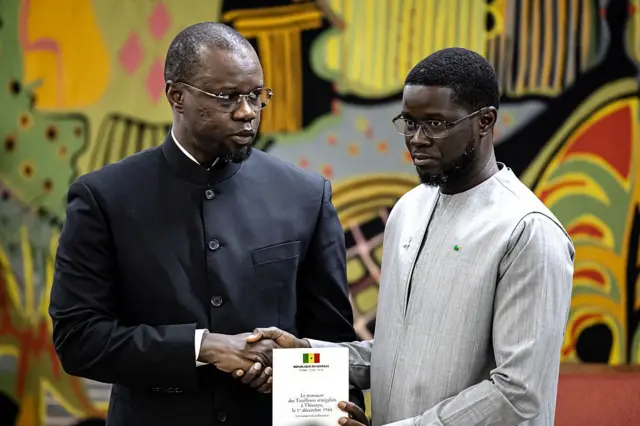
Tensions between Senegal’s political leadership and the ruling party, Pastef-Les Patriotes, have reached a critical juncture following Ousmane Sonko’s public rejection of the newly formed government. In a press briefing held in Dakar, the former Prime Minister outlined the reasons behind his party’s decision to withdraw from the executive team led by Ahmadou Alamine Mohamed Lô.
The announcement highlights deep-rooted disagreements over key national priorities, including judicial reform, financial accountability, and the renegotiation of economic contracts perceived as unfavorable to Senegal’s interests. Sonko also raised concerns about the government’s approach to public debt management, questioning the lack of concrete assurances regarding financial commitments and future engagements with international lenders.
Beyond policy differences, the Pastef leader expressed dissatisfaction with the government’s composition, stressing that as the majority party, his movement deserved significant representation in the executive. Sonko argued that without holding at least half of the ministerial portfolios, the party could not justify its participation in the administration. He further questioned the legitimacy of the new government, despite the inclusion of some allied figures.
While Sonko ruled out immediate plans to challenge the executive—such as filing a no-confidence motion—his remarks signal a growing rift between the presidency and the party that played a pivotal role in the 2024 political transition. This development underscores the fragile dynamics at the heart of Senegal’s governance and raises questions about the future stability of the ruling coalition.