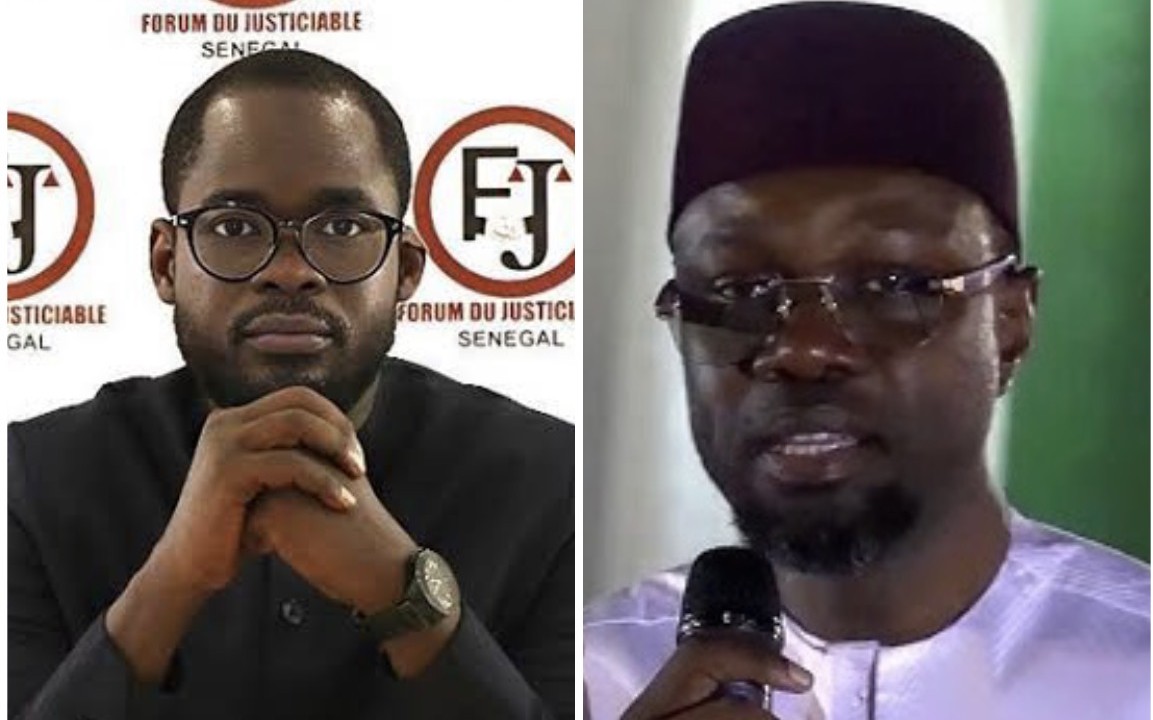
Senegal’s political landscape has been shaken by a fresh debate on financial transparency, sparked by Babacar Bâ, President of the Forum du Justiciable, who has sharply criticized former Prime Minister Ousmane Sonko for what he calls a glaring contradiction in his stance on state funds. The controversy centers on Sonko’s past use of a political fund exceeding 1.7 billion CFA francs, a figure he had previously condemned as part of his anti-corruption rhetoric.
From critic to beneficiary: the paradox of Senegal’s political financing
Bâ’s latest intervention highlights a striking paradox. Sonko, now a prominent opposition figure and champion of ethical governance, once publicly railed against what he termed ‘black cash’ in state coffers. Yet, during his tenure as Prime Minister, he managed a political fund of over 1.7 billion CFA francs—an amount he later acknowledged under public pressure. For Bâ, this shift from critic to recipient of such funds is not just ironic but emblematic of a deeper systemic issue in Senegal’s governance.
The Forum du Justiciable leader has long been a vocal advocate for financial accountability. In recent months, he has repeatedly called for full disclosure of funds received by the Presidency, Prime Minister’s office, and National Assembly, insisting on rigorous audits by the Cour des Comptes. His latest remarks, however, take on a more urgent tone, framing the issue as a national wake-up call.
Institutional masquerade and the call for citizen action
In a bold departure from his typically technical critiques, Bâ has framed Senegal’s governance as a ‘charade’, urging citizens to reclaim control of their nation’s future. His language cuts through the usual bureaucratic discourse, signaling a growing frustration with the lack of transparency in public finance management. While Sonko’s past criticisms of opaque financial practices are well-documented, Bâ’s challenge forces a reckoning: can a leader who once decried the very mechanisms he later utilized truly claim moral authority in the fight against corruption?
The debate extends beyond Sonko himself, exposing broader questions about the integrity of Senegal’s political institutions. As public scrutiny intensifies, the demand for accountability grows louder, with citizens and activists alike questioning the sustainability of a system where financial opacity persists despite progressive rhetoric.