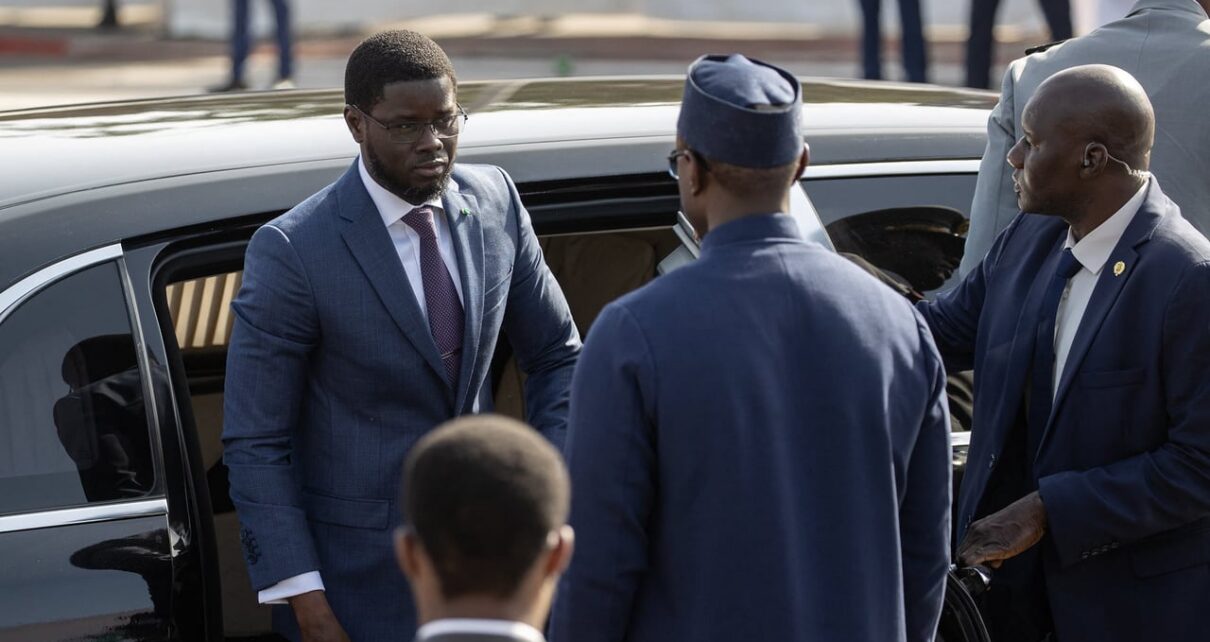
In the heart of Dakar, a political shift is unfolding, casting a spotlight on a young leader navigating uncharted territory. As the 65th anniversary of Senegal’s independence was celebrated in April 2025, President Bassirou Diomaye Faye stood alongside Prime Minister Ousmane Sonko, a moment that symbolized both continuity and transformation in the nation’s governance.

a delicate balance of power in Senegal
Senegal’s political landscape is increasingly defined by the dynamic between two prominent figures: President Bassirou Diomaye Faye and Prime Minister Ousmane Sonko. While Sonko remains a dominant force within the ruling party, Faye is carving out his own identity, raising questions about the future direction of the country. This evolving relationship underscores the challenges of governance in a nation where leadership transitions are closely watched by both citizens and international observers.
Faye’s rise to the presidency marked a turning point in Senegalese politics, following a period of significant upheaval. His leadership style, often described as pragmatic yet reformist, contrasts with the more assertive approach of Sonko. This dichotomy has created a complex political environment where collaboration and competition coexist, shaping policies and public perception alike.
the challenges of political emancipation
The journey toward political emancipation in Senegal is fraught with obstacles. Faye’s administration faces the daunting task of addressing economic disparities, improving governance, and maintaining social cohesion. Meanwhile, Sonko’s influence looms large, as his political base continues to expand. The interplay between these two leaders highlights the delicate balance required to sustain progress without undermining stability.
public expectations and the road ahead
Senegalese citizens are closely monitoring the actions of their leaders, demanding transparency, accountability, and tangible improvements in their daily lives. Faye’s ability to assert his authority while fostering unity with Sonko will be critical in determining whether Senegal can achieve its developmental goals. As the nation moves forward, the partnership—or potential rivalry—between these two figures will remain a focal point of political discourse.
key takeaways for Senegal’s political future
- Leadership dynamics: The relationship between Faye and Sonko will shape Senegal’s political trajectory in the coming years.
- Policy direction: Faye’s reformist agenda must align with Sonko’s strategic vision to ensure cohesive governance.
- Public sentiment: Citizens’ trust in their leaders hinges on visible progress in economic and social development.
- International relations: Senegal’s position on the global stage may be influenced by how internal political challenges are managed.