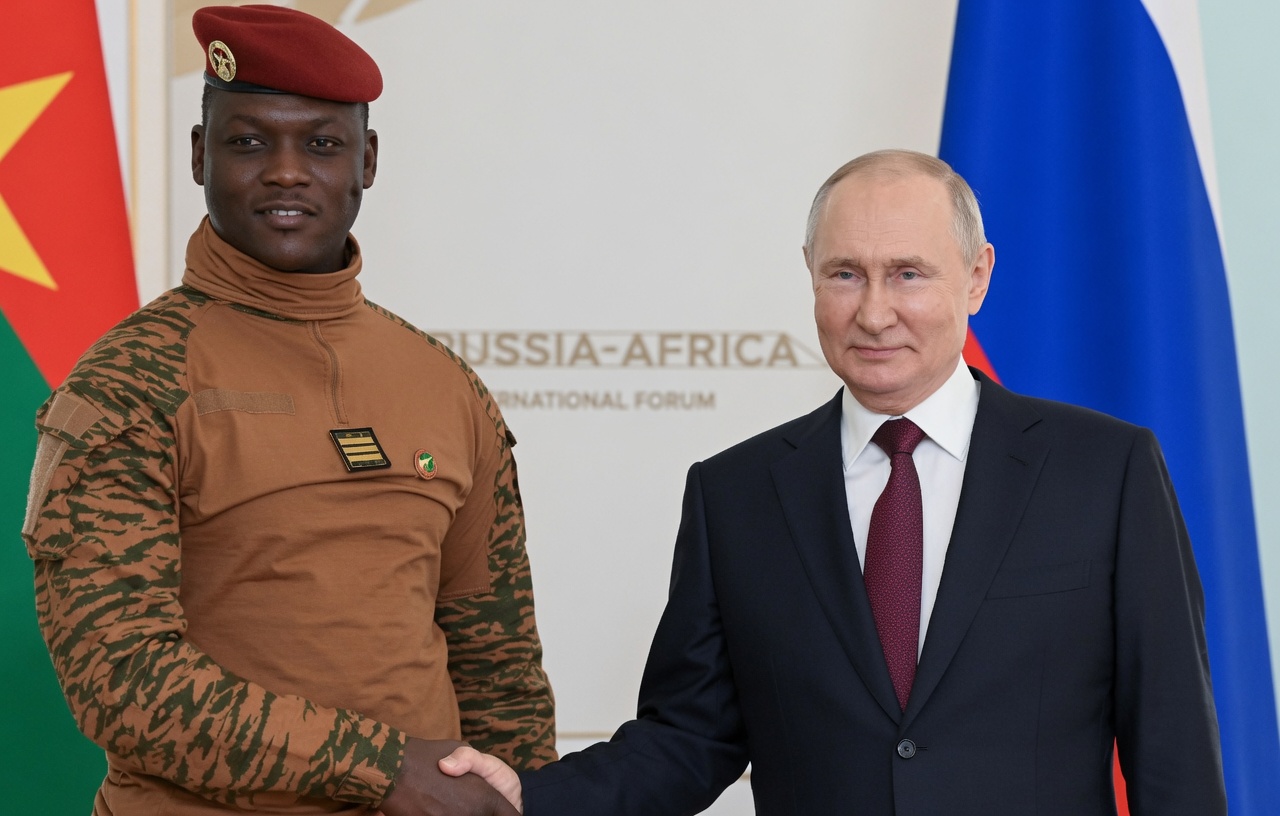
Ouagadougou’s recent pivot toward Moscow has been framed as a strategic shift toward enhanced sovereignty and security, with officials repeatedly emphasizing the benefits of a ‘win-win’ partnership. The narrative underscores principles of mutual respect, the absence of political strings attached, and a fresh approach to international cooperation. Yet, beneath the polished rhetoric lies a more complex reality that challenges the depth and sustainability of this alliance.
the promise of regained sovereignty
Burkina Faso’s decision to diversify its diplomatic and military partnerships follows years of strained relations with traditional Western allies. The government asserts that this reorientation has restored its ability to make independent foreign policy choices. However, true sovereignty extends beyond merely swapping one dependency for another. A balanced partnership requires not only the freedom to select allies but also the capacity to maintain decision-making autonomy, particularly in critical areas such as security and natural resource management.
security cooperation: progress or illusion?
Despite intensified collaboration with Russia, Burkina Faso continues to grapple with relentless violence. Armed groups remain active across vast regions, civilian casualties persist, and mass displacements show no signs of abating. While military support may provide temporary relief, it has yet to translate into a decisive shift in the conflict’s trajectory. The persistent insecurity raises questions about whether this partnership can deliver on its security promises or merely offers a short-term palliative.
economic ties: promises versus realities
Official statements highlight promising future investments and economic opportunities arising from the partnership. Yet, tangible benefits for Burkina Faso’s economy remain elusive. Persistent insecurity, disruptions in supply chains, and declining economic activity continue to weigh heavily on local businesses. Economic sovereignty cannot be built on vague commitments alone; it requires measurable progress in job creation, infrastructure development, and sustainable growth. So far, these benchmarks have not been met.
One particularly contentious aspect of the economic relationship is the exchange of gold reserves for Russian wheat. While framed as a strategic move to bolster food security, this arrangement risks undermining Burkina Faso’s long-term economic autonomy. If the country’s most valuable resource must be leveraged to secure basic food supplies, it signals a troubling dependence rather than a sustainable strategy. A truly sovereign nation should be able to feed its people and harness its own resources for development without external trade-offs.
education and human capital: limited yet meaningful contributions
The educational dimension of the partnership offers a glimmer of hope. A select number of Burkinabè students now have access to Russian universities, potentially enriching the nation’s human capital. However, the scale of these programs remains modest and does little to address the systemic challenges facing Burkina Faso’s education system and youth employment landscape. While educational exchanges are valuable, they are not a substitute for comprehensive reforms or large-scale investments in local institutions.
the myth of unconditional cooperation
Officials often describe the partnership as unburdened by political conditions, portraying Russia as a selfless ally. Yet, international relations are rarely altruistic; every alliance serves strategic and economic interests. For Moscow, strengthening ties with Burkina Faso aligns with broader ambitions to expand influence in Africa, counter Western dominance, and secure economic footholds amid global sanctions. The idea that this relationship is entirely devoid of ulterior motives reflects political rhetoric rather than geopolitical reality.
the risks of over-reliance on a single partner
Concentrating partnerships around a single actor carries inherent risks. Overdependence on Russia could constrain Burkina Faso’s diplomatic flexibility, deter diverse foreign investment, and complicate relations with other international players. In an era of multipolar competition, a balanced approach—one that engages multiple partners—is essential to safeguard long-term interests and avoid the pitfalls of a new form of dependency.
measuring partnership success: beyond the rhetoric
The ultimate test of any international partnership lies in its impact on the daily lives of citizens. Sovereignty is not measured by diplomatic statements or symbolic gestures but by tangible improvements in security, public services, economic stability, and opportunities for young people. On these fronts, Burkina Faso’s partnership with Russia has yet to deliver convincing results. While the alliance may offer new diplomatic avenues, it has not yet proven capable of addressing the country’s most pressing challenges. The true measure of success will be whether this reorientation translates into measurable, sustainable progress—or remains little more than a shift in alliances with uncertain benefits for the Burkinabè people.