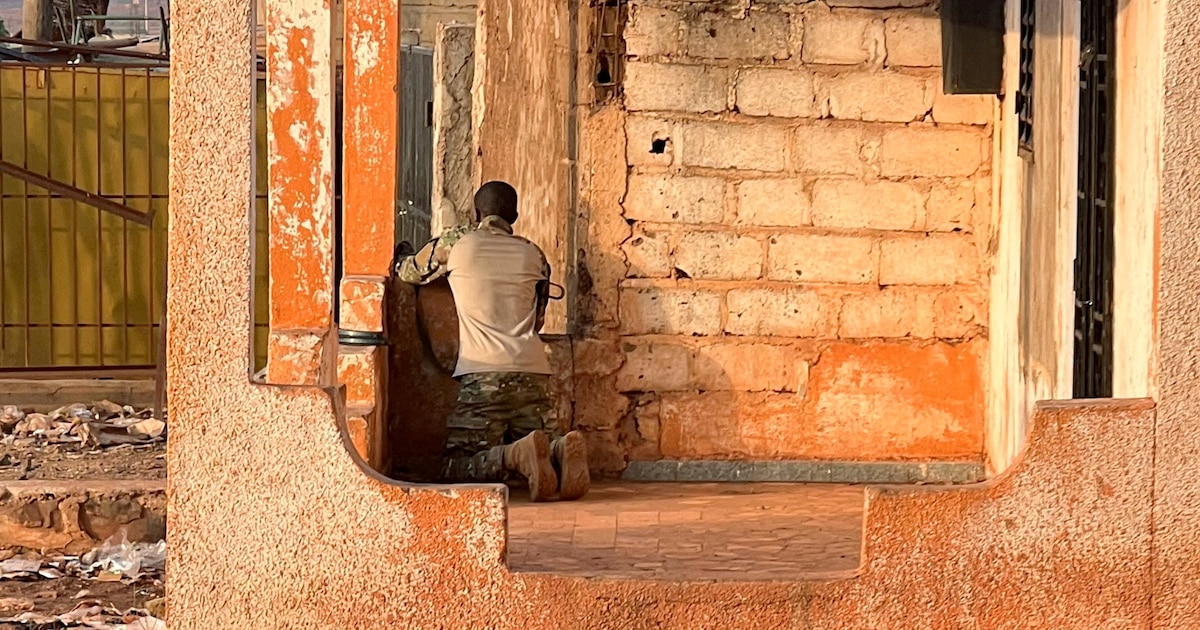
In a significant and symbolic setback, pro-Russian mercenaries from the Africa Corps—successors to the Wagner Group since 2025 and allies of Mali’s military junta—were forced into a humiliating retreat from Kidal in northeastern Mali on April 26. Social media footage captured the chaotic scene as the fighters, disarmed and overwhelmed, fled in trucks under pressure from the Group for the Support of Islam and Muslims (GSIM, also known as JNIM), an Al-Qaeda affiliate, along with Tuareg rebels from the Azawad Liberation Front (FLA). In their haste to withdraw, the mercenaries abandoned scores of armored vehicles and helicopters, which now fall into the hands of the advancing jihadist and rebel forces. Several Malian soldiers were also captured following brief clashes.
This escalation comes as Mali has been struck by a wave of coordinated attacks launched by GSIM militants, allied with the Tuareg separatist FLA, targeting strategic positions across the country—including areas on the outskirts of the capital, Bamako. The assaults mark a sharp intensification of violence in a conflict that has already claimed thousands of lives and displaced hundreds of thousands more.
Kidal’s fall: a blow to Moscow’s strategy
The Africa Corps, which operates under Russia’s Defense Ministry, admitted on April 27 that its forces had withdrawn from Kidal, a historic Tuareg stronghold in northern Mali. The retreat is a stark reversal for the mercenary group, which had achieved its most notable success in November 2023 when Wagner fighters seized the city and raised their infamous skull-and-bones flag. “Seizing Kidal was the only real strategic victory Russia could claim since deploying to Mali in 2021,” noted Djenabou Cissé, a research associate at the Fondation pour la recherche stratégique. “Its loss is a major embarrassment for Moscow’s military showcase in the Sahel.”
The coordinated GSIM offensive has targeted multiple cities, including Bamako, Kati—home to the country’s main military base—and Gao, a former UN stronghold. At least six urban centers have come under attack in a single weekend, signaling a dramatic expansion of militant control.
Mali’s junta under pressure as allies fail
Since seizing power in a 2021 coup, Mali’s military leaders have relied heavily on Russian mercenaries—first Wagner, now Africa Corps—to bolster their fight against Islamist insurgents. Yet the violence has only worsened, with some of the deadliest attacks on civilians attributed to Russian mercenaries and Malian troops, according to Wassim Nasr, a specialist in jihadist movements. “It was clear long ago that Russian mercenaries were ineffective as counterterrorism partners, whether under Wagner or Africa Corps,” he told The Washington Post. “Saturday’s attacks only confirmed their limitations.”
Reports from the UN and Human Rights Watch have documented a surge in conflict-related sexual violence linked to Malian security forces and their Russian auxiliaries, further eroding public trust in the junta’s strategy.
“The Russians betrayed us in Kidal”
On April 28, Prime Minister Abdoulaye Maïga paid tribute to Defense Minister Sadio Camara, who was killed during the assault on Kati, the junta’s headquarters. The same day, junta leader Assimi Goïta addressed the nation, claiming the situation was “under control” and vowing to continue operations until the militants were “completely neutralized.”
Yet skepticism is growing. A Malian officer, speaking to RFI on condition of anonymity, accused the Russian mercenaries of abandoning their posts. “The Russians betrayed us in Kidal,” he said. “The regional governor warned them three days before the attack, but they did nothing. They had already negotiated their exit.” With Africa Corps reportedly preparing to withdraw from other northern towns, the Malian army faces further weakening.
The Kremlin, through spokesman Dmitri Peskov, declined to comment on Africa Corps’ ability to regain control during a daily press briefing on April 28. However, Peskov asserted that Russian forces had prevented a coup attempt by FLA and GSIM fighters—a claim that does little to ease concerns about the junta’s rapidly deteriorating position.