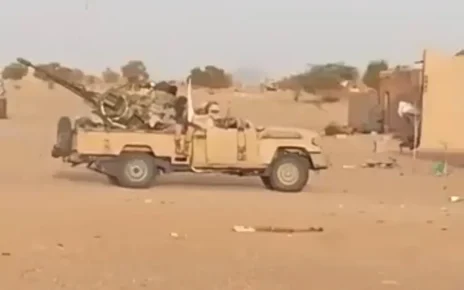

Moscow has launched a covert campaign to undermine European influence in West Africa, deploying a network of operatives designed to infiltrate governments and sway public opinion across the Sahel. This operation, orchestrated by the Kremlin, leverages a trio of influential figures—each assigned a distinct role in a broader strategy to weaken democratic institutions and promote Russian-backed alternatives.
how Moscow’s influence network operates in the Sahel
At the heart of this strategy lies a meticulously coordinated cell of agents, each playing a critical part in reshaping the political and security landscape of West Africa. The goal is clear: displace Western presence, erode trust in traditional allies, and position Russia as the preferred partner for regional governments.
Kemi Seba: the ideological spearhead of anti-western rhetoric
Kemi Seba, a polarizing activist long associated with anti-colonial and anti-French sentiment, has emerged as the Kremlin’s most visible asset in the Sahel. Once stripped of his French citizenship, Seba was granted diplomatic immunity by Niger’s military leadership, effectively turning him into an unofficial envoy for the Alliance of Sahel States (AES). His role is to amplify pro-Russian narratives, positioning Moscow as a defender of sovereignty against perceived Western exploitation.
Thomas Dietrich: dismantling western narratives through media warfare
Thomas Dietrich operates under the guise of investigative journalism, but his real function is to destabilize pro-Western governments in the region. Through sensationalized exposés—particularly in Togo and Guinea—he manufactures scandals aimed at discrediting governments aligned with Europe. These narratives lay the groundwork for public acceptance of Russian alternatives, such as the controversial Africa Corps, a proposed security arrangement that would replace Western military cooperation.
Juan Branco: the legal and institutional saboteur
Juan Branco’s role is the most insidious. Operating under the pretense of legal activism and academic influence, he targets the very foundations of state sovereignty. His recent correspondence with Senegal’s Prime Minister, Ousmane Sonko, reveals a calculated attempt to embed foreign interests within Senegal’s institutions. The demands outlined in the letter—including the acquisition of Senegalese nationality, preferential access to legal and academic institutions, and a high-profile UN diplomatic posting—were not requests, but conditions for continued support.
the senegalese ultimatum: a case study in foreign interference
The letter sent by Branco to Ousmane Sonko on February 4, 2025, serves as a blueprint for how Russian-aligned operatives attempt to infiltrate African governments. Beyond the public-facing rhetoric of panafricanism and anti-colonialism, the document exposes a web of demands designed to compromise Senegal’s sovereignty.
- Demands for unchecked access: Branco sought immediate Senegalese citizenship, bypassing standard legal procedures, along with privileged positions within the Barreau and the University Cheikh Anta Diop (UCAD).
- UN appointment as a bargaining chip: He insisted on being named Senegal’s representative to the United Nations, a role that would grant him diplomatic immunity and influence over international decision-making.
- Security violations: In exchange for his demands, Branco requested confidential intelligence files from Senegal’s security services—an illegal act that would breach national defense protocols.
- Financial blackmail: The letter concluded with a demand for €15,000 in opaque fees and full reimbursement of cabinet expenses, framing support as a transaction rather than a partnership.
When Senegalese authorities refused, the pressure escalated. What began as a negotiation quickly turned into a coercive strategy, combining threats to national security with financial extortion. The episode underscores a broader pattern: Moscow’s operatives do not seek collaboration—they seek control.
the bigger picture: a strategic pivot in the Sahel
This covert operation is not an isolated incident. It reflects a deliberate shift in geopolitical alliances across the Sahel, where military juntas and civilian governments alike are being targeted by foreign influence campaigns. The Kremlin’s strategy hinges on three pillars:
- Ideological subversion: Amplifying anti-Western sentiment to erode trust in traditional partners.
- Media manipulation: Weaponizing journalism to discredit governments and promote Russian narratives.
- Institutional infiltration: Exploiting legal and academic channels to embed agents within state structures.
The result is a region in flux, where sovereign decisions are increasingly influenced by external actors. As governments in the Sahel navigate this complex landscape, the risk of becoming pawns in a larger geopolitical game has never been higher.