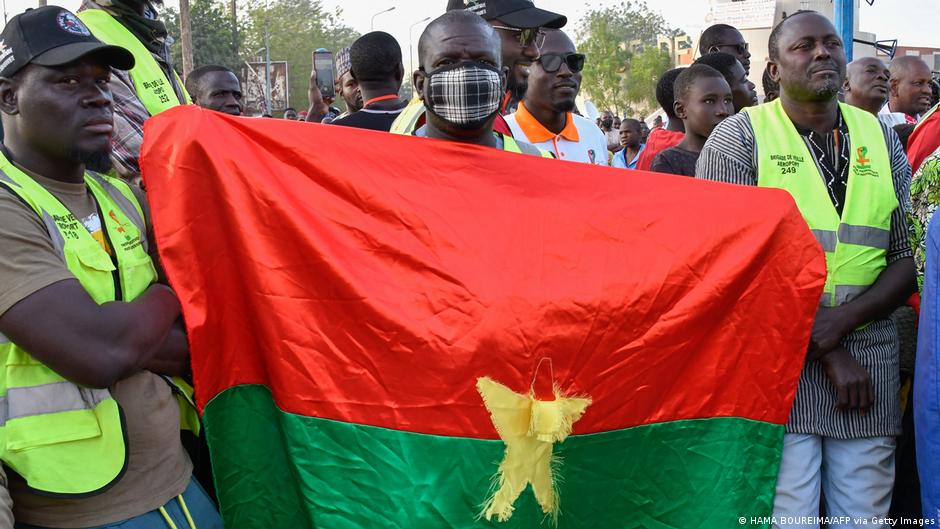
In the heart of West Africa, Burkina Faso is witnessing a troubling escalation in state-led repression that threatens to silence dissent across the Alliance of Sahel States (AES). The arrest of influential imam Mohamed Ishaq Kindo and the suspension of the country’s largest student union, the UGEB, underscore a deliberate crackdown under military rule. These developments, unfolding in a single week, reveal deeper cracks in civic freedoms now spreading across Mali, Burkina Faso, and Niger.
imam Kindo’s disappearance sparks national alarm
Just days before the Tabaski holiday, masked security forces reportedly raided the home of imam Mohamed Ishaq Kindo in Ouagadougou. Eyewitnesses described a scene of coercion: armed men, blending police and military personnel, forcibly took the prominent religious leader into custody. Kindo is no ordinary figure. He has long been recognized for his outspoken stance, even challenging the ruling junta led by Captain Ibrahim Traoré — a notable contrast to the submissive posture of many other religious leaders.
According to veteran journalist and exiled Burkinabè commentator Newton Ahmed Barry, Kindo’s critique was not ideological but grounded in principle: “He stood apart as one of the few Muslim leaders who dared to question public policy, particularly a proposed law seeking to regulate religious practices, including public prayers.”
a new voice of dissent, distinct from malian icons
Some observers have drawn parallels with Mali’s imam Mahmoud Dicko, a towering figure in regional Islamic activism. Barry dismisses the comparison: “Kindo was not seeking a political pulpit. His role was rooted in civic vigilance, guided by his position within the Federation of Islamic Associations of Burkina Faso (FAIB), where he helped safeguard religious doctrine.”
clashes erupt amid disinformation campaigns
The detention of Kindo triggered immediate backlash. Supporters took to the streets, leading to violent confrontations with security forces. Dozens were arrested, and several were reportedly transferred to a military camp in Kaya, in the Centre-Nord region. Amid the turmoil, a fabricated statement claiming Kindo had died began circulating online. Authorities swiftly denied the rumor, while independent fact-checkers identified inconsistencies in several viral videos, suggesting possible use of artificial intelligence to fabricate evidence.
state tactics: fear as a tool of control
Newton Ahmed Barry warns of a calculated strategy: “This junta thrives on widespread fear. By traumatizing the population, they believe they can consolidate power and rule unchallenged.” The arrest of Kindo, he argues, is part of a broader pattern: the systematic silencing of dissent, whether religious, academic, or civic.
student union suspended amid rising repression
In a parallel move, the Union Générale des Étudiants du Burkina (UGEB) — a historic student organization founded in 1960 — was suspended for three months, with the possibility of renewal. Its president, Bazo Wilfried, and several members were detained under charges of “glorifying terrorism” and “demoralizing the armed forces.” The charges stem from a statement criticizing the government’s failure to restore security, describing the situation as a “civil war” and highlighting the “manifest inability” of the regime to protect its citizens.
Mahamadou Idder Alghabid, Deputy Secretary-General of the Alliance of Sahel Democrats (ADS), condemns the accusations: “It’s laughable to label unarmed students as terrorist sympathizers. But this is now a familiar script across the Sahel. Whenever dissent appears, authorities suppress it under the guise of counterterrorism. It’s a dangerous trend common to all three AES countries ruled by juntas.”
regional erosion of civic freedoms
From Ouagadougou to Bamako and Niamey, human rights defenders report a steady erosion of public freedoms. Civil society organizations are being dissolved, judicial pressure is intensifying, and freedom of expression is increasingly restricted. According to the ADS, the line between legitimate criticism, labor activism, and criminal offense is rapidly disappearing — a dangerous slide toward authoritarian consolidation.
voices of resistance persist despite repression
Despite the risks — arrests, abductions, and threats — resistance continues, often from exile. Alghabid remains defiant: “We are fully aware of the battle ahead. We oppose three military regimes. Yet every day, we gain ground while they lose it. Their early propaganda promised sovereignty and anti-imperialism, but those promises have evaporated. The people of the Sahel are waking up to the truth: these juntas have no solutions, only empty slogans. They are abandoning ship, and the people will follow.”
Newton Ahmed Barry echoes this sentiment, predicting a turning point: “History shows that regimes built on repression always collapse under their own excesses. Ibrahim Traoré’s power is no exception. The Burkinabè people are not broken. They will respond, and when they do, change will come.”
global call to defend fundamental freedoms
Human rights organizations are urging international solidarity. They stress the urgent need to support civic spaces, independent media, and peaceful democratic initiatives. Warnings are clear: silence and ambiguity only embolden authoritarian drift. “Condemning junta abuses is not counterproductive,” they insist. “It is necessary to prevent normalization of military coups and flagrant human rights violations.”
naming the crisis: the fight for legitimacy
At the core of the crisis lies a fundamental question: Can military juntas ever claim legitimate authority? Human rights advocates argue no. They call for courage in naming these violations and rejecting the normalization of authoritarian rule in the Sahel. The message is unequivocal: the confiscation of power through force cannot become an acceptable norm — nor can the systematic denial of human dignity.