Updated June 4, 2026
As global attention remains fixed on conflicts in Ukraine and the Middle East, the Sahel is quietly slipping into one of the world’s most neglected humanitarian disasters. United Nations reports indicate that more than 24 million people across the region will require urgent assistance in 2026, marking one of the most severe and underfunded crises on the planet.
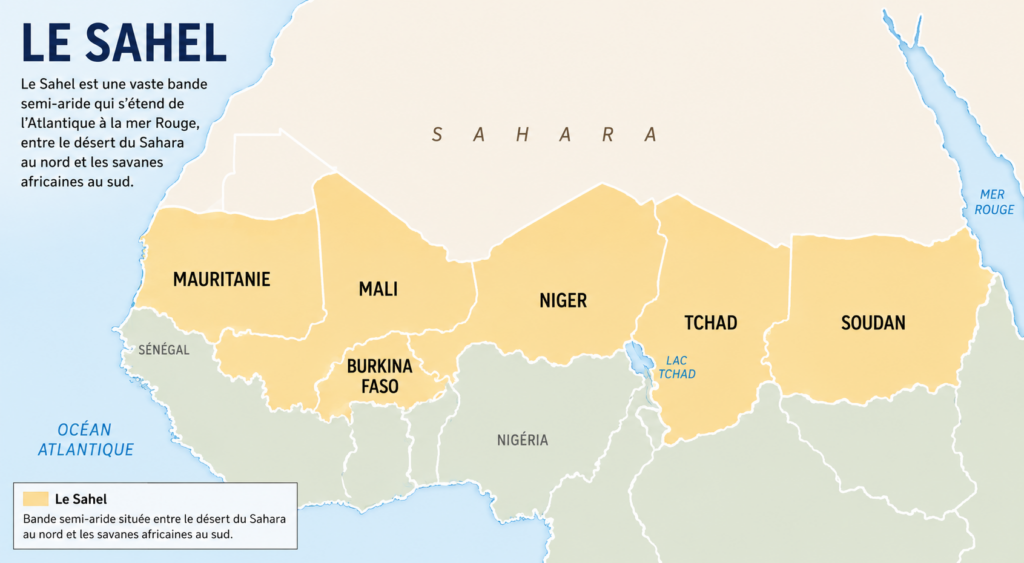
From Mauritania to Chad, sweeping through Mali, Burkina Faso, and Niger, communities are grappling with a toxic blend of crises that erode their ability to survive. Armed violence, mass displacement, soaring inflation, climate shocks, and severe food shortages are pushing millions of families to the brink of survival.
United Nations data reveals a worsening outlook: between June and August—the lean season before harvests—nearly 15.5 million people could face acute food insecurity or worse. Among them, over 1.5 million may slip into emergency food shortages, requiring immediate lifesaving interventions.
The human cost extends far beyond numbers: families skipping meals, farmers unable to afford fertilizer or seeds, children losing access to education, and entire communities uprooted by violence.
International aid drying up just as needs surge
One of the most alarming developments is the sharp decline in humanitarian funding. In 2025, only 29% of the funds required for Sahel operations were secured—the lowest level in years. This shortfall is forcing aid agencies to scale back operations, suspend critical programs, or withdraw from the most vulnerable areas entirely.
This funding gap coincides with rising needs driven by global economic pressures, including energy price spikes linked to tensions in the Middle East. These increases directly impact already struggling populations. For the United Nations, every cut in funding translates into fewer meals on the table, less protection for women and children, reduced access to healthcare, and fewer children in school.
Violence spreads, deepening the crisis
The food crisis is intertwined with a worsening security situation. Once concentrated in the central Sahel, armed groups are now expanding their reach into coastal West African nations. Their growing influence is forcing mass displacements and shutting down essential services. Nearly 12,900 schools have closed, leaving over 2.3 million children without education.
Humanitarian experts warn that this loss of schooling threatens long-term consequences. A generation could grow up without skills or opportunities, trapped in regions where armed groups often manipulate youth vulnerabilities to expand their influence.
Climate shocks compound suffering
Adding to the turmoil is the climate emergency. Since the start of the year, nearly 590,000 people have been affected by floods, while prolonged droughts and desertification shrink vital resources. The Sahel, one of the regions least responsible for climate change, is among the hardest hit by its effects.
This convergence of crises is pushing the Sahel to the edge of a humanitarian catastrophe. The United Nations stresses that solutions exist—but without urgent funding, millions more could face catastrophic conditions in the coming months.