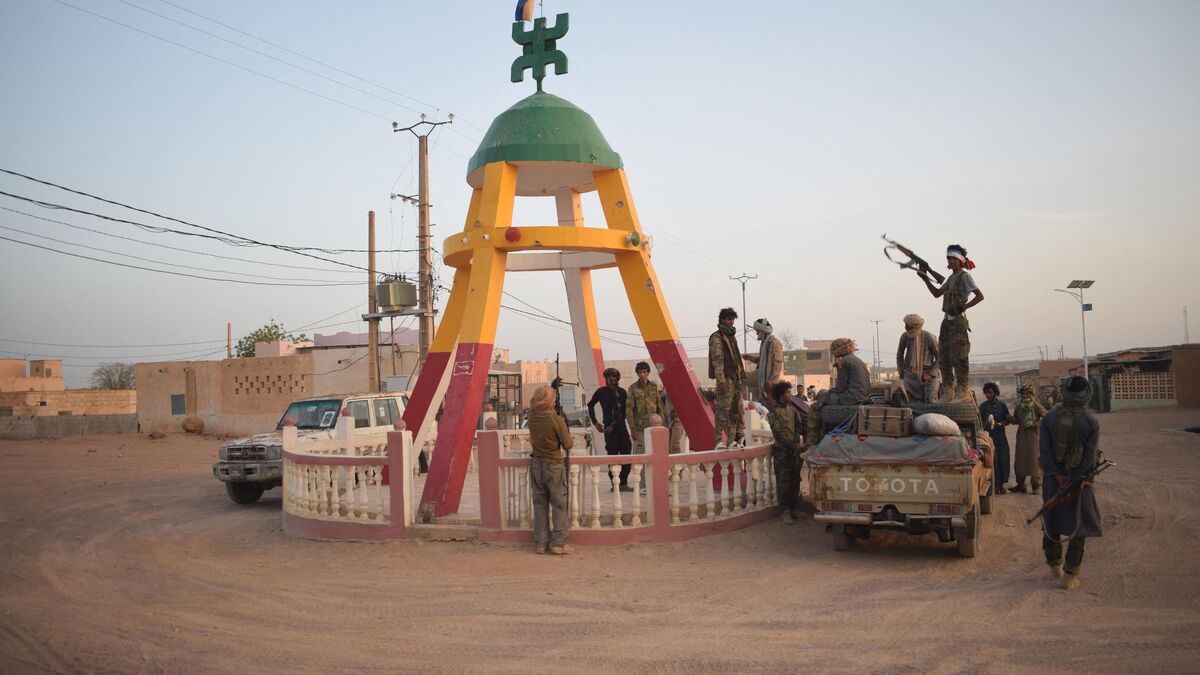
Late last week, a dramatic shift unfolded in Mali’s volatile east, where Tuareg rebels seized control of Kidal—a key stronghold held for years by Africa Corps, Moscow’s most covert military branch in Africa. While this withdrawal marks a tactical retreat, it does little to diminish the Kremlin’s strategic influence in the Sahel region.
The sudden capture of Kidal came during an intense offensive that also targeted government positions near Bamako. Among the casualties was Mali’s Defense Minister, Sadio Camara, whose death underscores the escalating unrest gripping the nation. These coordinated attacks reveal the fragility of the current regime and the growing power of rebel factions challenging its authority.
From Wagner to Africa Corps: a changing of the guard
Established in 2023 as Wagner’s successor, Africa Corps has operated with heightened secrecy, evading the international scrutiny that plagued its predecessor. The group’s emergence was first announced on Telegram by military blogger Deux Majors, who cited statements from Igor Korotchenko—a former colonel and Kremlin-aligned journalist. Since then, Africa Corps has been officially overseen by Russian Deputy Defense Minister Yunus-bek Yevkurov, signaling direct state control from Moscow.
The transition from Wagner, which had grown infamous for its brutal tactics and alleged war crimes, reflects a deliberate effort by Russia to rebrand its African operations. Following the mysterious deaths of Wagner founders Yevgeny Prigozhin and Dmitri Utkin in August 2023, Africa Corps positioned itself as a more disciplined and centralized force, though its objectives remain aligned with Moscow’s geopolitical ambitions.
Military ambitions and ideological roots
Africa Corps has wasted no time in defining its mission. According to Korotchenko, the group aims to “conduct large-scale military operations across Africa to help nations break free from neocolonial dependence, expel Western influence, and achieve full sovereignty.” The name itself is a deliberate nod to history—a reference to the Afrika Korps, Nazi Germany’s North African division during World War II.
Unlike Wagner, Africa Corps has sought to avoid the same level of condemnation by adopting a lower profile. While Wagner’s forces were repeatedly accused of atrocities, Africa Corps has focused on strengthening ties with allied governments, providing military support, and embedding itself in fragile states. Its presence has expanded across the Sahel, including Burkina Faso, Libya, Sudan, the Central African Republic, and Niger.
Mali: a critical battleground
Since 2024, Africa Corps has supplanted Wagner in Mali, deploying hundreds—or possibly thousands—of fighters to prop up the Bamako junta. Some former Wagner commanders and their troops have reportedly defected to the new group, consolidating its foothold in the region. The Kremlin’s strategy extends beyond military support: it seeks to counter Western influence, control migration routes, and secure access to valuable mineral resources.
Yet Africa Corps’ involvement has not gone unchallenged. In 2024, the United Kingdom imposed sanctions, accusing the group of “widespread human rights abuses” and “exploiting natural resources for profit.” Despite these criticisms, the organization continues to expand its operations, driven by Moscow’s determination to maintain a stronghold in West Africa.
What’s next for Africa Corps?
With Wagner’s decline and Africa Corps’ growing dominance, the Kremlin appears to be doubling down on its African strategy. The group’s retreat from Kidal may be temporary, but its broader objectives remain unchanged. As Russia seeks to reshape the geopolitical landscape of the Sahel, Africa Corps stands as a key instrument of influence—one that could redefine the balance of power in the region for years to come.