Why the Sahel states’ exit from the International Criminal Court is a setback for global justice
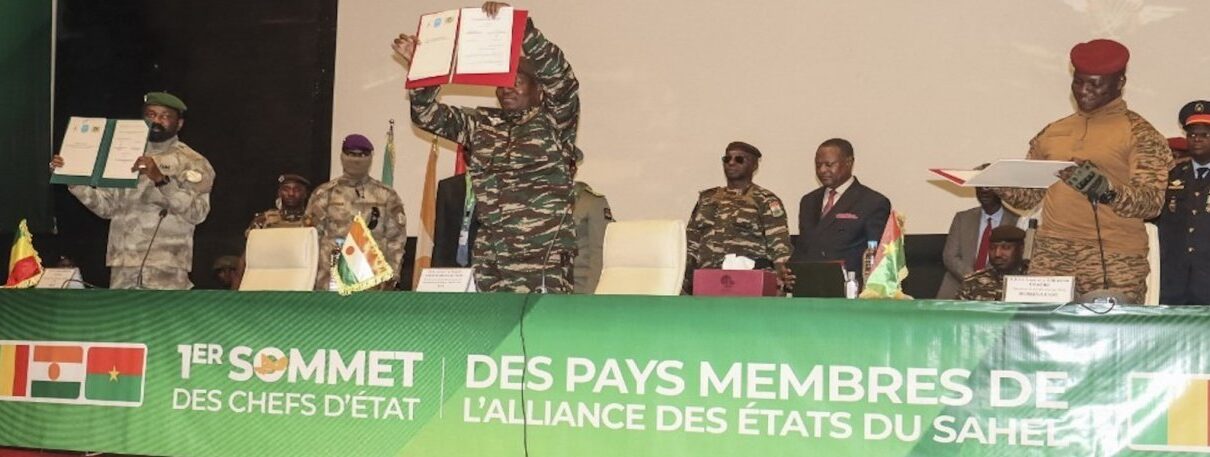
The Global Initiative Against Impunity (GIAI)—comprising prominent organizations such as the International Federation for Human Rights (FIDH), the Coalition for the International Criminal Court (CICC), Redress, Trial International, and Women’s Initiatives for Gender Justice—strongly condemns the announced withdrawal of Burkina Faso, Mali, and Niger from the Rome Statute of the International Criminal Court (ICC). This move represents a significant regression in the fight against impunity and undermines decades of African leadership in advancing global justice. Beyond weakening the ICC itself, it also jeopardizes the broader framework of international justice at a time when unity is critically needed.
Legal nuances of the withdrawal process
September 26, 2025. Despite claims of immediate effect, the withdrawal of Burkina Faso, Mali, and Niger from the ICC cannot take place instantly. According to Article 127 of the Rome Statute, a state must submit a formal written notification to the United Nations Secretary-General to initiate withdrawal, and the process only becomes effective one year after this notification. Until then, the Sahel states remain fully bound by their obligations under the Rome Statute, including the duty to cooperate with the Court. Importantly, the withdrawal does not affect ongoing proceedings related to crimes committed before the withdrawal takes effect.
Currently, the ICC is processing cases linked to the situation in Mali, which were referred to the Court by the Malian government in July 2012. The reparations process in the Al Mahdi case is nearing completion. Ahmed Al Faqi Al Mahdi was convicted on September 27, 2016 for directing attacks on religious and historic buildings in Timbuktu. Additionally, the Court is expected to deliver a decision on reparations in the Al Hassan case in the coming months, following his conviction on June 26, 2024 for war crimes and crimes against humanity also committed in Timbuktu. A warrant for arrest remains active against Iyad Ag Ghaly, the alleged leader of Ansar Dine, a jihadist group active in Mali.
From leadership to withdrawal: leaving victims without recourse
African states played a pivotal role in establishing the ICC in 1998, with widespread ratification of the Rome Statute and even referring domestic situations to the Court. This commitment provided victims of grave crimes with a vital international ally when justice was unattainable at the national level. The announced withdrawal contradicts this legacy of leadership, leaving victims with reduced avenues for obtaining justice.
This decision follows the January 2025 departure of the three Sahel states from the Economic Community of West African States (ECOWAS), another institution they helped shape and which has a strong human rights track record through its Community Court of Justice. These withdrawals mark a regression in the fight against impunity, leaving victims without recourse, weakening human rights protections, and deepening isolation at a time when regional and international cooperation are essential—especially in countries grappling with terrorism-related atrocities.
“The decision to withdraw from the ICC further weakens the position of victims, for whom the Court often represents their last hope for justice. After leaving ECOWAS, the loss of ICC protection leaves victims in Burkina Faso, Mali, and Niger without recourse for the most serious human rights violations they continue to endure,” stated Drissa Traoré, Secretary-General of the FIDH. “In these countries facing multidimensional crises, national judiciaries remain unable to deliver justice and reparations to victims due to a lack of political will and an inability to investigate war crimes and crimes against humanity.”
A blow to an already vulnerable international justice system
The announcement comes as international justice faces growing pressure. Earlier this year, Hungary also signaled its intention to withdraw from the Rome Statute—a move widely criticized for undermining the global fight against impunity.
While the ICC has faced criticism in the past for the perceived selectivity of its cases and a focus on Africa, the Court has made strides in expanding its mandate beyond the continent. Current investigations and cases span Afghanistan, Bangladesh/Myanmar, Palestine, Ukraine, Venezuela, Libya, and the Philippines. Recent arrests of suspects in Libya and the former President Rodrigo Duterte highlight that no region or high-level official is beyond the reach of justice. This growing universality strengthens the Court’s legitimacy but also makes it more vulnerable to political attacks.
“State parties must demonstrate resilience and reaffirm their commitment to the Court, the fight against impunity, and the rights of victims worldwide,” emphasized Alix Vuillemin, Executive Director of Women’s Initiatives for Gender Justice (WIGJ). “At a time when the Court faces increasing attacks, states must advance toward universality, not retreat. Turning away now only strengthens impunity.”
The critical role of states in upholding international norms
The ICC plays a vital role in international justice by complementing existing mechanisms such as truth-seeking processes and transitional justice initiatives, all essential for sustainable peace. The Rome Statute enshrines key principles: no immunity for heads of state, complementarity with national jurisdictions, and victim participation in judicial processes and reparations. The withdrawal from the Statute risks weakening these protections domestically and compromising decades of progress in establishing global norms against impunity.
The GIAI urges all ICC state parties to reaffirm their commitment to the Rome Statute. As violence escalates against victims in Africa and around the world, preserving the ICC as a court of last resort is essential.
*The Global Initiative Against Impunity (GIAI) is a consortium of eight international NGOs and the CICC, co-financed by the European Union. Its mission is to contribute to the fight against impunity by supporting a holistic, integrated, and inclusive approach to justice and accountability for perpetrators of grave human rights violations and international crimes. This statement does not necessarily reflect the position of all member organizations.