Government stands firm on penal code reform despite international criticism
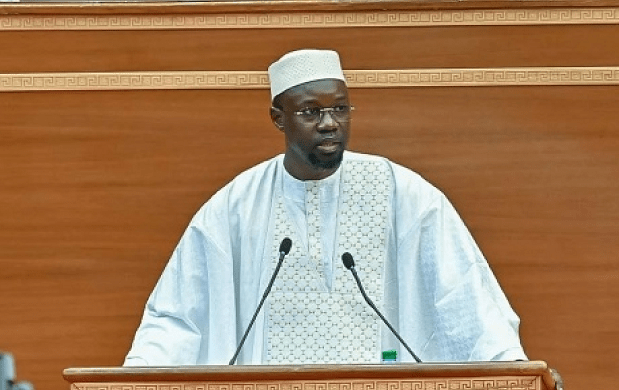
Prime Minister Ousmane Sonko delivered a firm message to lawmakers on Friday, declaring that the newly enacted law targeting acts against nature will be enforced with zero tolerance. Speaking during a parliamentary session, he dismissed concerns raised by foreign governments and international observers regarding the controversial legislation.
During the questions to government session, Sonko emphasized that the effective implementation of the reformed penal code is now the top priority. He argued that once a law is passed and signed into force, all citizens—regardless of prior opposition—must comply with its provisions without exception.
The reform, signed by President Bassirou Diomaye Faye on March 27, 2026, amends Article 319 of the 1965 Penal Code. The updated legislation introduces stricter penalties for what it defines as unnatural acts, alongside new clauses criminalizing their promotion and financing.
Under the revised law, convicted individuals face imprisonment ranging from five to ten years, coupled with financial penalties between 2 million and 10 million West African CFA francs. The government has repeatedly framed the reform as a measure to safeguard public health and combat social ills, with officials citing the spread of HIV as a key concern.
In response to international backlash—particularly from Western capitals—Senco reiterated Senegal’s legislative sovereignty. He asserted that Senegalese society is free to determine its moral and legal standards, declaring that the nation owes no explanations or justifications to external powers on this matter.
The Prime Minister closed the debate by unequivocally ruling out any moratorium on the new law. He stressed that the government remains fully committed to its strict and immediate enforcement, signaling that no delays or exemptions will be granted.