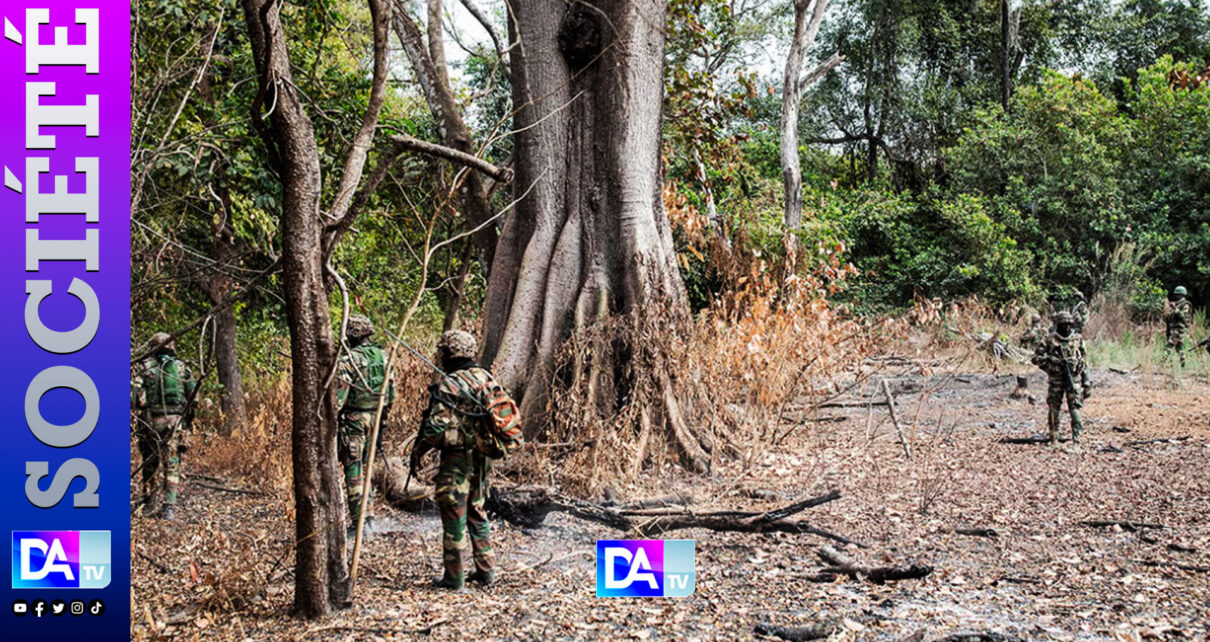
The recent destruction of cannabis plantations in Casamance by Senegalese security forces underscores a decades-old conflict that refuses to fade. In early May, soldiers and gendarmes, supported by detection dogs, dismantled cannabis fields near the Gambian border—a stronghold of the weakened MFDC rebel movement.
The operation, described by Colonel Cheikh Guèye, regional military commander in Ziguinchor, yielded significant results: 14 arrests, a cache of firearms, and over six tons of cannabis seized. While the military action proceeded without major resistance, it highlighted the shifting dynamics of a conflict that has simmered for 43 years in southern Senegal.
a rebellion drained of strength and purpose
The MFDC, which has waged an armed campaign for Casamance’s independence since December 1982, now faces irreversible decline. Once a formidable force, the movement has been crippled by internal fractures, dwindling recruitment, and the aging of its fighters. Its once-solid base of local support has eroded, leaving it isolated and financially strained.
Analysts point to multiple factors behind its collapse: divisions among political and military factions, reduced access to weapons and ammunition, and the loss of legitimacy in the eyes of communities that once sympathized with its cause. The rise of political leaders from Casamance, including Prime Minister Ousmane Sonko, has further diminished the movement’s appeal. Many now see the struggle for independence as outdated, with national representation offering a more viable path forward.
cannabis cultivation fuels instability in the shadows
Despite its weakened state, the MFDC continues to exploit the lucrative cannabis trade to fund its remaining operations. The dense forests and remote terrain of northern Sindian, near the Gambian border, provide ideal conditions for illicit cultivation. Local populations, struggling with poverty and limited economic opportunities, have increasingly turned to growing cannabis—prompting theological debates among religious leaders over its permissibility.
Prime Minister Sonko has made the fight against cannabis a national priority, declaring, « We do not believe the maquisards still pursue independence as anything more than a principle. The real issue is cannabis cultivation. We will deploy all necessary means to eradicate it. » The May operation aimed to cripple the rebels’ financial lifeline by targeting their drug networks—a strategy Colonel Guèye described as « striking at the heart of their war economy. »
While peace agreements have been signed with some rebel factions—most recently in Bissau in February 2025—implementation remains uneven. The third anniversary of a peace accord with one faction near Ziguinchor was marked this week, yet sporadic violence persists, and not all armed groups have laid down their arms. Displaced communities, however, are gradually returning to their villages, encouraged by the lull in hostilities.
peace remains fragile amid lingering threats
Local civil society leaders acknowledge progress but caution that the path to lasting stability is far from assured. « Pacification is not yet complete, » they warn, noting that some armed elements remain reluctant to disarm. The interplay between drug trafficking, rebel remnants, and local economic hardship continues to pose a formidable challenge to peace in a region that has long yearned for tranquility.