Urgent call to uphold humanitarian law amid Bamako blockade
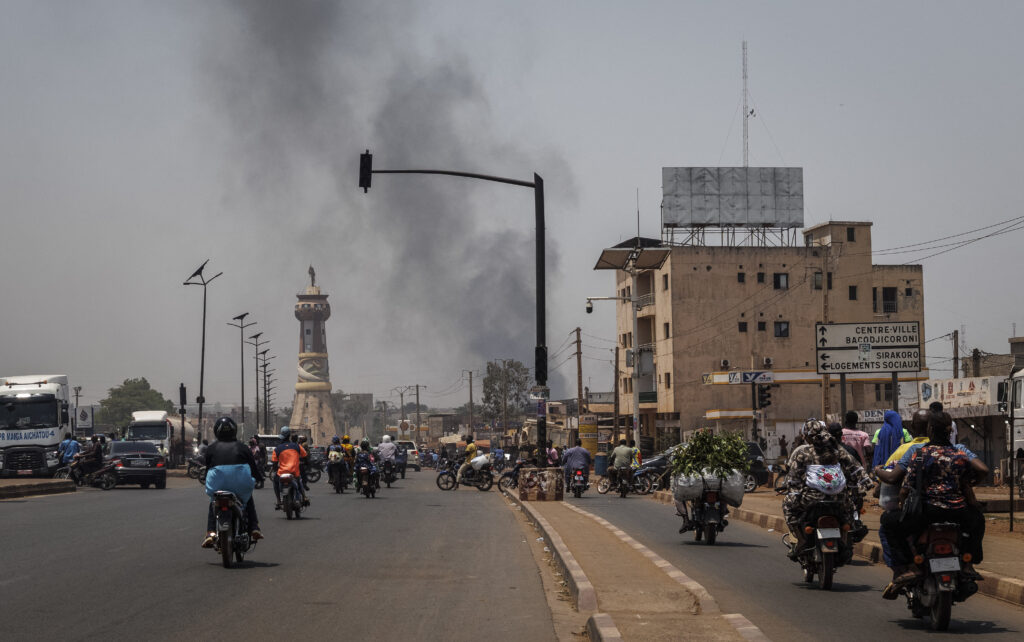
The ongoing blockade of Bamako is inflicting severe hardship on civil·e·s, jeopardizing their fundamental rights to food, health, and safety, and violating international humanitarian law, warns Amnesty International. The group is urging the GSIM (Groupe de soutien à l’islam et aux musulmans), an Al-Qaïda-affiliated armed faction, to immediately lift the blockade and ensure the protection of civil·e·s.
Since April 28, three major routes into Bamako have been obstructed, cutting off the capital from essential supplies. On May 6, the GSIM targeted a civilian convoy transporting fruits from Bamako to Bougouni, despite no military escort or involvement. International humanitarian law explicitly prohibits attacks on civilian vehicles and infrastructure, yet these violations continue unchecked.
Civil·e·s must never be collateral damage in conflict. Blockades that deprive populations of food, water, or healthcare violate the most basic principles of war. The GSIM must halt these unlawful restrictions immediately.
Marceau Sivieude, Amnesty International’s West and Central Africa Regional Director
How the blockade breaches warfare rules
The GSIM’s blockade, announced on April 28, differs from the September 2025 restrictions—which targeted only fuel tankers—by now affecting all incoming goods. By May 15, at least half of Bamako’s key supply routes were disrupted, leading to soaring prices for essential goods. These actions not only breach international law but also exacerbate the humanitarian crisis in a city already grappling with instability.
« Blockades must not strip civil·e·s of their economic and social rights. The GSIM’s blockade of Bamako contravenes international humanitarian law. Access to clean water, food, and medical supplies must be guaranteed for all residents, » emphasized Sivieude.
On May 5, the UN Human Rights Office (OHCHR) reiterated calls for an immediate end to hostilities, urging all parties to prioritize civil·e·n protection and respect for civilian infrastructure. The GSIM later announced a partial easing of the blockade on May 6, allowing medical evacuations, though Amnesty International has yet to verify implementation.
Chilling account of a deadly ambush on civilians
Survivor testimonies reveal the brutal reality of the GSIM’s tactics. In January 2026, a military-escorted fuel convoy traveling from Dakar to Bamako was ambushed near Diboli and Kayes. The attackers, reportedly over 200 in number, opened fire without warning. Several drivers and apprentices attempting to flee were executed. « Djihadists on motorcycles struck without hesitation. When three military trucks arrived to reinforce the convoy, they were also targeted and set ablaze, » recounted the survivor under anonymity.
The attackers captured at least 12 drivers and apprentices, forcing them to dig graves for fallen comrades before slaughtering them. This horrific incident underscores the GSIM’s blatant disregard for international humanitarian law, which mandates the protection of civilians and prohibits indiscriminate violence.
Attacks on civilians, whether deliberate or indiscriminate, constitute war crimes. The GSIM must cease all such actions immediately. Malian authorities must investigate these atrocities and hold perpetrators accountable.
Marceau Sivieude, Amnesty International’s West and Central Africa Regional Director
Escalation of violence in Mali
The blockade follows a surge in attacks across Mali. On April 25, the GSIM and the Front de libération de l’Azawad (FLA) launched coordinated assaults in Bamako, Kati, Mopti, Sévaré, Gao, and Kidal, targeting military bases and political figures. In Kati, Defense Minister Sadio Camara and several family members were killed in a targeted explosion.
On May 6, GSIM fighters attacked the villages of Kori Kori and Gomassagou in central Mali, causing significant civilian casualties. Local sources reported at least 40 deaths and multiple disappearances, highlighting the escalating toll on Malian communities.