Moscow’s hollow roar: The Kremlin’s failure to back Venezuela
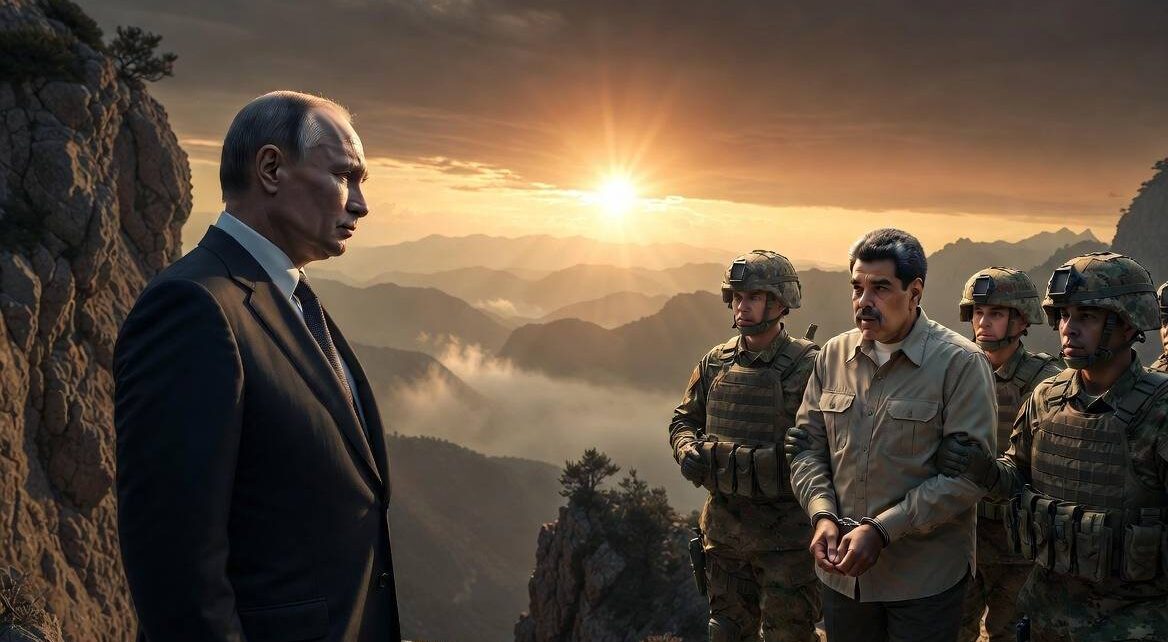
There are silences that echo louder than confessions, and diplomatic condemnations that reveal more about retreat than resolve. When seismic political shifts rocked Caracas in early 2026—marked by large-scale U.S. military intervention and the dramatic capture of Nicolás Maduro—the Russian Federation responded with a disconcerting passivity. For a nation that once positioned itself as Venezuela’s guardian of sovereignty and a bulwark against American imperialism, this retreat into hollow diplomatic statements amounts to a surrender of operational silence.
Where has Moscow’s once-formidable posture gone? Where are the high-profile strategic alliances once heralded under the glare of global media?
Empty words as the only shield
While Russia’s foreign ministry formally labeled the events an « armed aggression » and demanded the release of the deposed leader, such rhetoric amounted to little more than symbolic posturing. Beyond the predictable diplomatic noise, what concrete action did the Kremlin take? A few delayed naval maneuvers, the belated dispatch of a submarine to escort a sanctioned oil tanker, and an optimistic hope expressed in public that Washington would « uphold international law ».
This was not merely restraint—it was capitulation in plain sight. By refusing to mount a robust counter-diplomatic offensive or challenge the U.S. narrative in international forums like the UN Security Council, Russia allowed its most trusted Latin American ally to be extradited to New York prisons without lifting a finger. Russian intelligence, so quick to preempt Western moves elsewhere, remained conspicuously absent, leaving Caracas defenseless against the renewed Monroe Doctrine under the White House’s reinvention.
The stark truth is undeniable: the 2025 strategic partnership treaty proved to be little more than paper tigers. When confronted with its first real test of power, Russia’s shield shattered, exposing glaring limitations in its global projection capabilities.
A trap of strategic exhaustion
This silence was not a calculated tactic—it was an unavoidable consequence of exhaustion. Entangled in years of conflict and suffocated by a « death economy » that drains financial and human resources, the Kremlin simply no longer possesses the means to sustain its global ambitions.
Venezuela became an involuntary bargaining chip—or worse, a collateral casualty—of Russia’s own isolation. By limiting its response to perfunctory protests, Moscow sent a clear message to allies worldwide: Russian protection ends where Russian vulnerabilities begin.
Geopolitical betrayal and the fall of a protector
By abandoning Venezuela to a transitional government under external pressure and tacitly accepting the fait accompli imposed by Washington, Russia committed a grave strategic error. It consigned the Venezuelan people to a new era of foreign tutelage without offering any credible alternative.
This silence is not diplomatic restraint—it is the admission of failure. In cloaking its impotence in politeness, Russia did not merely lose a key ally and privileged access to one of the world’s largest oil reserves—it forfeited its role as a global counterbalance. In Caracas, the curtain fell, and the once-proclaimed Slavic protector was nowhere to be seen.