As Mali grapples with severe instability, its regional partners appear to be looking elsewhere. Neither the Alliance of Sahel States (AES) — intended to provide a collective security response for Mali, Burkina Faso, and Niger — nor ECOWAS, which Bamako has exited, seems capable of exerting significant influence. Amidst official silences, pro forma condemnations, and political calculations, West Africa projects an image of strategic void. Bakary Sambe, president of the Timbuktu Institute and a research professor at Gaston-Berger University of Saint-Louis, offers insights into this period reshaping West African security dynamics.
Following the attacks on April 25th, what is the current understanding of the situation in Mali?
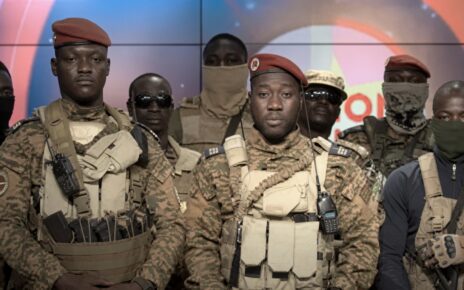
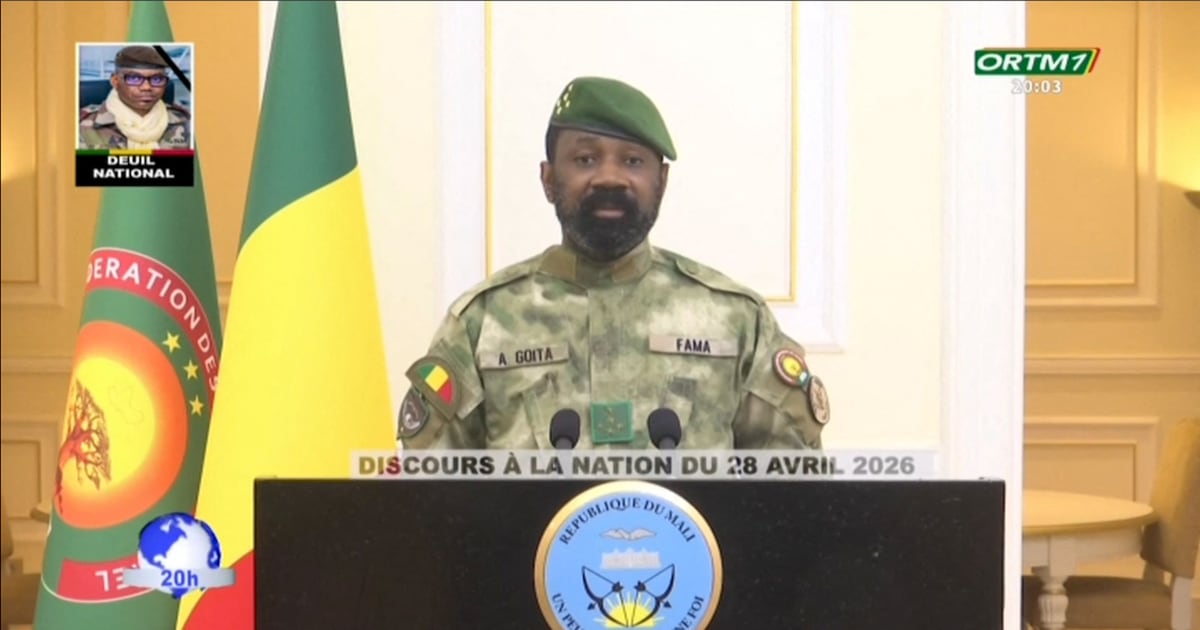
Bakary Sambe: The coordinated assault was devastating, particularly in Kati, where Defense Minister Sadio Camara tragically lost his life, subsequently replaced by General Assimi Goïta himself. However, at this juncture, I believe it’s premature to discuss a potential regime change or the fall of Bamako. Life continues as best it can, and Malians, long accustomed to crises, are once again demonstrating their remarkable resilience. This persists despite the ongoing war of communiqués between the military authorities, the Azawad Liberation Front (FLA), and JNIM.
What concrete actions are Burkina Faso and Niger, Mali’s allies in the AES, undertaking?
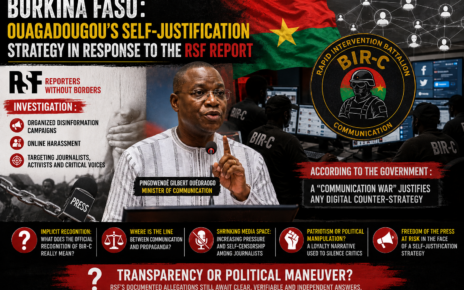
Captain Ibrahim Traoré of Burkina Faso officially condemned the events as a “monstrous plot.” While some might deem this response subdued, Ouagadougou’s stance is primarily pragmatic. Burkina Faso remains deeply engrossed in its own internal security challenges, explaining its relative withdrawal. Just last week, numerous soldiers lost their lives in attacks on Burkinabè soil. During Mali’s fuel blockade in late 2025, Burkina Faso did provide logistical aid until its own domestic situation became too complex to manage. From a legal standpoint, Articles 5 and 6 of the Liptako-Gourma Charter — which solidifies this Sahelian alliance — are often likened to NATO’s mutual assistance principle. This framework is quite explicit. However, for both Burkina Faso and Niger, internal security threats severely restrict their ability to implement these provisions. On paper, the AES functions as a confederation that has not yet achieved its strategic maturity, particularly regarding its capacity to pool forces effectively. This week, Nigerien authorities reluctantly declared a national day of “fasting” and prayers against terrorism.
The Malian crisis highlights the limitations of regional alliances.
ECOWAS has called for “regional mobilization,” but with what objective, especially since Bamako left the organization in January 2025?
This declaration must be viewed within the recent regional context. It follows a significant meeting in Lomé, Togo, dedicated to the Sahel. For the first time in years, ministers from AES nations, alongside representatives from ECOWAS, the African Union, France, the European Union, and Russia, convened at the same table.

Beyond the immediate crisis in Mali, it’s crucial not to overlook diplomatic efforts aimed at counteracting the trend of regional fragmentation and the escalating security challenges of recent years. Within this context, ECOWAS seeks to project a new image, distancing itself from the regional body that once considered military intervention in Niger. During the Lomé meeting, Mali’s Minister of Foreign Affairs, Abdoulaye Diop, affirmed that channels for dialogue and exchange remain open, strictly adhering to the principle of state sovereignty in the Sahel. Through these overtures, ECOWAS intends to gradually re-engage in the Sahelian geopolitical landscape.
The African Union, meanwhile, stresses the importance of “continental mechanisms” to prevent further security destabilization in the Central Sahel. What does the continental organization refer to?
Once again, the formation of the AES, with its Liptako-Gourma Charter, somewhat dismantled the existing regional security framework. This framework, however, had never been particularly effective in the fight against terrorism. The reason is straightforward: for over a decade, regional organizations were largely dispossessed of security responsibilities, with a clear prioritization of the G5 Sahel, which was dissolved in 2023. Despite their historical distance from the Sahelian security arena, both the African Union and ECOWAS continue to pursue the ideal of an intervention force, or at least a joint force. Yet, this ambition struggles to materialize on the ground. By the end of 2026, ECOWAS plans to deploy a 1,650-member anti-terrorist brigade, but a broader armed or peacekeeping mission remains highly uncertain for now. Regardless, there’s a growing awareness that attempting to extract the Central Sahel from West Africa in the hope of combating armed groups constitutes a strategic misstep. Faced with divisive issues, security must be managed collaboratively through intelligence sharing and the pooling of resources. The shock of April 25th has brought the indispensable need for security cooperation, even minimal, back to the forefront.
Russia faces a strategic defeat.
Indeed, another actor that has increased its visits to the Sahel in recent months is Washington. What stance might the United States adopt concerning the Malian crisis?
Beyond Donald Trump’s relative disinterest in Africa, we are observing a renewed focus from American diplomacy, with high-ranking officials returning to the Sahel, even to Niger, where US military personnel had been asked to leave. This is simply because the geopolitical stakes have shifted. Furthermore, the situation in Mali underscores a complete strategic defeat for Russia, most starkly evidenced by the death of Defense Minister Sadio Camara. He was widely regarded as the most pro-Russian military figure to rise to the highest levels of the Malian state. The departure of Africa Corps paramilitaries from Kidal serves as another powerful indicator. Russia’s Sahel setback is not merely military; it is profoundly symbolic. A myth has crumbled: the notion that Russia could reliably guarantee the protection and security of regimes. Moscow’s diplomatic and security credibility risks taking a significant hit. Conversely, if the United States believes it can challenge, or even displace, the Russians from the Sahel, I anticipate Washington will identify geostrategic and diplomatic justifications to establish a more pronounced presence in the region, particularly in Mali, with the underlying issue of resource control.
Does the Malian crisis now threaten the Gulf of Guinea nations?
For coastal states, it is primarily the dynamics within Burkina Faso that concern the central authorities of Togo, Benin, Ghana, or Côte d’Ivoire. As it stands, if the Malian security situation were to deteriorate further, the repercussions would be more acutely felt in Senegal or Mauritania. Consequently, all eyes are on Ouagadougou. The apprehension of a Sahelian domino effect is highly relevant, as is the questioning of the AES’s future and institutional viability. Populations are awaiting concrete solutions beyond mere rhetoric. In the meantime, Togo is endeavoring to forge a new “bridge with the Sahel,” to quote the Togolese Minister of Foreign Affairs, Robert Dussey. Time will tell what this ambition truly entails.
The Sahel cannot be separated from West Africa.
Should we fear a domino effect after these attacks, particularly in Burkina Faso?
The Malian case is distinctive; assuming a similar attack would replicate elsewhere might be premature. Crucially, the Azawad Liberation Front (FLA) does not operate in Burkina Faso. In Mali, the catalyst for these events is the convergence of profound security crises in the North and political turmoil in Bamako. Paradoxically, the severity of these attacks could provide a form of political leverage for the authorities in power. This is because whenever the issue of the North becomes critical or highly visible, it galvanizes the Malian population around its army, reinforcing a sense of territorial integrity. The rallying around the flag has never been stronger in Bamako in recent days, to the point of dampening any dissenting voices, which, in the current climate, would be perceived as contrary to the prevailing patriotism. The authorities no longer even need galvanizing communication. To revisit the domino effect, despite vast swathes of territory outside Ouagadougou’s central control, there is, for now, no influential protest movement capable of bolstering JNIM jihadists and destabilizing Burkina Faso to such an extent.