A Technological Breakthrough in Cotonou
In the city of Cotonou, the startup SSaFE is redefining innovation. Spearheaded by chemical engineer Marielle Agbahoungbata, the company has developed an AI-driven “filtering robot” designed to convert polluted water into a usable resource, all while communicating in local languages.
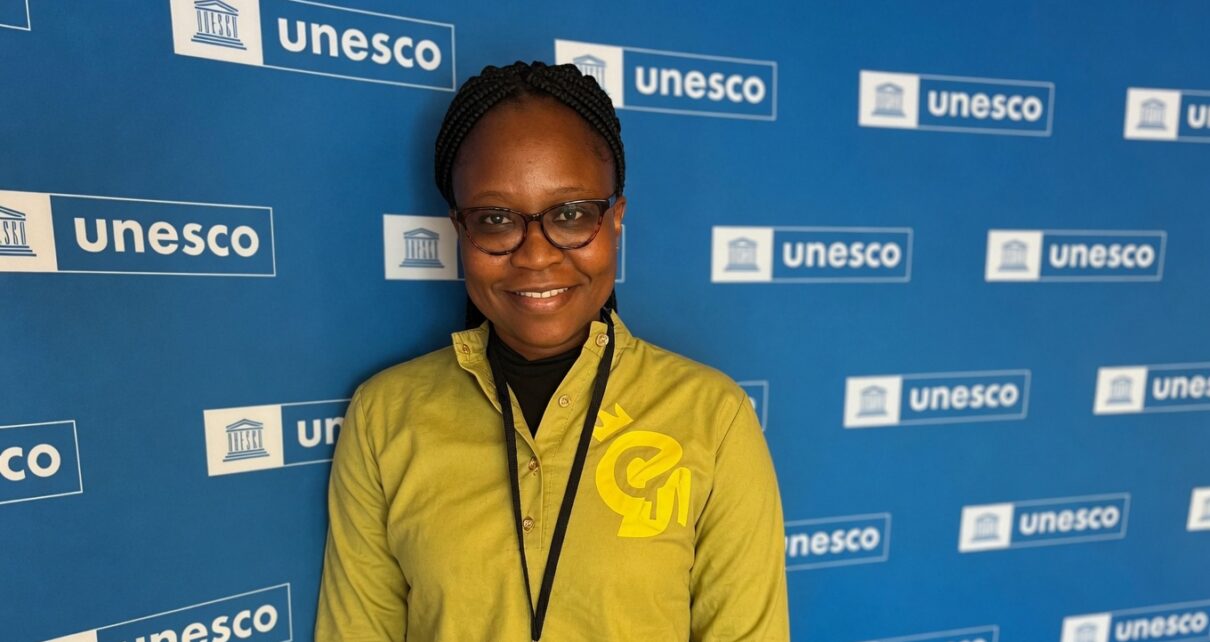
During a conference at UNESCO headquarters in Paris, Marielle Agbahoungbata presented a compelling vision from Bénin. Moving beyond theoretical discussions on technology, she unveiled a practical solution for her country’s challenges: a robot that can not only assess water quality but also autonomously determine the appropriate treatment method.
A Digital Mind for Clean Water
Named Watt Air, this device is more than just a machine; it functions as a miniature laboratory. Based on the specific pollutants it detects, the integrated artificial intelligence makes a critical decision: is this water suitable for irrigation, washing clothes, or human consumption?
“The robot saves both time and energy. The AI precisely calculates the amount of reagents needed, achieving a surgical efficiency in managing this resource,” the founder explained.
In an era of increasing water stress and rising costs, this technological shortcut helps prevent waste and optimizes the use of every available litre.
Overcoming the Literacy Divide
This is where the project’s human-centric design becomes apparent. SSaFE’s innovation is not just for engineers but is aimed at mothers in remote areas. The robot features a multilingual voice assistant, capable of responding in languages such as Fon, Bambara, Swahili, and Wolof.
Consider a woman in a village where formal education is a distant luxury, now able to converse with her filter to recycle laundry water. “She can recycle her water at home, even if she has never attended school,” Marielle notes with evident pride. This represents a paradigm where AI adapts to human needs, not the other way around.
Sèmè City: An Incubator for Excellence
This ambitious project is being nurtured within Sèmè City, Cotonou’s innovation hub. Thierry d’Almeida, the director general of the centre’s research institute, believes that this collaboration between mathematicians and chemists is vital for addressing local challenges effectively.
Supported by a $30,000 grant from UNESCO, the Watt Air project demonstrates that solutions to Africa’s problems can and often do originate on the continent, driven by a deep understanding of local contexts.
The 2027 Horizon
While the robot is still in its prototype phase, the goal is clear: to have it operational by 2027. SSaFE is currently seeking partners and financial backing to transition the technology from the laboratory to households.
Beyond the technical achievement, Marielle Agbahoungbata’s work underscores a fundamental truth: technology is only valuable if it frees up time, protects health, and ensures that no one is left behind, regardless of their language or background.