The fading promise of Russian security solutions
Following a decade marked by rapid expansion through mercenary operations, disinformation campaigns, and anti-Western populism, the Kremlin’s African strategy now confronts an insurmountable reality. Unfulfilled security guarantees, military entanglements, and growing public discontent suggest that the notion of a declining Russian imperialism on the continent is no longer speculative but an observable trend.
The illusion of an alternative security model
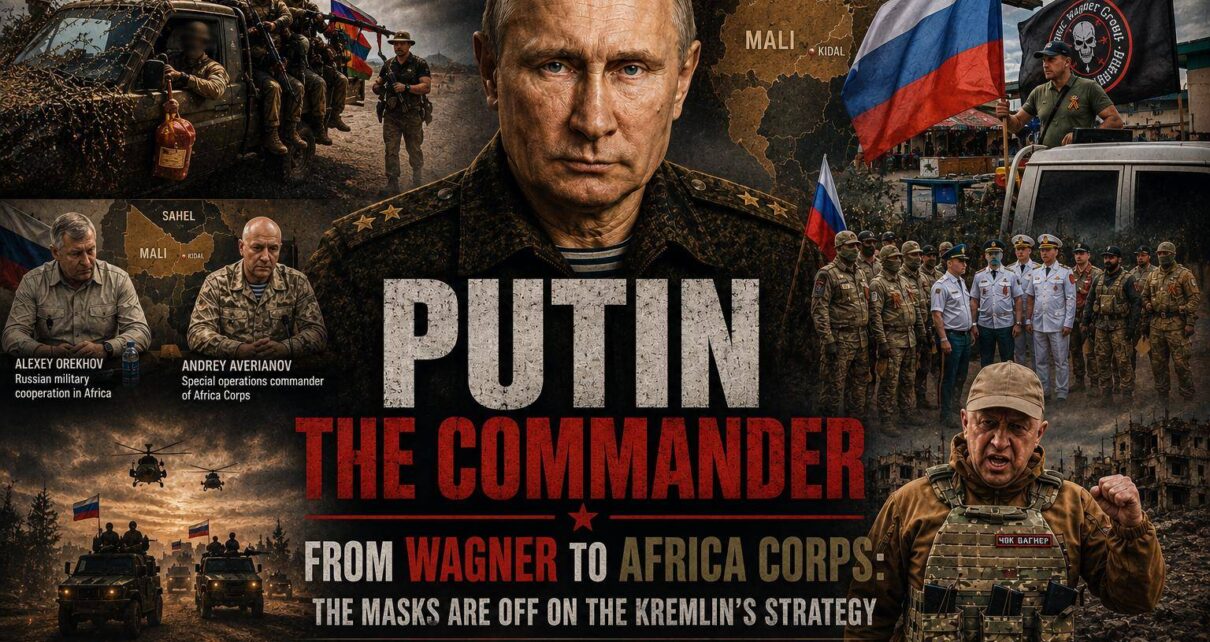
In the mid-2010s, as traditional Western powers receded, Russia positioned itself as a solution provider across Bamako, Bangui, Ouagadougou, and Niamey. By promoting a ready-made security narrative—free from human rights conditions—Moscow leveraged the Wagner Group (now rebranded as Africa Corps) to gain influence. Yet, years later, the outcomes have been starkly different.
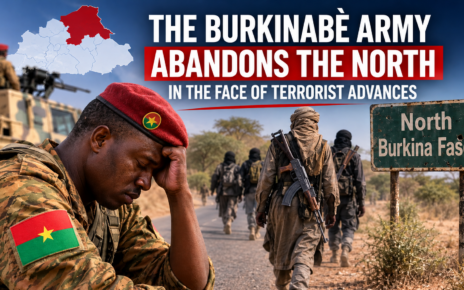
The Sahel’s security landscape has not improved; it has worsened. The catastrophic loss of dozens of Russian mercenaries and Malian soldiers in the Battle of Tinzawatane, near the Algerian border, shattered the myth of Russian invincibility. Rather than fostering peace, Moscow’s interventions have primarily served to prop up regimes in exchange for access to strategic minerals such as gold, diamonds, and uranium. This extractive approach, a hallmark of imperialism, is increasingly evident to local populations who recognize that the oppressor has merely exchanged one flag for another.
The structural factors driving Russia’s retreat
An examination of current trends reveals three fundamental weaknesses underpinning Russia’s diminishing influence in Africa:
- Financial and military strain from the conflict in Ukraine: Russia’s prolonged war in Ukraine has drained resources, diverting elite troops and heavy weaponry from African engagements to the European front. The once-abundant supply of military hardware for African partners has now been sharply curtailed.
- Lack of viable economic development models: Russia’s economic capacity remains limited, with a GDP comparable to Spain’s. It cannot compete with the European Union’s developmental aid or China’s infrastructure investments. African governments and juntas are discovering that emergency wheat shipments and social media propaganda campaigns do not sustain populations.
- The resurgence of African nationalism: Russia’s strategy relied heavily on the rhetoric of a “second decolonization.” However, the younger, digitally connected African generation rejects any form of foreign domination—whether from Paris or Moscow. The perception that replacing one colonial power with another constitutes liberation has evaporated.
A shifting geopolitical landscape
The decline of Russian influence does not automatically signal a return to Western dominance. Instead, a more pragmatic and less ideological redistribution of power is underway.
China is quietly reinforcing its economic foothold, prioritizing stable contracts over military posturing. Meanwhile, Turkey and the United Arab Emirates are emerging as key alternative partners, offering advanced drone technology and financial investments without the geopolitical baggage associated with the Kremlin.
The end of a geopolitical shortcut
Russia’s imperial venture in Africa, though intense, has proven historically short-lived. It has underscored a critical reality: influence cannot be sustained through force and manipulation alone.
For African leaders, the lesson is unambiguous: there are no shortcuts in geopolitics. Security and development cannot be outsourced to foreign mercenaries, regardless of their origin. The waning of Russian dominance may mark the beginning of an Africa that seeks not masters, but genuine partners.