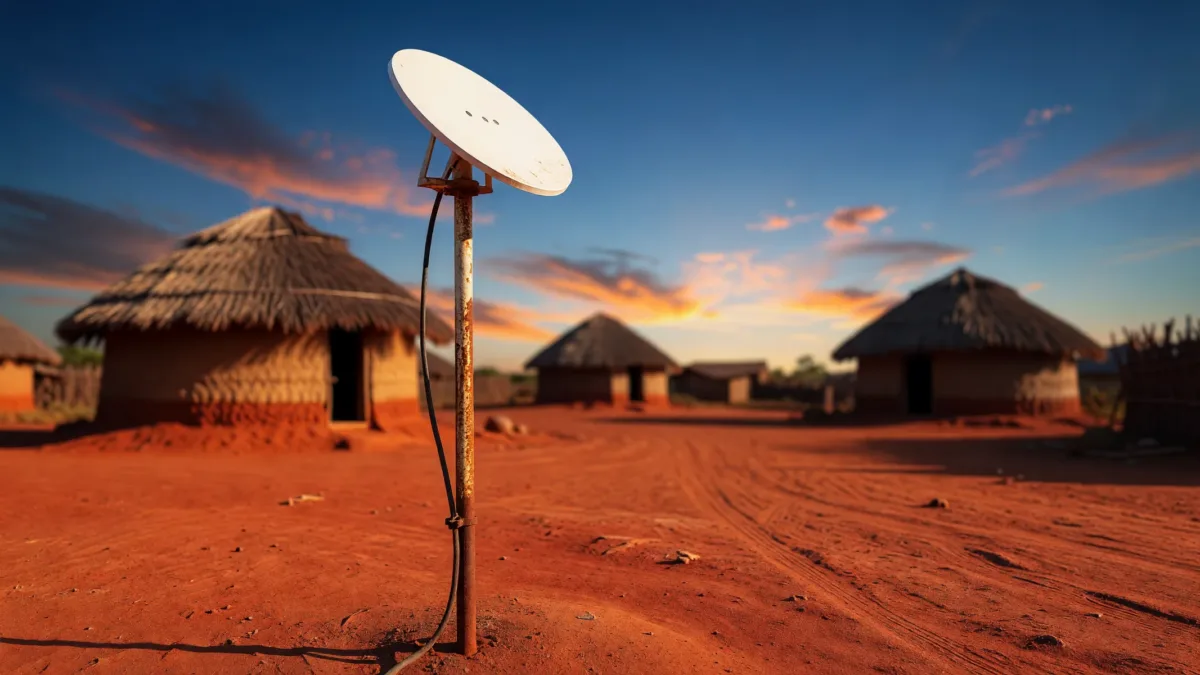
Côte d’Ivoire has officially greenlit Starlink’s satellite internet service to operate within its borders. The landmark decision was announced on July 16 during a high-profile visit by Frank R. Garcia, U.S. Deputy Assistant Secretary of State for African Affairs, at the U.S. Embassy in Abidjan. The visit also coincided with the signing of multiple economic agreements aimed at accelerating the country’s digital transformation.
Bridging the rural connectivity gap
Starlink’s arrival marks a significant step toward improving internet access in remote and underserved regions of Côte d’Ivoire. The service will leverage low-orbit satellite technology to deliver high-speed connectivity without the need for extensive ground infrastructure, according to the Ivorian Press Agency. The local Starlink subsidiary had previously secured a provisional 12-month license from ARTCI, the national telecommunications regulator.
Despite steady progress in urban areas like Abidjan and Bouaké, large swathes of the country—particularly in the north and west—still suffer from limited internet penetration. Starlink’s entry could help narrow this digital divide, offering a reliable alternative to traditional broadband solutions.
170 million USD sovereign data center investment
The authorization of Starlink is part of a broader U.S. commitment to Côte d’Ivoire’s digital infrastructure. American firm Cybastion has secured $170 million in financing guarantees from the U.S. Export-Import Bank to build the country’s first sovereign data center. This facility, designed to store sensitive national data, will also support the digitization and modernization of public services.
Three major agreements signed in one visit
The diplomatic meetings in Abidjan resulted in three key partnerships. In addition to Starlink and Cybastion, a $293 million agreement was finalized with ABD Group to fund and develop priority infrastructure in health and education. A separate contract was also signed with NTELX to optimize truck coordination at the Port of Abidjan, enhancing the country’s logistical efficiency.
Côte d’Ivoire’s digital ambitions
With a population of over 29 million, Côte d’Ivoire is West Africa’s largest Francophone economy and has set ambitious goals for its digital future. Government initiatives include the digitization of administrative services and the expansion of e-government platforms. However, internet access remains uneven, with rural areas trailing far behind urban centers.
Starlink’s satellite-based approach could provide a much-needed solution to this challenge, offering high-speed connectivity without the constraints of terrestrial infrastructure. The move aligns with Côte d’Ivoire’s broader strategy to position itself as a regional tech hub.
Diplomatic momentum with Washington
Frank R. Garcia’s visit culminated in a meeting with Ivorian Vice President Tiémoko Meyliet Koné to assess the economic partnership between the two nations. The discussions underscored the growing technological collaboration between Côte d’Ivoire and the United States, which is already a key investor in sectors like energy, infrastructure, and agriculture.
The agreements reflect Abidjan’s strategy to diversify its international partnerships amid intensifying competition among global powers for influence in West Africa. While China, France, and the U.S. all vie for strategic projects, Côte d’Ivoire is carefully balancing its engagements to maximize developmental benefits. The next milestones will be the operational launch of Starlink and the progress of the Cybastion data center.