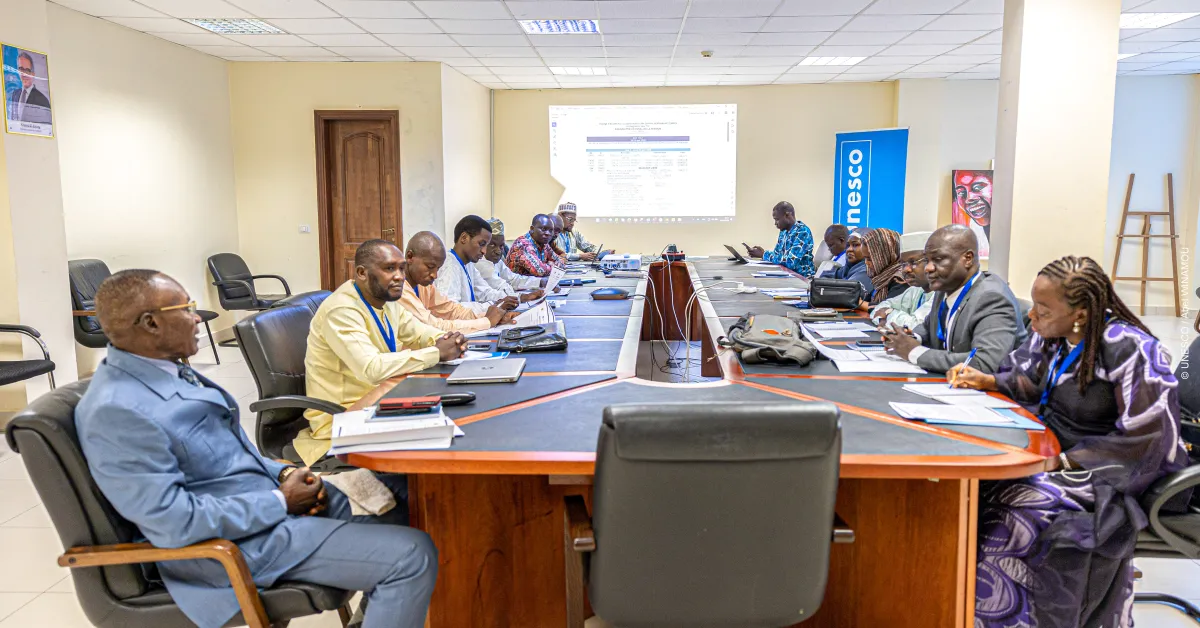
Tchad and UNESCO study digital education advances in Yaoundé
From April 20 to 24, 2026, a high-level delegation from the Republic of Chad conducted an educational study mission in Yaoundé, coordinated by the UNESCO Regional Office for Central Africa. The visit focused on examining best practices for integrating Information and Communication Technologies (ICT) into education systems, a critical step in modernizing learning environments.
The mission aligns with Chad’s national vision for educational reform, including the 2022–2026 National Development Plan, the Chad Connexion 2030 initiative, and the National Teacher Policy. These strategies aim to create an inclusive, high-quality education system accessible to all citizens.
Key objectives and national strategies
Under the Chadian School Refoundation Program (PRET), supported by the Global Partnership for Education and implemented with assistance from UNESCO and UNICEF, the delegation explored ways to strengthen ICT integration in schools. Despite structural challenges, digital tools are seen as essential to improving teaching quality, expanding access to education, and enhancing governance in the education sector.
The mission emphasized the need for low-complexity, accessible digital solutions tailored to Chad’s local conditions. A key focus was on teacher training, curriculum development, and institutional partnerships that could support a gradual digital transformation of the education system.
Learning from Cameroon’s digital education model
The delegation studied Cameroon’s progress in ICT integration across both formal and non-formal education sectors. Meetings with officials from the Ministry of Basic Education (MINEDUB) provided insights into Cameroon’s approach, covering:
- Pedagogical and curriculum innovations enabled by digital tools
- Teacher training programs and digital competency development
- Institutional coordination mechanisms and partnerships with development agencies
- Infrastructure and resource deployment strategies for sustainable digital learning
These exchanges allowed the Chadian delegation to identify adaptable models and best practices that could be replicated in their own context.
Methodology and expected outcomes
The study mission followed a rigorous methodological approach, combining:
- Document analysis and policy reviews
- Stakeholder interviews with educators and policymakers
- On-site observations of ICT-enabled learning environments
- Collaborative working sessions to assess feasibility and relevance
The goal was to produce a comprehensive mission report with actionable recommendations and a prioritized action plan. This plan will guide Chad’s next steps in integrating ICT into its education system, ensuring that reforms are both effective and sustainable.
Regional cooperation for resilient education systems
This initiative highlights the role of the UNESCO Regional Office for Central Africa as a facilitator of knowledge exchange and innovation across the subregion. By fostering peer learning and adaptation of proven solutions, the mission contributes to building more resilient and future-ready education systems in Central Africa.
Through such collaborative efforts, countries like Chad and Cameroon are better positioned to accelerate their digital transformation in education, ensuring that no learner is left behind in the 21st century.