
The sovereign credit rating assigned to Chad by S&P on March 16—maintaining the country at «B-» with a stable outlook—effectively validates the strategy behind the «Tchad Connexion 2030» National Development Plan. This decision underscores the agency’s confidence in the country’s economic momentum, driven by robust growth, moderate debt levels, and sustained support from international partners, the Ministry of Finance, Budget, Economy, Planning, and International Cooperation remarked.
Growth forecasts revised upward: from 3.6% to 5.2%
Since 2023, Chad’s economy has been steadily recovering, driven primarily by rising hydrocarbon prices and service sector rebound. In 2025, economic activity continued strengthening, with S&P projecting real GDP growth of 5% for the year—up 1.5 percentage points from its December 2024 forecast (3.6% annually between 2024 and 2027).
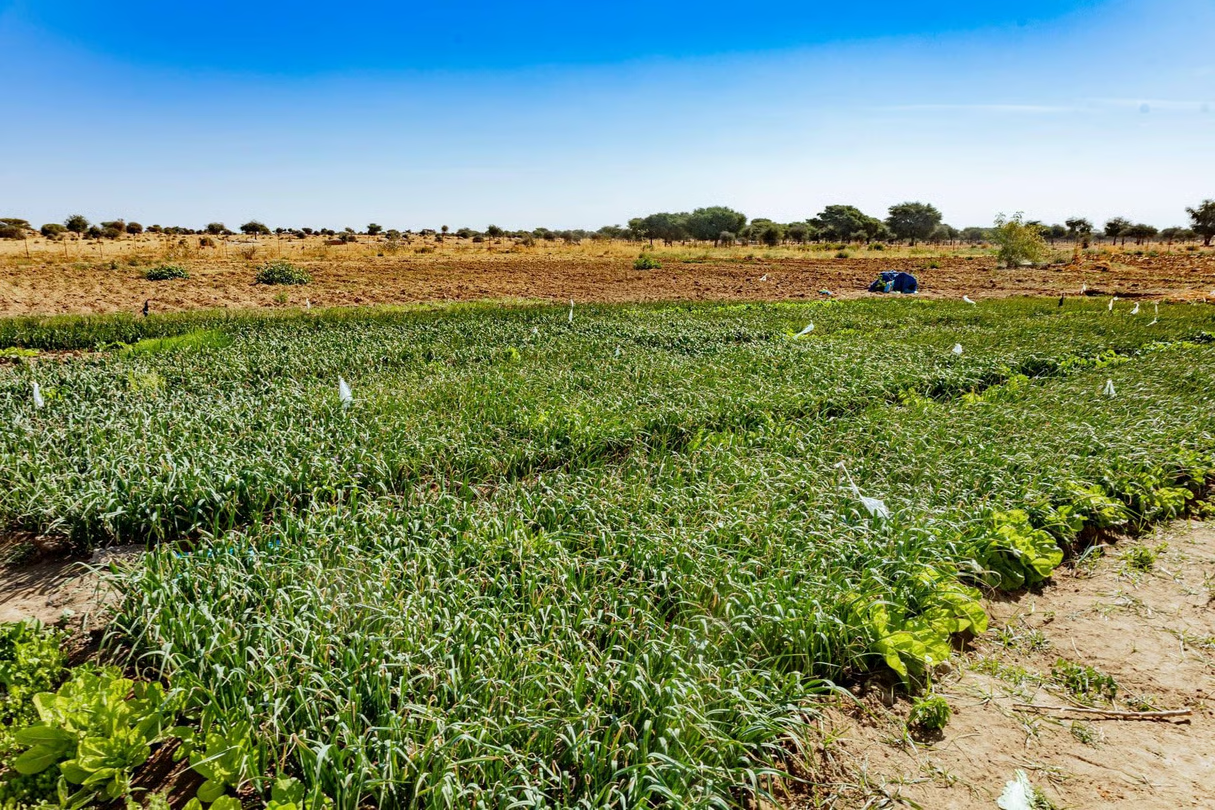
The International Monetary Fund (IMF) also revised Chad’s growth outlook upward to 5.2% last December, reflecting the economy’s vigor. Recent improvements in agricultural output and recovery in non-oil sectors have contributed to more diversified growth, despite oil remaining a key driver, accounting for a significant share of exports and public revenue. Meanwhile, agriculture and services bolster domestic demand.
Debt under control: public finances stabilize
Chad has made remarkable strides in public finance management, particularly in reducing its debt burden after years of high vulnerabilities. Public debt is now trending downward, estimated at around 36% of GDP—a moderate level compared to peers. In 2022, Chad became the first country globally to restructure its external debt under the G20’s Common Framework, reducing its foreign debt to half of total debt and securing mostly concessional terms with favorable repayment conditions.
This restructuring has restored fiscal space, enhanced debt attractiveness to investors, and enabled the financing of key projects outlined in the «Tchad Connexion 2030» National Development Plan. Authorities continue to pursue prudent fiscal policies, balancing debt sustainability with investments in infrastructure and social spending.

Domestic revenue mobilization: a key reform driver
Significant progress has been made in domestic revenue mobilization—a cornerstone of Chad’s ongoing economic reforms. The tax-to-GDP ratio, though still modest, rose sharply from 9.8% in 2022 to 13.1% in 2023, according to OECD data, reflecting efforts to broaden the tax base and improve tax administration.
This momentum continued in 2025, with non-oil revenues exceeding projections, supported by robust non-hydrocarbon activity and measures implemented under the IMF program approved in July 2025, totaling $625.3 million. Additionally, digitalization of public finances and stronger governance have enhanced collection efficiency.
The Ministry of Finance noted, «This rating confirmation strengthens Chad’s financial credibility, making it more attractive to private investors while reinforcing confidence among international partners in the reform trajectory.»
Unlocking potential through «Tchad Connexion 2030»
To sustain S&P’s stable rating, critical areas like economic diversification, improved tax revenue mobilization, and maintaining sustainable debt levels must be further strengthened—alongside investments in essential infrastructure. These priorities are central to the «Tchad Connexion 2030» National Development Plan.
The plan was adopted by the Council of Ministers on May 29, 2025, following Chad’s political transition, which began after President Idriss Déby Itno’s passing in April 2021 and concluded with the election of President Mahamat Idriss Déby Itno in May 2024, alongside the adoption of a new Constitution and a national reconciliation dialogue.
With economic emergence now within reach, Chad secured $20.5 billion in funding from public and private partners in Abu Dhabi in November 2025 to support its strategic plan. Through 268 cross-cutting projects, the initiative aims to transform the economy by lifting 2.6 million Chadians out of poverty, driving 8% annual growth from 2025 to 2030 and boosting GDP by 60% by 2030. The plan is structured around four pillars, implemented through 17 programs and 268 projects:
- Accelerating development of strategic infrastructure: electricity, water, roads, and telecommunications.
- Enhancing social policies in education, health, vocational training, youth employment, and social inclusion.
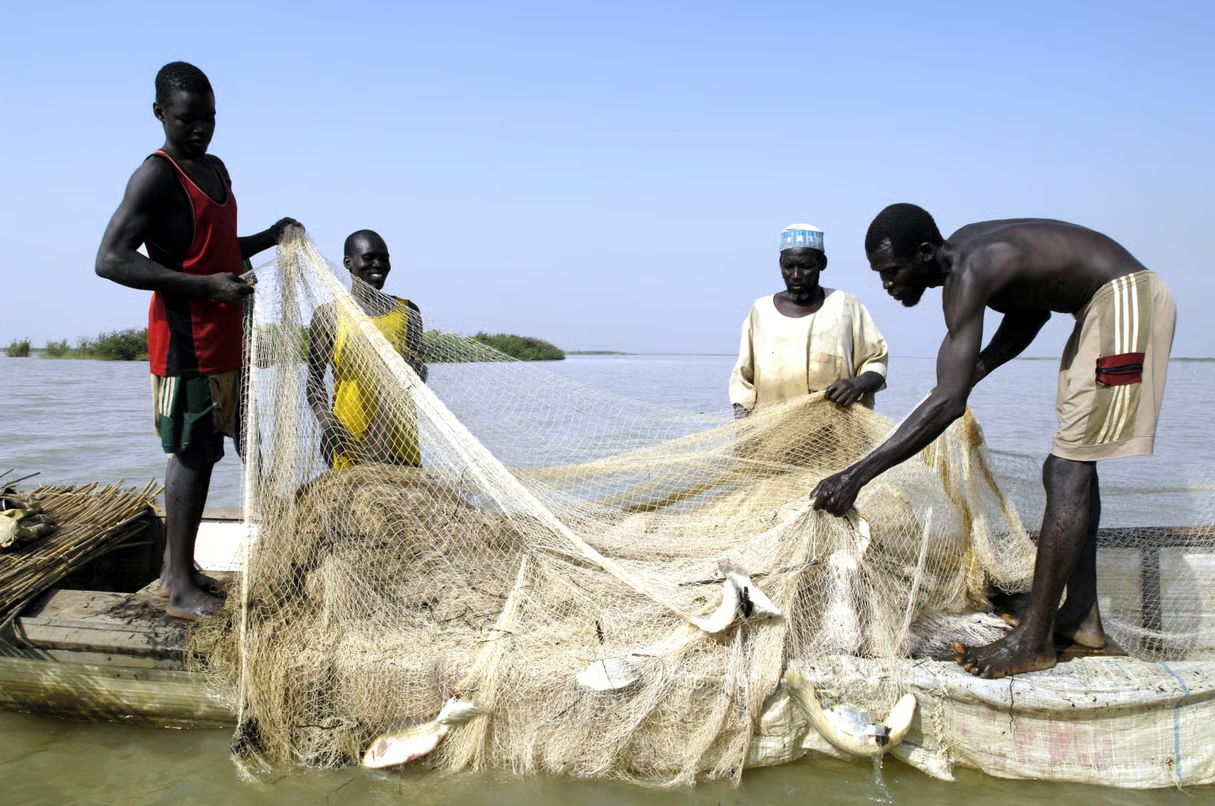
- Diversifying the economy by expanding export-oriented sectors in agriculture, livestock, fishing, hydrocarbons, mining, and tourism, with added-value processing encouraged.
- Improving the business environment through administrative simplification and reforms.