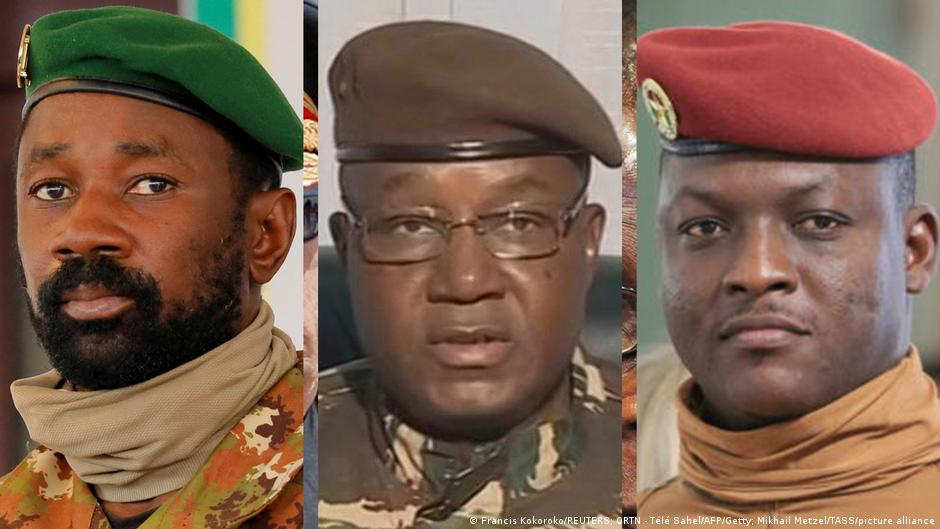
The nations of Burkina Faso, Mali, and Niger are frequently at the center of international discussions. Currently led by military figures who assumed control between 2020 and 2023, these three states share a common struggle: the fight against persistent terrorism and armed groups operating across their vast territories, which span nearly 2.8 million square kilometers.
Combatting insecurity and extremist violence remains the primary justification provided by the current military administrations. The surge in jihadist activity fostered a state of perpetual instability, ultimately leading to the collapse of previous governments in Mali, Niger, and Burkina Faso. Exhausted by the perceived failure of civilian leaders to provide protection, many citizens initially viewed these military interventions as a necessary short-term remedy.
However, as these transitional periods continue to stretch on, residents within the AES (Alliance of Sahel States) are beginning to question the genuine intent of their leaders to restore democratic principles and the rule of law. This skepticism is fueled by an increasing trend among military authorities to openly challenge the very foundation of democracy.
In Mali, for instance, state-led national dialogues resulted in recommendations to abolish political parties and all politically affiliated organizations. Furthermore, these consultations suggested that the military leader, recently elevated to the rank of general, Assimi Goïta, should serve as President of the Republic for a renewable five-year term.
Assimi Goïta, who has held power since the August 2020 coup, lacks electoral mandate. His authority rests on a claim of popular backing that is difficult to verify independently, especially in an environment where strict crackdowns have created a pervasive sense of apprehension.
The pursuit of a distinct political path
A comparable atmosphere exists in Niger and Burkina Faso, the other members of the AES. In Bamako, as in Ouagadougou and Niamey, major political factions chose to ignore the state-sponsored national forums. Yet, the essence of democracy lies in the existence of checks and balances. While no single political system fits every nation, countries often look to their unique histories and social realities to shape their governance.
Across the Sahel, there is a growing discourse regarding the need to move away from post-colonial frameworks and establish models rooted in local values. The recent series of coups in Mali, Niger, and Burkina Faso may represent an attempt to diverge from the democratic standards established during the national conferences of the 1990s.
Those historical gatherings had originally introduced the concept of the rule of law in Africa, emphasizing that the state must adhere to the principles of democratic transition and the regular rotation of power.
Soma Abdoulaye, a legal scholar at the University of Ouagadougou in Burkina Faso, argues that the challenge in Africa is not a lack of institutional frameworks or legal norms. Instead, the issue lies in the execution of these rules by leaders who lack a true democratic spirit.
The manipulation of public sentiment
The debate surrounding “Western-style democracy” remains intense in Ouagadougou, Bamako, and Niamey. Public trust in democratic processes is being tested as transitional authorities often leverage public opinion to consolidate their hold on power, frequently pushing democratic reforms to the background.
Mali, for example, experienced a democratic milestone in 1992 with the election of Alpha Oumar Konaré. However, since 2012, the nation has faced severe social, political, and security upheavals, leading to multiple democratic interruptions that have deeply polarized the Malian people.
In Niger, the introduction of multi-party politics in the 1990s initially brought hope for greater freedom of expression and the right to choose leaders. Nevertheless, the practical failure of democratic institutions has frequently allowed the military to intervene in Niamey. Following the recent ousting of President Mohamed Bazoum, the Nigerien public remains divided over their perception of democratic rule.
Currently, ECOWAS (the Economic Community of West African States) and other global bodies are attempting to enforce a return to constitutional order through sanctions. These measures, however, are often dismissed by segments of the population as evidence of Western meddling. For many in the Sahel, the current struggle is one of sovereignty and independence, particularly for those nations that have withdrawn from ECOWAS.
The military heads of the AES are known for their provocative rhetoric. Captain Ibrahim Traoré, Burkina Faso‘s transitional leader, recently challenged the idea that democracy leads to progress, asking for examples of countries that developed through such systems. This stance is contested by figures like François Akila-Esso Boko, a former Togolese minister, who points to the historical failures of dictatorial regimes.
The necessity of political opposition
Fostering a robust political culture is essential for opposition groups. Experts like Jean Didier Boukongou, a professor of international law, highlight the critical role and responsibilities of the opposition, noting their current vulnerability when facing established military regimes.
Developments in Guinée
Beyond the AES, Guinée also underwent a military takeover on September 5, 2021. The country is currently under the control of a military administration that has sought to completely restructure the political environment.
More than 50 political organizations were banned by the Guinean government, officially for failing to meet specific evaluation standards. Conakry has announced a constitutional referendum for late September, framing it as the initial move toward restoring constitutional governance.
Nevertheless, much like the situations in Mali, Niger, and Burkina Faso, the Guinean junta faces frequent allegations of stifling dissent and suppressing the voices of the opposition.