In any democratic system, matters of national defense are inherently sensitive. Military operations, intelligence activities, and strategic partnerships often remain shielded from public scrutiny. Yet, when secrecy becomes the norm rather than the exception, especially on issues of national importance, it risks eroding trust rather than reinforcing it.
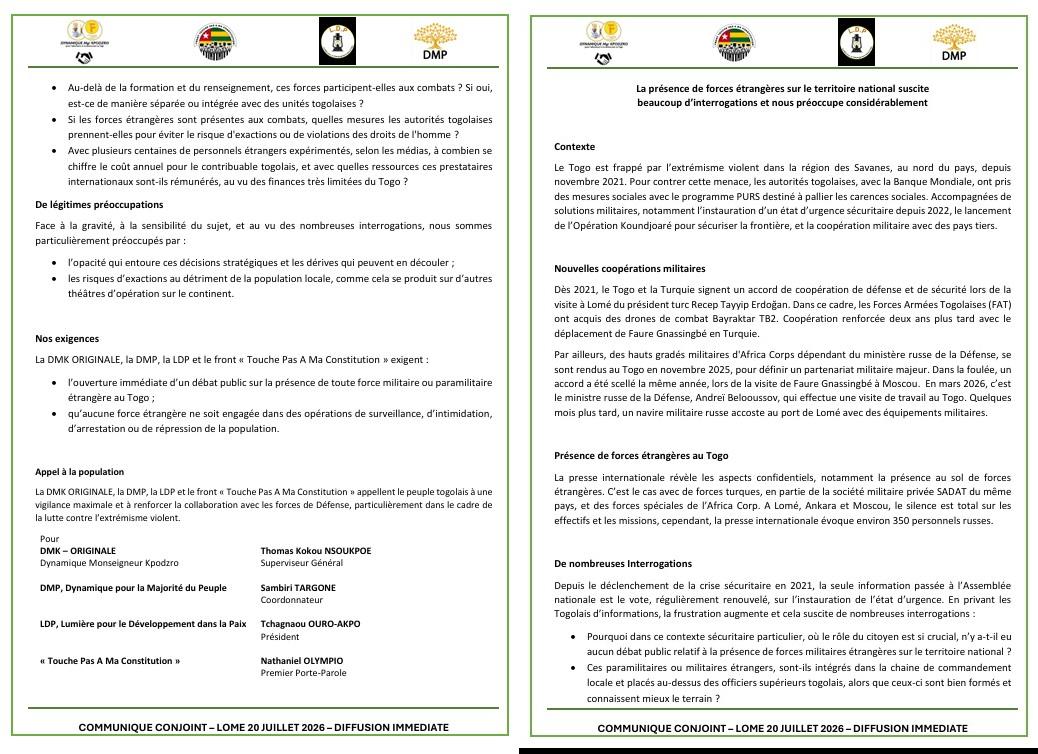
In Togo, reports from multiple observers and media outlets suggest the presence of foreign military personnel on national soil, including individuals from Russia and Turkey. If confirmed, this development raises legitimate questions that demand clear responses from the authorities.
a shield against political dissent?
The opacity surrounding these foreign military ties has fueled deeper suspicions about the true intentions of the Togolese government. Critics argue that the deployment of these forces reflects growing unease within the administration led by President Faure Gnassingbé. With persistent allegations of poor governance, socio-economic unrest, and institutional tightening, fears of both popular uprisings and internal coups have intensified, prompting the regime to seek unconventional safeguards.
Rather than being framed as a defensive measure for national security, the arrival of these foreign military partners is widely interpreted as a lifeline for a government determined to hold onto power at all costs. The lack of transparency only deepens these perceptions, leaving room for speculation about the true nature of these engagements.
unresolved operational and legal ambiguities
Central to the debate is the precise role of these foreign personnel. Are they engaged in military training, intelligence gathering, strategic advising, equipment maintenance, or perhaps even the close protection of high-ranking officials? Without detailed official explanations, conjecture fills the void, obscuring the real objectives behind their presence.
A critical distinction must be made regarding their operational involvement. Are these foreign military figures restricted to advisory or technical roles, or do they participate in active security operations alongside Togolese forces? The answer to this question carries significant implications for understanding the scope and legal framework of these agreements.
The issue of accountability is equally pressing. In nations hosting foreign military personnel, well-defined legal frameworks typically govern their rights, obligations, and oversight mechanisms. What specific provisions have been established in Togo to regulate their activities? What safeguards are in place to prevent potential abuses and ensure compliance with national laws and international commitments?
the hidden costs of secrecy
Financial transparency adds another layer of concern. How many foreign military personnel are currently stationed in Togo? What is the duration of their missions? What financial burden do these partnerships impose on the national budget? Are these costs borne by Togo itself, the partner countries, or through specific cooperation agreements? Taxpayers, who ultimately fund public policies, have a right to clarity on these matters.
It is important to note that opposition to military cooperation is not the issue here. Many states engage foreign partners to bolster their defense capabilities against shared threats. Togo, too, faces a complex regional security landscape, including the persistent terrorist threat in the North, which could justify such defense partnerships.
transparency as a cornerstone of trust
The credibility of any government hinges on transparency. When authorities provide clear explanations regarding the objectives, legal frameworks, and operational modalities of military cooperation, they diminish the space for rumors, unfounded claims, and conflicting interpretations.
In a region marked by chronic political instability and shifting security alliances, the most effective response to public concerns lies in open communication. Without compromising legitimate national security interests, authorities can offer insights into the intended goals, established safeguards, and collective responsibilities.
In defense matters, as in all areas of public policy, transparency is not a luxury—it is a cornerstone of legitimacy. When the presence of foreign military forces raises more questions than it answers, particularly amid perceptions of an administration clinging to power, the onus falls on the authorities to clarify the situation. In a democracy, silence is not a sustainable communication strategy; it inevitably paves the way for doubt.