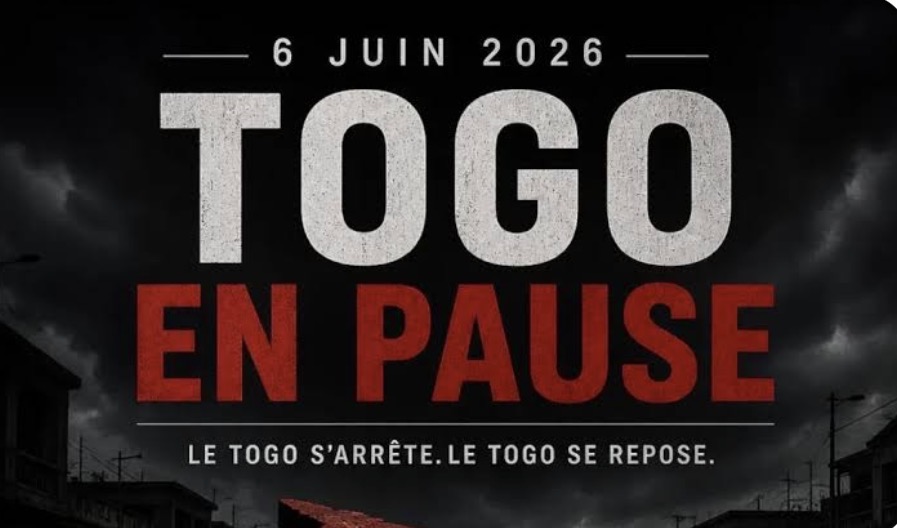
The sixth of June 2026 is set to mark more than a protest day—it’s a deliberate break. For nearly six decades, Togo has operated under a deeply rooted system of clan-based, militarized political control that perpetuates itself without reform. Now, the movement ‘Togo in Pause,’ led by the M66 coalition and supported by the entire Togolese resistance, is calling for a bold new strategy: withdrawal rather than participation.
Elections, institutions, public discourse—none of these have delivered real change. Power circulates within closed circles, never truly leaving. Crackdowns on demonstrations, silencing of dissent, and suppression of freedoms aren’t accidental flaws; they are the system’s core mechanics, designed to endure.
A generation rejecting the status quo
The youth of Togo have never known a political system that responds to their needs. They’ve witnessed marches dispersed, activists arrested, and media outlets muzzled. They’ve faced deepening inequality, social exclusion, and territorial divides. Yet they refuse to accept this as fate.
With ‘Togo in Pause,’ they’re embracing a form of resistance that is both peaceful and uncompromising: not filling the streets, but creating a void. A silence so loud it forces the regime to confront its own reality.
Staying home, suspending daily routines, refusing to feed the machine—this isn’t retreat, it’s a political statement. It’s saying, without violence: ‘If you won’t listen, feel our absence.’ On June 6, every shuttered shop, every empty street, every quiet home becomes a form of protest.
A locked-down system
For generations, power has been concentrated in a tight network of military, ethnic, and civilian elites. Key roles in the army, security forces, administration, and state-owned enterprises are reserved for loyalists. The system prioritizes power preservation over fairness, development, or equity.
Both citizens and the diaspora understand this reality all too well. Despite modernizing rhetoric and international partnerships, the underlying structures remain unchanged. Poverty persists, inequality deepens, and opportunities remain scarce.
‘Togo in Pause’ is an act of collective clarity: refusing to normalize what has never been normal.
A movement that unites across society
The power of this call lies in its inclusivity. It reaches workers, traders, students, civil servants, craftspeople, farmers, and those living abroad. Each person, in their own way, can contribute by pausing their role in sustaining the system.
June 6 isn’t just another day. It’s a declaration of dignity. To participate is to reject empty political rituals, repeated promises, and cycles of stagnation. It’s to declare: ‘We are not extras in your political theater.’
A collective test of resolve
Choosing to stay home, to pause work, to avoid movement—this is not a passive act. It challenges years of conditioned resignation, fueled by fear and division. It asks a simple but profound question: to keep tolerating the system, or to risk change.
The message of June 6 isn’t tied to a slogan or a single organization. It’s rooted in decades of accumulated frustration and unheard voices. It reflects a will that spans generations.
June 6: not a beginning, not an end, but a turning point
On this day, the Togolese people affirm they will no longer extend a system that has dominated for over six decades. The nation pauses. Not to disappear—but to rise again, with clarity and purpose.
The Togo we know will stand still.
So it can finally move forward.