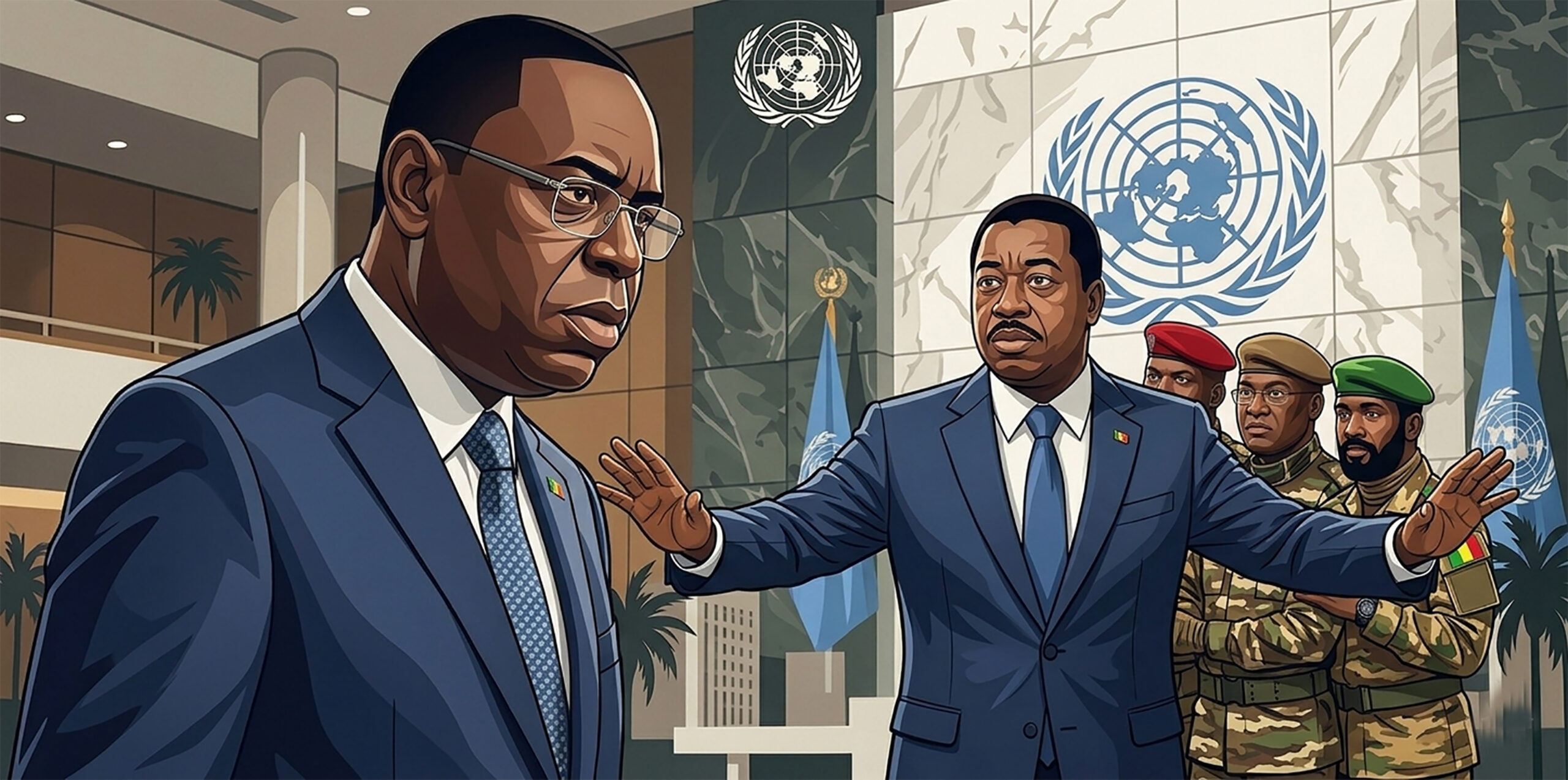
When former Senegalese president Macky Sall envisioned himself ascending to the pinnacle of global diplomacy, his aspirations collided with an unexpected obstacle. While 55 African nations appeared to back his bid to succeed António Guterres, Togo, Senegal, and the AES bloc have shattered the illusion of continental unity. This outright rejection sends shockwaves through diplomatic circles, marking a seismic shift in African geopolitics.
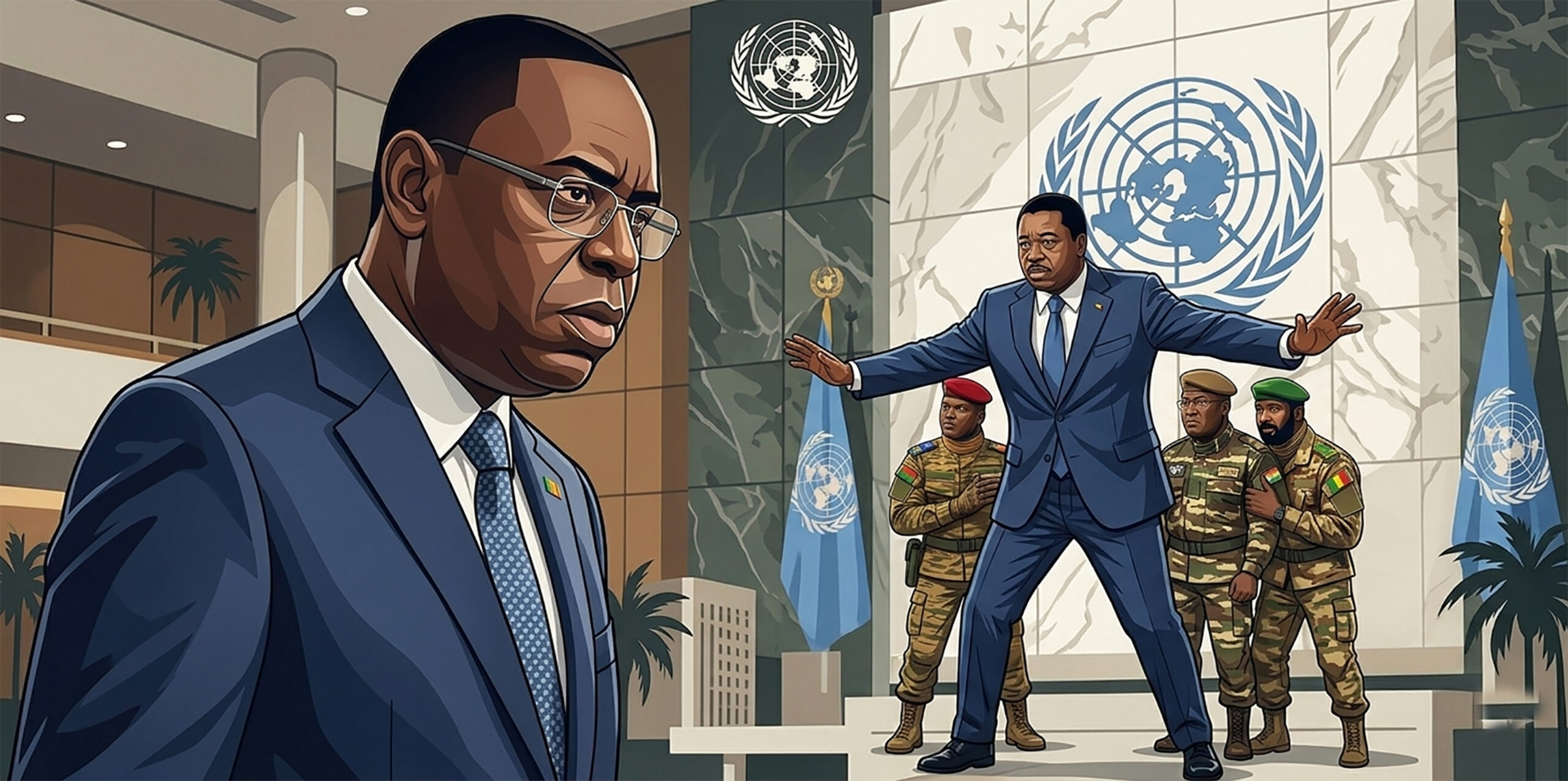
The divide could not be starker. On one side, a complacent continental diplomatic machinery, accustomed to handing out symbolic positions to former leaders. On the other, an alliance spearheaded by Togo’s Faure Gnassingbé, which has shattered protocol by openly opposing Senegal’s ambitions. This defiance is more than a mere vote—it signals the death knell for a culture of diplomatic appeasement.
Lomé: the driving force behind sahelian dissent
Togo’s role in this saga transcends regional squabbles. By aligning with the AES bloc (Mali, Burkina Faso, Niger), Lomé has taken a decisive stance—one of outright defiance against the status quo. The reasons are clear:
- CEDEAO’s troubled legacy: For Lomé and its Sahelian partners, Macky Sall was the architect of punitive measures that sought to suffocate the region’s military-led transitions.
- Solidarity with Dakar’s new leadership: By rejecting Sall’s candidacy, Togo aligns with the refusal of Bassirou Diomaye Faye’s regime—a move rooted in principle: you cannot claim to represent Africa while being rejected at home.
A global ripple effect
The message delivered to the UN Security Council is unmistakable: how can the General Assembly endorse an African candidate who cannot even secure unanimous support within its own continent?
“Togo has just reminded the world that Africa is no longer a monolithic bloc to be maneuvered at the whims of Western chancelleries. This is a diplomatic earthquake,” noted a geopolitics expert at the University of Lomé.
The fading of a dream
For Macky Sall, the reality check is harsh. The “death blow” did not come from New York but from Lomé—a city he assumed would bow to the unspoken rules of diplomatic musical chairs. By breaking ranks, Faure Gnassingbé has cemented his role as a key player in regional geopolitics, capable of reshaping international destinies through a sovereignist vision.
The 38th floor of Manhattan’s glass tower now lies beyond reach. The verdict came not from the corridors of the UN, but from the shores of the Gulf of Guinea: Macky Sall’s time has passed.